
Declutter Your Home into a Sanctuary — Fast & Easy!
Master the 3-Box Method + Sell Clutter for $1,000 Cash (No Storage Fees!)
👉 Download Now – Just $2.90!Crafting a green kitchen infused with warmth and charm is becoming a delightful trend in home decor. If you’re dreaming of a space that embodies sustainability while offering a cozy atmosphere, you’re not alone. Many are craving eco-friendly designs that not only satisfy their aesthetic tastes but also reflect their values. That’s why I created this post. Here, you’ll discover 18 innovative green kitchen ideas that place a stunning wooden island front and center. A wooden island serves as a perfect focal point, bringing together the elements of nature and functionality.
This post is for anyone passionate about home decor and sustainable living. Whether you’re a seasoned eco-warrior or just starting your journey towards a greener lifestyle, you’ll find plenty of inspiration here. You’ll learn how to infuse rustic kitchen decor with modern elements, explore eco-friendly materials and appliances, and discover ways to create an inviting ambiance with green color schemes. By the end of this guide, you’ll be equipped with fresh ideas that inspire you to create a warm, sustainable kitchen that reflects your unique style.
Let’s dive into these practical and creative kitchen ideas that harmonize design with sustainability. From bold green cabinetry to layered lighting, each suggestion will help you make your dream kitchen a reality, all while being mindful of the environment.
Key Takeaways
– Discover 18 unique green kitchen ideas that center around a beautiful wooden island, offering a blend of style and sustainability.
– Explore various green color schemes, such as bright greens and earthy tones, to create the perfect ambiance in your kitchen.
– Learn how to incorporate eco-friendly materials and fixtures, ensuring your kitchen design aligns with your values.
– Find practical storage solutions and minimalist designs that enhance efficiency while maintaining a clean and inviting space.
– Get inspired by personalized decor and vintage accents that add character and warmth to your kitchen while supporting sustainable practices.
1. Bright Green Cabinets for a Bold Statement
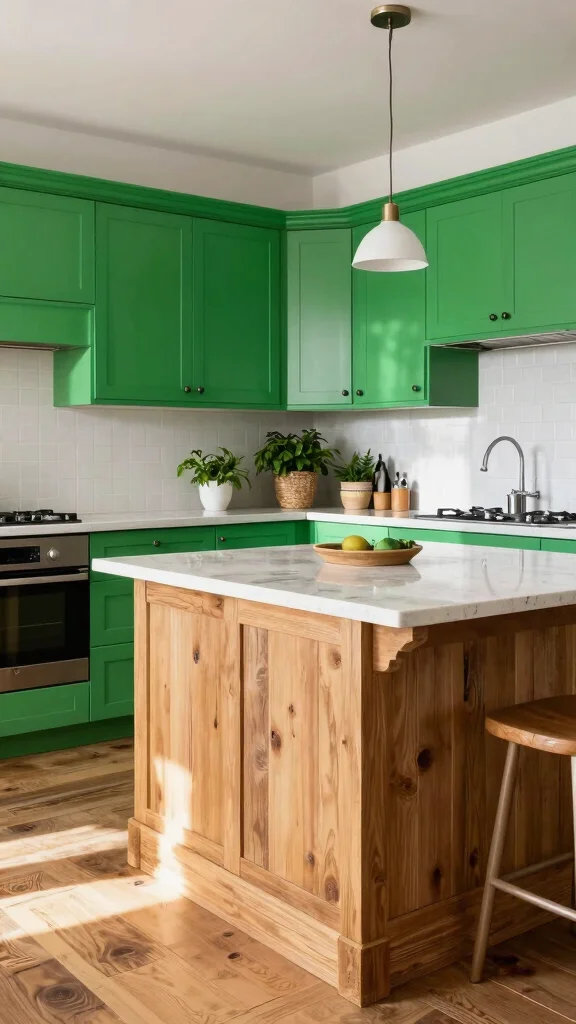
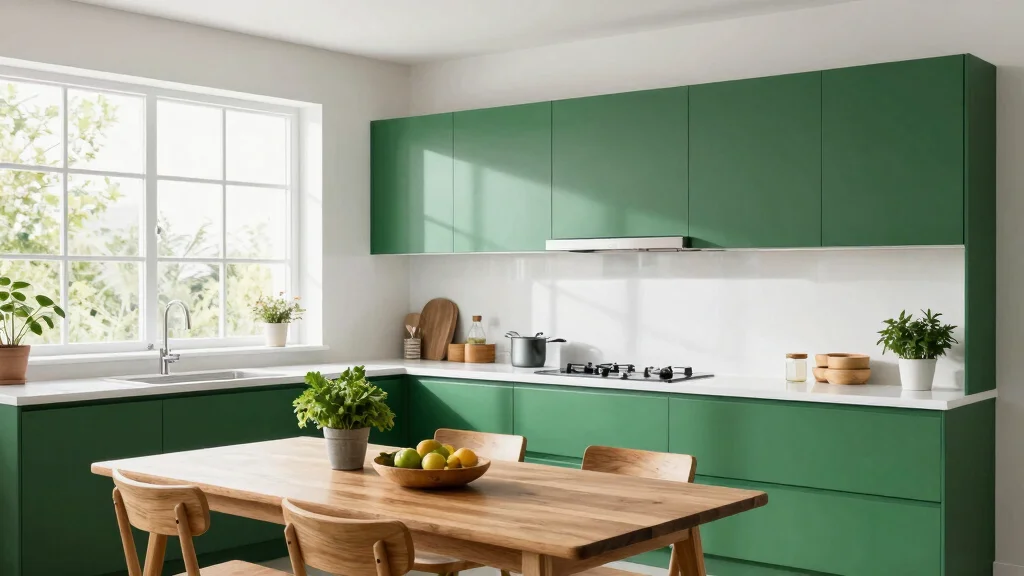
Bright green cabinets can breathe life into your kitchen, making it a vibrant space that radiates energy. This striking color works harmoniously with a wooden island, creating an eye-catching focal point that draws attention. The rich green tones evoke a sense of nature, infusing your kitchen with freshness and vitality. Pair this with natural wood finishes, and you achieve a delightful balance of rustic charm and modern flair. Using reclaimed wood for your island can also add an eco-conscious touch to your decor.
To make the most of this bold choice, consider these practical tips:
– Opt for glossy finishes to reflect light and enhance the green hue.
– Use light-colored countertops to balance bold cabinets.
– Add earthy accessories like terracotta pots or woven baskets for texture.
This design not only looks stunning but also promotes sustainability, creating a kitchen that’s as environmentally friendly as it is beautiful.


2. Earthy Green Tones for a Soothing Ambiance
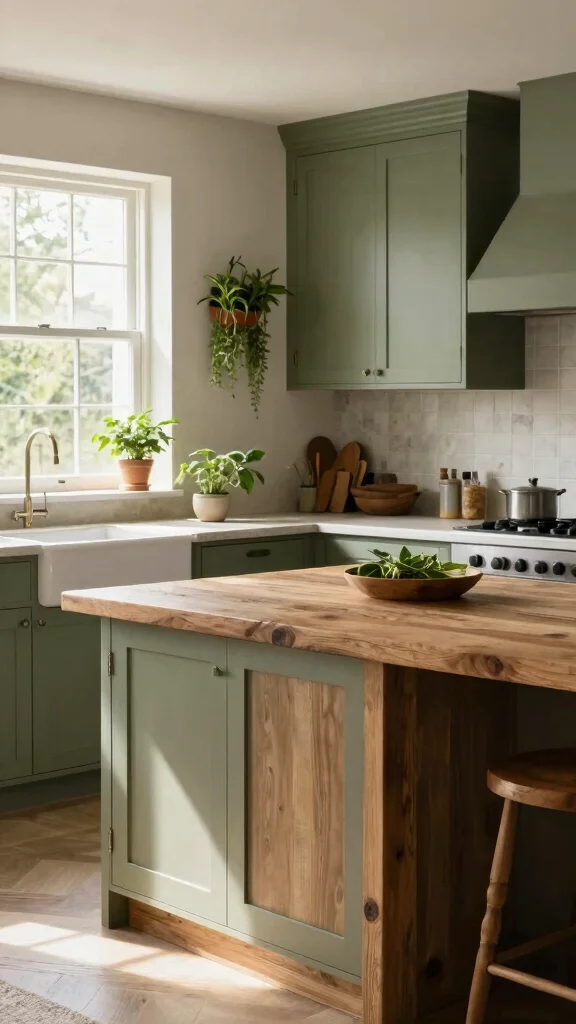
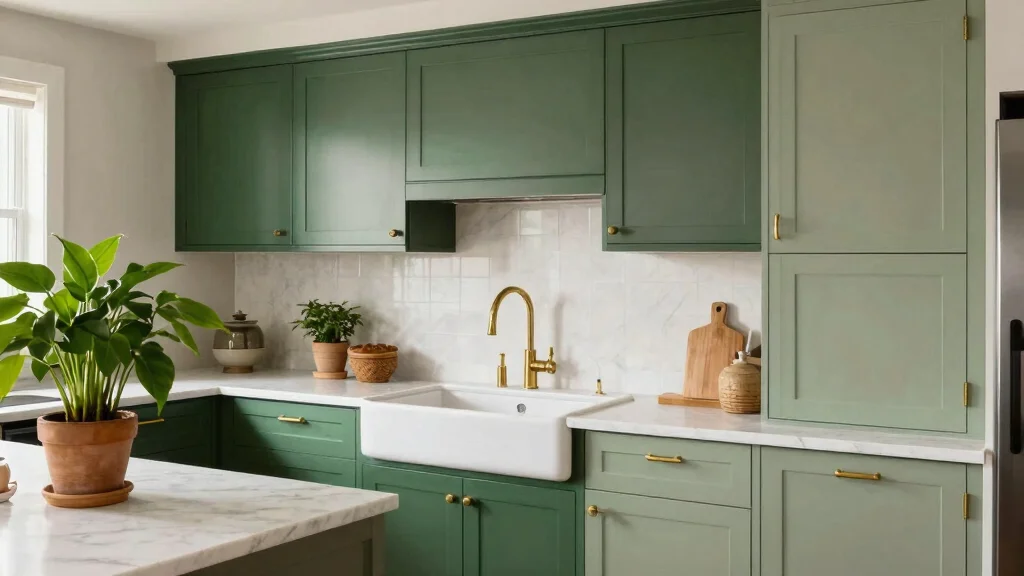
Earthy green tones create a tranquil kitchen atmosphere, ideal for those seeking serenity in their home. These muted shades blend seamlessly with a wooden island, resulting in an inviting and cohesive space. Think of shades like olive, moss, or sage that evoke a calm and relaxed vibe. Pairing these colors with the warmth of natural wood textures enhances the feeling of harmony throughout the room. Incorporate eco-friendly materials such as bamboo or upcycled tiles to elevate your design while supporting sustainability.
For styling, consider these suggestions:
– Use low-profile cabinetry to keep the focus on the wooden island.
– Incorporate soft fabric accents like linen or cotton in natural colors.
– Hang simple artwork or botanical prints to add interest without overwhelming the space.
This approach fosters a sense of tranquility, making your kitchen a peaceful retreat for culinary adventures.
3. Vintage Charm with Distressed Finishes
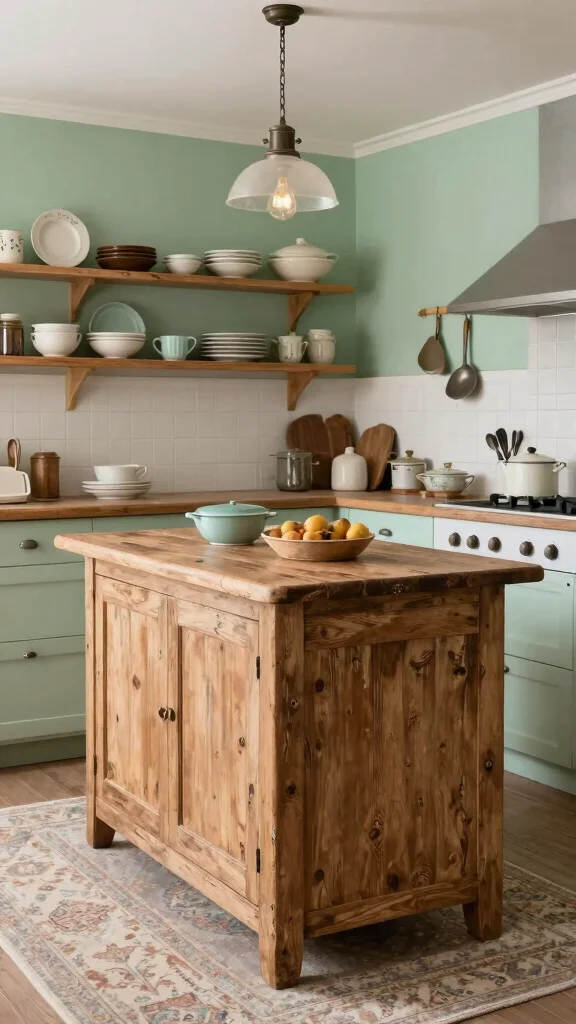
Embrace vintage charm by opting for distressed finishes on your wooden island. This technique not only adds character but also showcases the beauty of reclaimed materials, aligning with sustainable kitchen design. A weathered wood finish beautifully complements light green walls and vintage-style fixtures, creating a rustic yet inviting kitchen. It’s a fantastic way to celebrate imperfections and craft a unique focal point that tells a story.
To achieve this look, keep these tips in mind:
– Look for antiques or reclaimed wood that shows age and wear.
– Pair with vintage-inspired hardware for an authentic touch.
– Use muted green accents in accessories like dishware, curtains, or artwork.
This design merges nostalgia with sustainability, creating a stylish kitchen that honors the past while embracing eco-friendliness.
4. Open Shelving for an Airy Feel
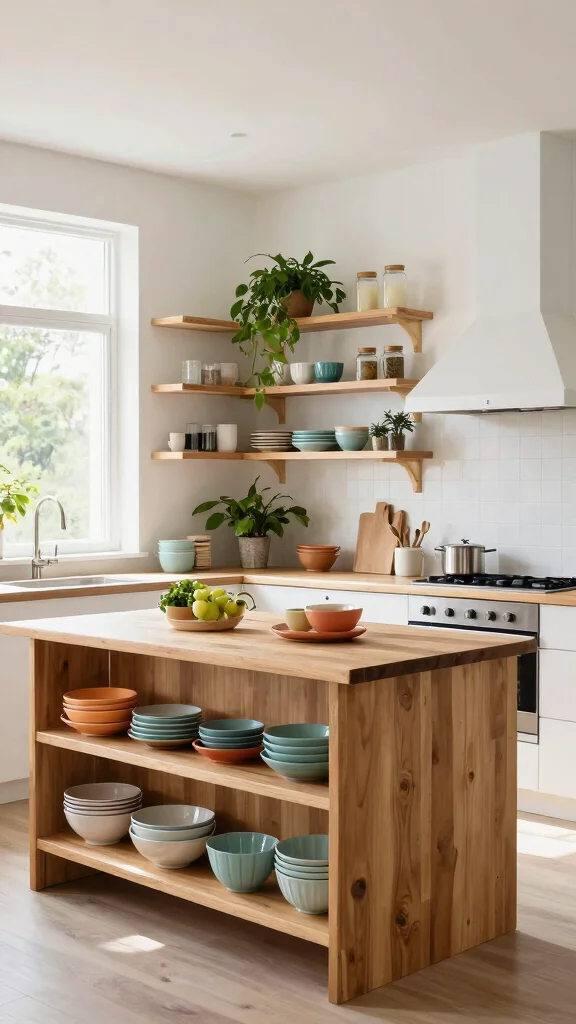
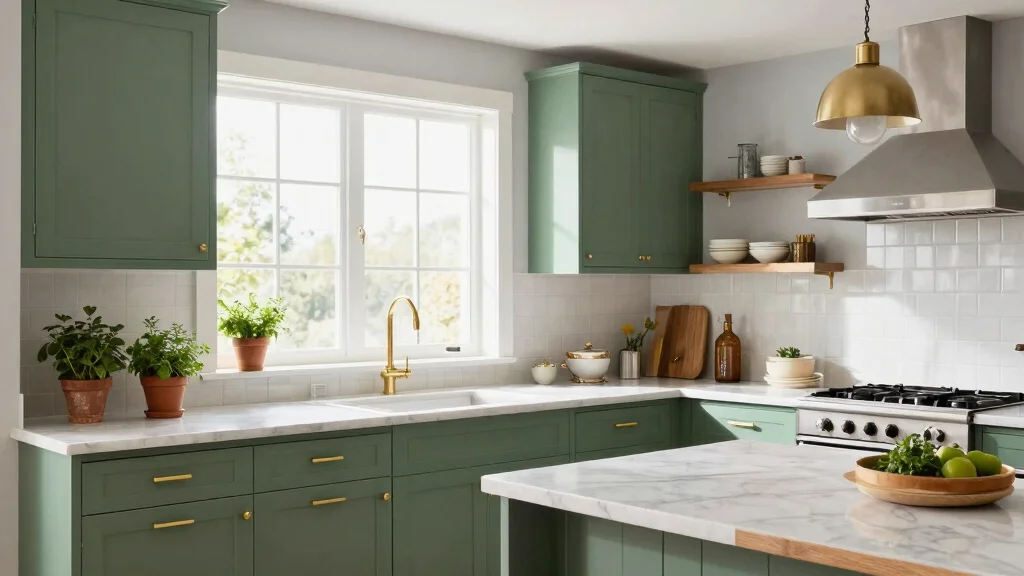
Open shelving is a stylish and practical addition that beautifully complements a green kitchen with a wooden island. It creates a sense of openness while showcasing your favorite dishware or plants. By keeping the shelving light and minimal, you maintain focus on your stunning island, ensuring the kitchen feels spacious. Introducing green accents in your displayed items can tie the entire look together seamlessly.
Here are some tips for effective open shelving:
– Use a mix of open and closed storage to balance visibility and practicality.
– Choose natural wood for shelves to echo your island’s finish.
– Decorate with green plants or colorful dishware to keep the space lively.
This design approach promotes a clean aesthetic and helps you stay organized while embracing eco-friendly home decor.
5. Accent Walls for a Pop of Color
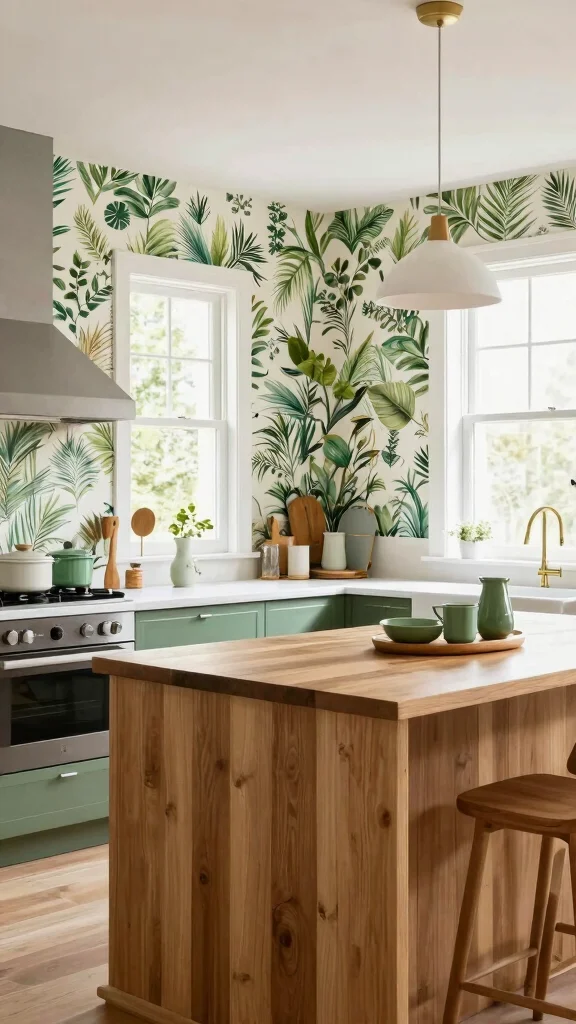
Inject personality into your green kitchen by creating an accent wall that complements your wooden island. A bold wallpaper or a fresh coat of paint in a deeper green or contrasting hue can serve as a stunning backdrop. This design draws the eye to the island, making your kitchen feel more dynamic and inviting. Whether you choose patterned wallpaper or a solid color, an accent wall adds depth and character to your space.
Consider these ideas for your accent wall:
– Consider a botanical print for a nature-inspired look.
– Use chalkboard paint for a functional and fun option.
– Create a textured wall with reclaimed wood to echo the island’s materials.
This design choice transforms your kitchen into a vibrant, stylish space while honoring its sustainable roots.
6. Two-Toned Designs for Visual Interest
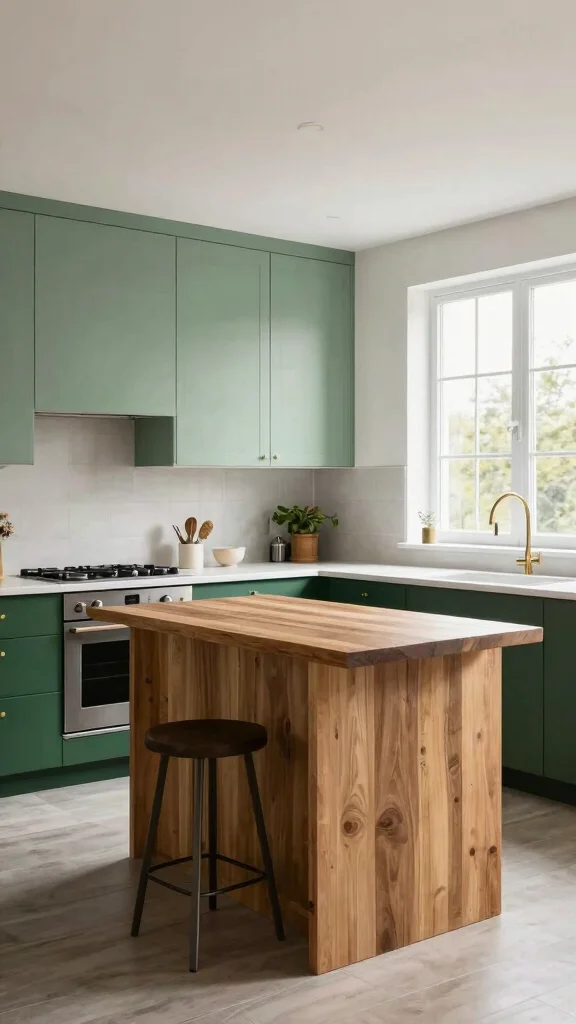
Two-toned kitchens have gained popularity for their ability to add visual interest and personality. By pairing contrasting colors with your wooden island, you can create an eye-catching effect that enhances your kitchen’s overall design. Picture soft green upper cabinets contrasted with deeper forest green lower cabinets, anchored by a rustic wooden island. This combination adds depth and highlights the beauty of natural wood.
Key aspects to consider include:
– Stick to a limited color palette to keep the design cohesive.
– Use the island as a bridge between the two tones for a unified look.
– Incorporate decor that reflects both colors for harmony.
This approach allows you to express your personal style while adhering to sustainable kitchen design principles.
7. Eco-Friendly Materials and Fixtures
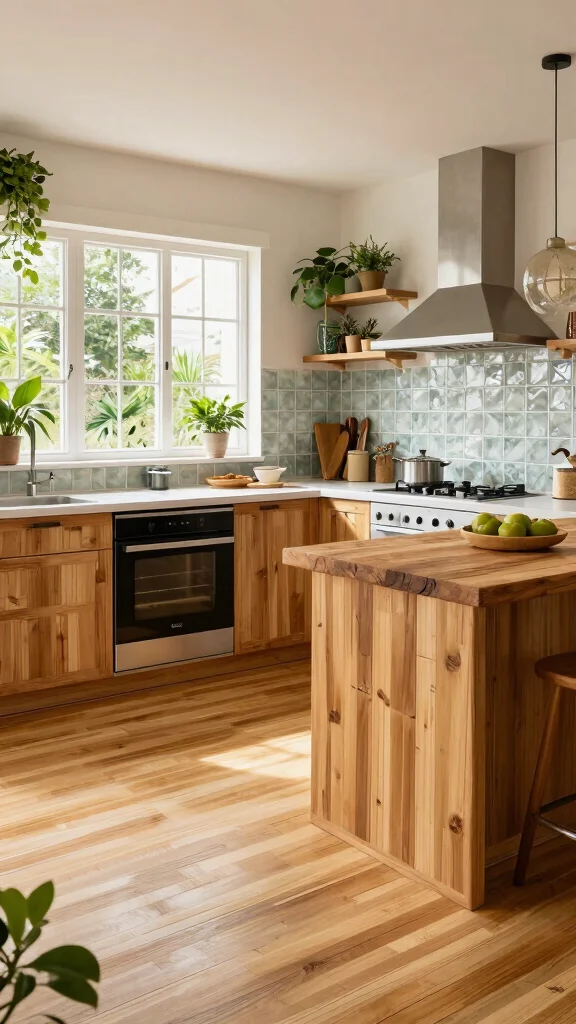
Selecting eco-friendly materials and fixtures is crucial for designing a sustainable kitchen. Opting for these options not only supports environmental efforts but also enhances the beauty of your wooden island. Consider bamboo flooring, recycled glass tiles, or energy-efficient appliances that contribute to a more sustainable kitchen environment. Pairing these elements with your wooden island creates a cohesive look that respects nature.
Essential eco-friendly tips include:
– Research certifications for sustainable materials.
– Look for water-efficient fixtures to promote conservation.
– Incorporate natural light through larger windows or skylights.
This design philosophy benefits both the planet and your kitchen, resulting in a stylish, functional space that feels good to use.
How To Choose the Right Wooden Island for Your Green Kitchen
When it comes to creating a stunning green kitchen with a wood island as the focal point, making the right choice is essential. Here’s how you can ensure you select the perfect wooden island to complement your sustainable kitchen design.
1. Size Matters
Before you even start looking at wooden islands, measure the space in your kitchen. You want the island to fit comfortably without obstructing movement. A good rule of thumb is to leave at least 36 inches of clearance around the island. Consider the size of your kitchen and the island; larger kitchens can accommodate bigger islands, while smaller kitchens might benefit from a compact design.
2. Material Quality
Look for islands made from reclaimed or sustainably sourced wood. This not only supports eco-friendly practices but also adds character and uniqueness to your kitchen. Hardwoods like oak, maple, or cherry are popular choices because of their durability. Ensure the wood has been treated properly to resist moisture and wear, especially in a kitchen environment.
3. Style and Design
Choose a style that complements your overall kitchen decor. If you want a rustic feel, go for a distressed finish or farmhouse design. For a modern touch, consider a sleek island with clean lines. The design should also match the green color schemes you’re using, whether that’s soft sage or bold emerald. Remember, your island is the centerpiece; it should reflect your personal style while still being functional.
4. Functionality
Think about how you plan to use your island. Will it serve as a cooking area, a breakfast bar, or a prep space? Consider features like built-in storage, seating, and electrical outlets. An island with drawers or shelves can keep your kitchen organized, while an overhang allows for casual dining. Make sure the configuration fits your cooking habits and lifestyle.
5. Budget Considerations
Decide on a budget before shopping for your wooden island. Wooden islands can range significantly in price based on size, material, and design. Make sure to balance quality with affordability. If you have a limited budget, consider DIY options or shopping for second-hand islands that you can refurbish.
6. Eco-Friendly Finishes
Once you’ve selected the island, think about the finishes. Look for non-toxic, eco-friendly paints or stains to enhance your island’s beauty without compromising your health or the environment. Finishes should be durable and easy to clean, especially in a kitchen setting.
Pro Tip: Before making a final decision, visualize your new island in the space. Use painter’s tape to outline the dimensions on the floor. This will help you see how it fits and whether it enhances the flow of your kitchen.
Creating a green kitchen with a wood island is not just about aesthetics; it’s about making conscious choices that reflect your values. By focusing on size, quality, design, functionality, budget, and eco-friendly finishes, you can select a wooden island that not only looks great but also supports a sustainable lifestyle. Enjoy the process of designing your kitchen, and remember, it should be a place where you feel comfortable and inspired to cook.
8. Incorporate Natural Elements
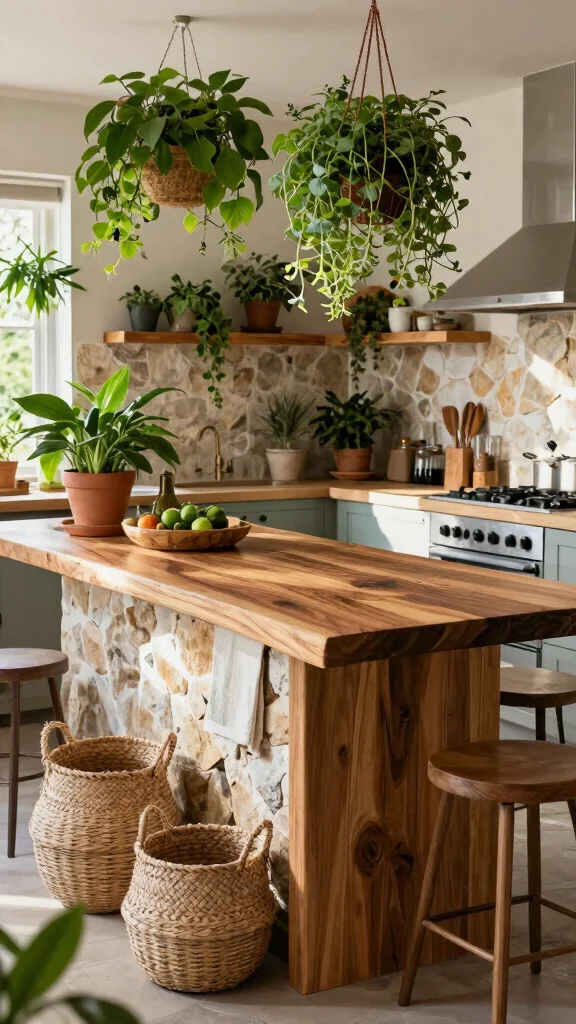
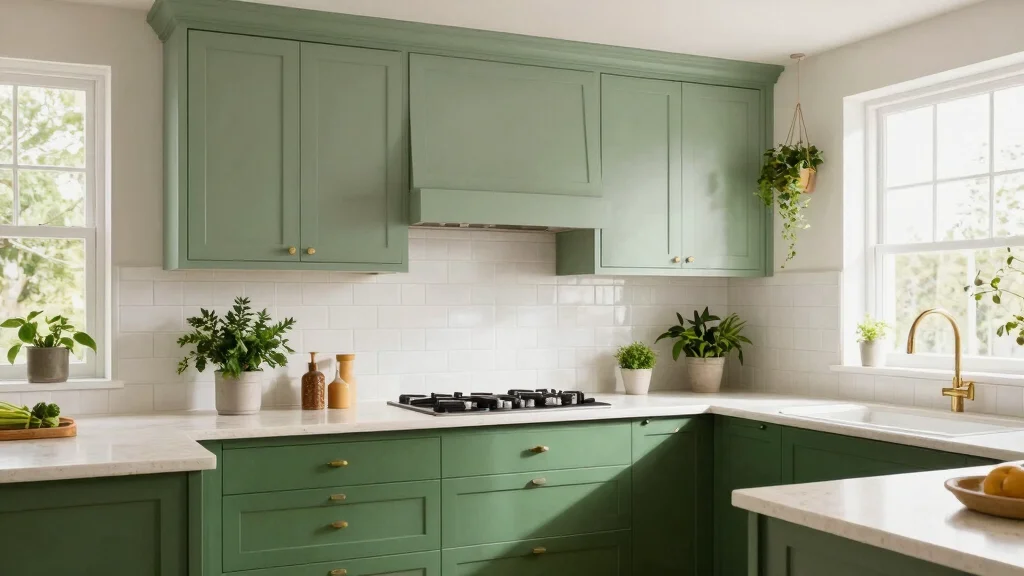
Integrating natural elements into your kitchen design is key to creating a green space. Alongside your wooden island, consider adding stones, plants, and textiles that reflect the beauty of the outdoors. A live-edge wooden countertop, stone backsplashes, or an herb garden can accentuate the natural feel of your kitchen. These elements work in harmony to create a warm and organic atmosphere that feels inviting.
Ways to incorporate nature include:
– Use potted plants or hanging herbs for fresh greens.
– Choose a stone countertop that complements your island’s wood finish.
– Decorate with woven baskets to add texture and earthiness.
This approach creates an inviting kitchen that celebrates your commitment to sustainability while showcasing nature’s beauty.
9. Layered Lighting for Functionality and Mood
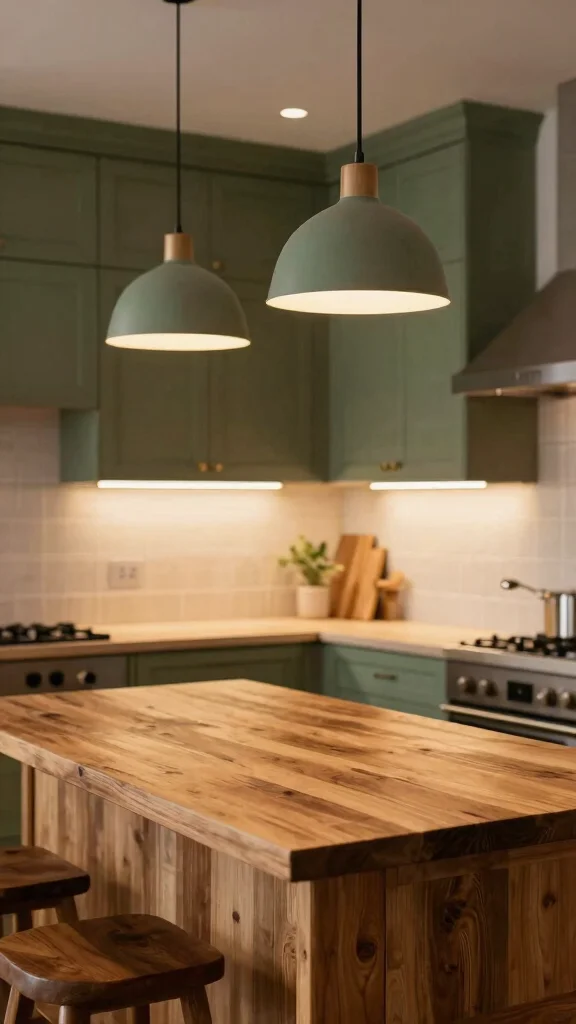
Lighting is essential in kitchen design, especially in a green kitchen featuring a wooden island. Implementing a layered lighting approach enhances both functionality and ambiance. Combine task lighting for cooking, ambient lighting for a cozy atmosphere, and accent lighting to highlight your wooden island. This setup creates a welcoming environment for gatherings with family and friends.
For effective lighting, consider:
– Use pendant lights above the island for focused illumination.
– Add under-cabinet lighting to brighten workspaces.
– Incorporate dimmers for flexibility in mood setting.
Creating a well-lit kitchen enhances usability and overall comfort, making it the perfect haven for culinary creations.
Layered lighting makes a green kitchen with wood island feel alive—task, ambient, and accent lighting work together to cut glare and waste fewer watts. Pro tip: switch to dimmable LEDs and separate switches so you only use what you need. Cozy, functional, and stylish every night.
10. Smart Storage Solutions for Efficiency
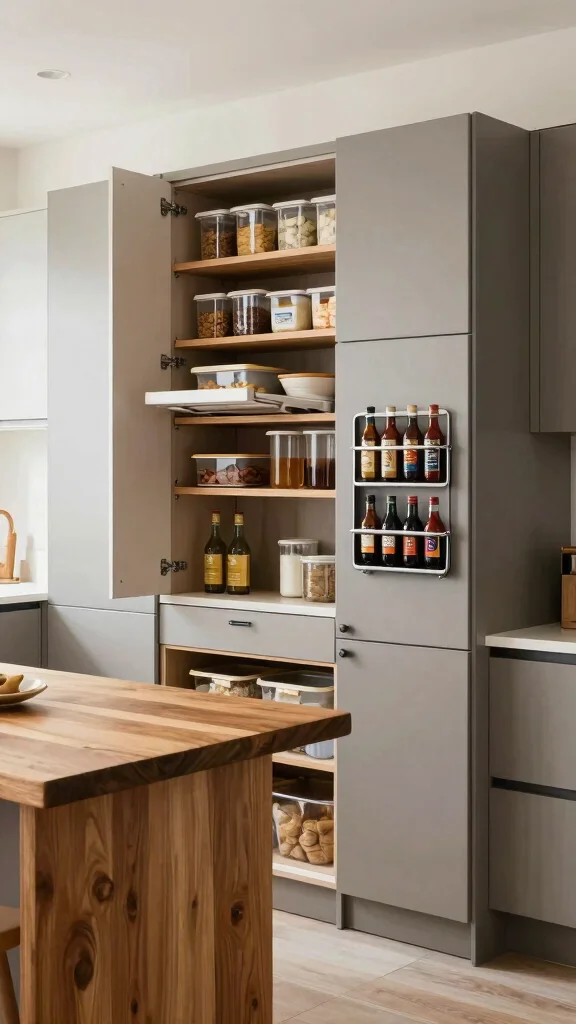
In a green kitchen, efficiency is paramount, and smart storage solutions can optimize your space while keeping everything organized. Incorporating clever designs like pull-out shelves, hidden drawers, and magnetic spice racks around your wooden island can help maintain a tidy kitchen. These features streamline the cooking process and contribute to a sustainable lifestyle by ensuring that everything you need is easily accessible.
Storage ideas to consider:
– Use vertical space with tall cabinets and open shelving.
– Invest in multi-functional furniture like stools that double as storage.
– Organize pantry items in clear containers for easy access.
An organized kitchen promotes efficiency while showcasing the beauty of your space, keeping it functional and stylish.
11. Vintage Accents for a Nostalgic Touch
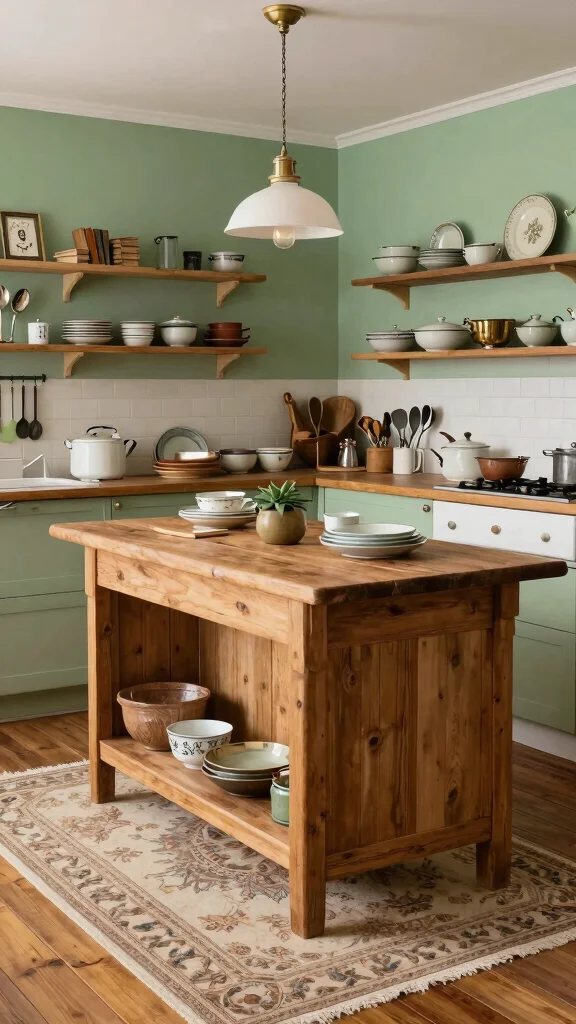
Adding vintage accents can infuse your green kitchen with a nostalgic charm that feels personal. Consider incorporating antique dishware, retro light fixtures, or a vintage rug that ties the room together. These elements serve as decor while providing a sense of history within your space. Pairing vintage pieces with sustainable materials creates a rich narrative that honors the past while looking towards a sustainable future.
For vintage decor, try:
– Mix and match different eras to create an eclectic vibe.
– Use antique finds as functional pieces, like a reclaimed wood table or vintage utensils.
– Highlight your vintage pieces against a soft green backdrop.
This combination creates a warm and inviting kitchen that feels unique and personal.
12. Minimalist Design for Clarity and Space
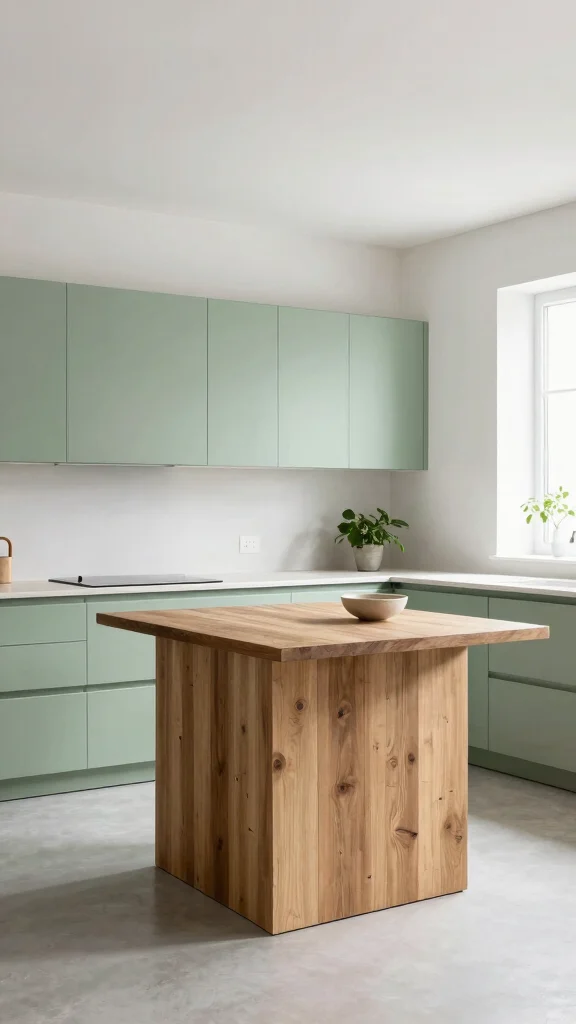
A minimalist design approach can transform your green kitchen into a serene space that highlights the beauty of your wooden island. Keeping decor simple allows natural materials to shine, creating a calm and uncluttered environment. Using a limited color palette and reducing accessories makes your kitchen feel more spacious and open. This design philosophy aligns perfectly with sustainable kitchen design principles, focusing on quality over quantity.
Key elements of minimalist design include:
– Choose sleek, functional furniture that doesn’t clutter the space.
– Use a neutral color scheme with pops of green to maintain harmony.
– Embrace open spaces around the wooden island for a clear flow.
This approach fosters a peaceful cooking environment, encouraging mindfulness and focus.
13. Bold Hardware Choices for a Modern Twist
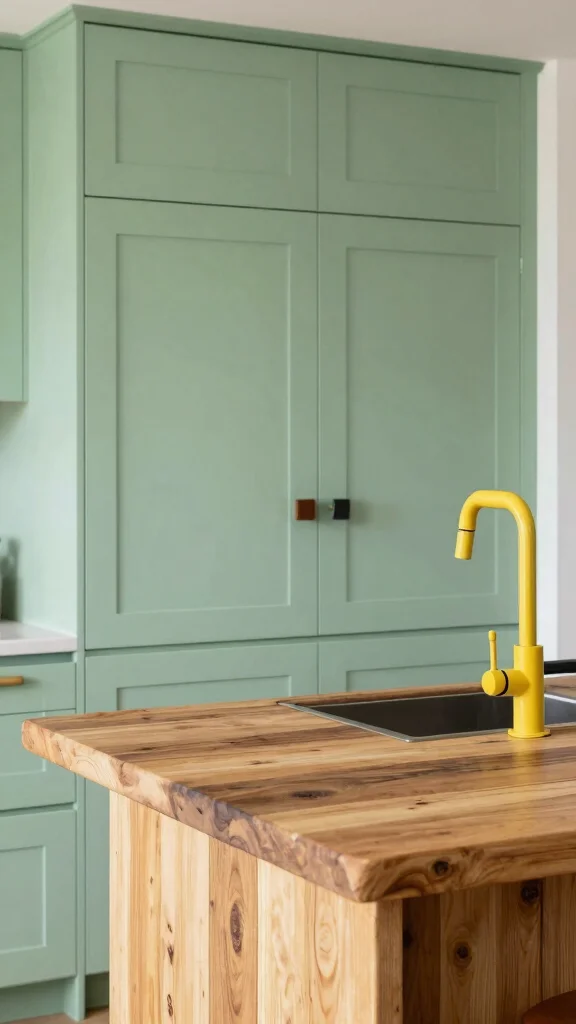
Elevate your green kitchen design with bold hardware choices that add a modern twist to your wooden island. Opt for statement cabinet knobs, vibrant faucets, or unique drawer pulls that stand out against softer colors. These small details can significantly enhance the overall aesthetic, drawing attention to your beautiful island. Choosing these elements in eco-friendly materials adds another layer of sustainability to your kitchen.
Considerations for hardware include:
– Mix metals for a contemporary edge.
– Choose shapes that complement your design style—geometric for modern, ornate for vintage.
– Ensure that finishes align with your color scheme for cohesion.
This design detail can transform your kitchen into a stylish, modern space that feels fresh and inviting.
Fun fact: Bold hardware can instantly elevate a green kitchen with wood island, and a copper faucet swap can boost perceived value by up to 10%. Mix metals for contrast that guides the eye to the island’s details, while eco-friendly materials keep it sustainable.


14. Culinary Garden for Fresh Ingredients
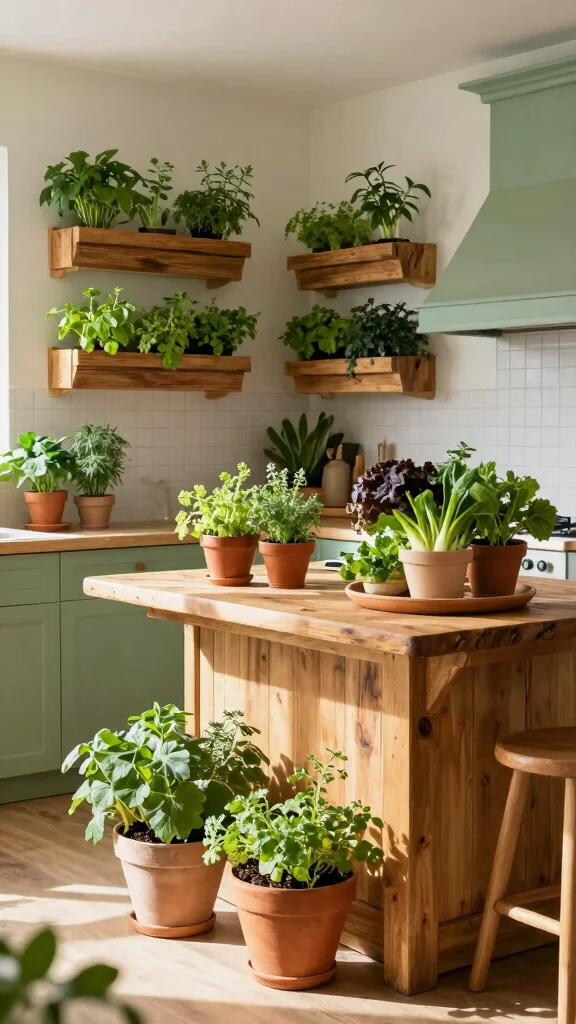
Creating a culinary garden within your kitchen enhances the cooking experience in your green space. Imagine having fresh herbs and vegetables available right at your fingertips, all while beautifying your wooden island. Utilizing vertical gardening techniques or indoor planters allows you to integrate nature into your kitchen decor while supporting a sustainable lifestyle. This practice promotes not only freshness in your meals but also adds vibrancy to your kitchen design.
Ways to create your culinary garden include:
– Use wall-mounted planters for herbs.
– Incorporate pots or a raised bed near the island for vegetables.
– Ensure your plants align with your decor for a cohesive look.
This idea transforms your kitchen into a functional and beautiful space, encouraging healthy cooking habits.




15. Eco-Friendly Appliances that Save Energy
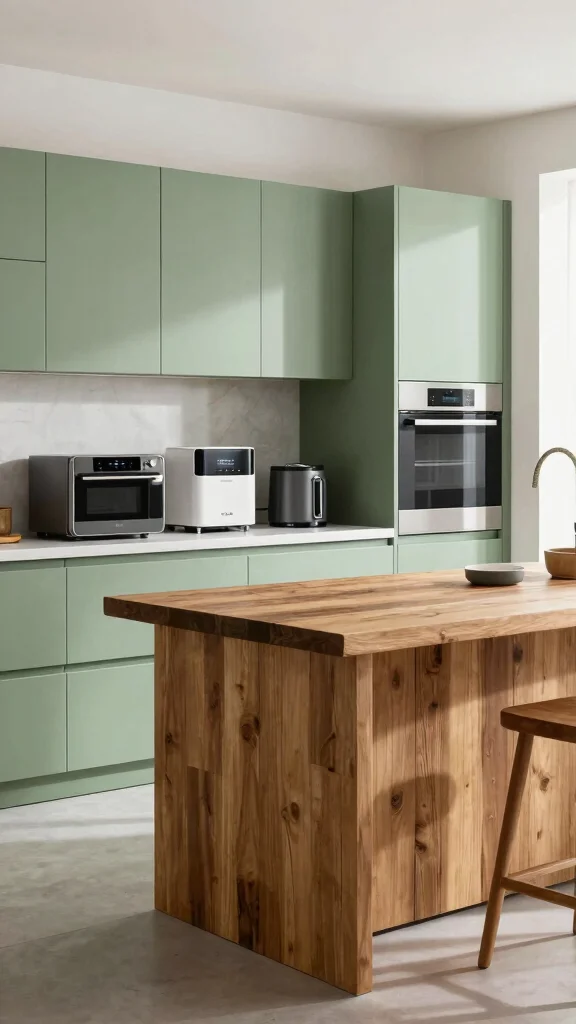
Choosing eco-friendly appliances is crucial for creating a sustainable kitchen. Opt for energy-efficient models that reduce your carbon footprint while enhancing your space’s aesthetic. Modern appliances come in various finishes and colors, making it easy to find pieces that match your green kitchen and complement your wooden island. This investment pays off in performance, longevity, and savings on energy bills.
Consider these tips:
– Look for appliances with Energy Star ratings for efficiency.
– Select finishes that harmonize with your overall kitchen design.
– Consider smart appliances that can help track energy usage.
This approach supports both your household and the environment, making your kitchen truly sustainable.
16. Personalized Decor to Reflect Your Style
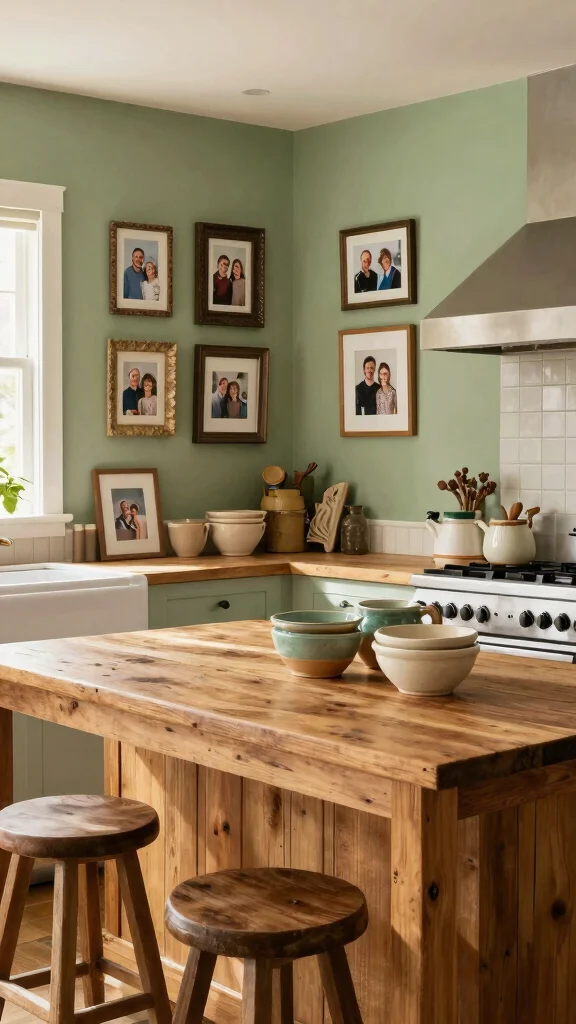
Personalizing your kitchen decor adds a unique touch that reflects your personality. Incorporate handmade items, family heirlooms, or local artisan crafts around your wooden island. This practice enhances the aesthetic of your green kitchen while supporting local artists and sustainable practices. Infusing your space with meaningful items creates a more intimate and inviting atmosphere.
Ideas for personalizing your kitchen include:
– Display family photos in decorative frames.
– Use handmade pottery for functional yet beautiful decor.
– Incorporate artwork that resonates with you for a personal touch.
These elements transform your kitchen into a warm, welcoming space filled with character and charm.
17. Mixing Textures for Depth and Interest
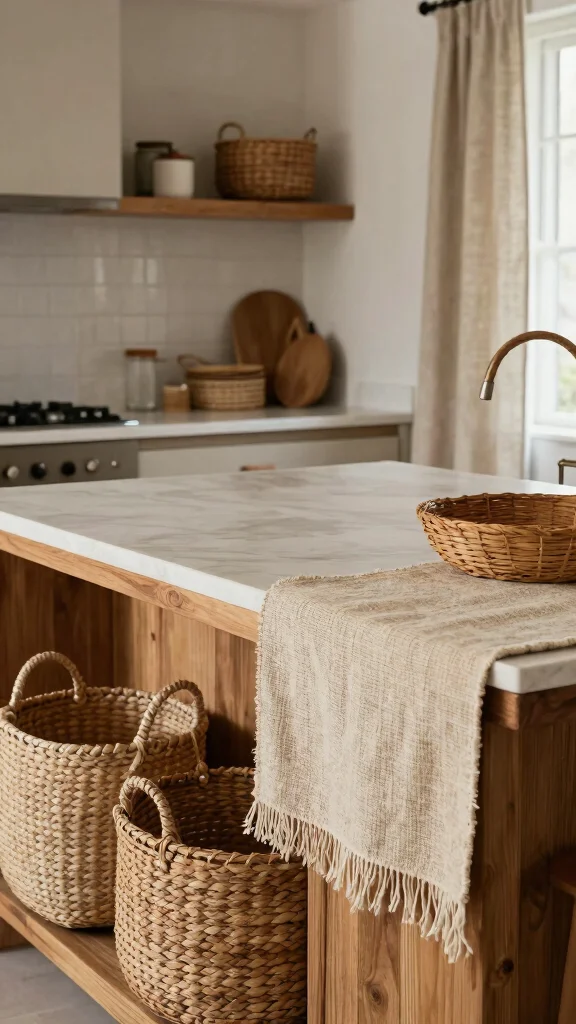
Mixing textures in your green kitchen design adds depth and intrigue. By combining smooth surfaces with rough natural elements, such as a sleek countertop alongside a rustic wooden island, you create a visually attractive space rich in detail. Introducing different textures through textiles, ceramics, or wall finishes can elevate the design further. This approach creates a multi-dimensional kitchen that feels alive and inviting.
For effective texture mixing, consider:
– Use woven baskets for storage to soften hard surfaces.
– Incorporate textiles like table runners or curtains in natural fibers.
– Balance different finishes to create harmony and interest.
This strategy enhances your kitchen’s aesthetic while promoting a sensory experience that draws you in.
Fun fact: mixing textures in a green kitchen with wood island visually adds 30% depth—think sleek surfaces beside rustic wood for instant warmth. When you layer textiles, ceramics, and wall finishes, the space feels inviting and surprisingly practical to use.
18. Sustainable Practices for Everyday Cooking
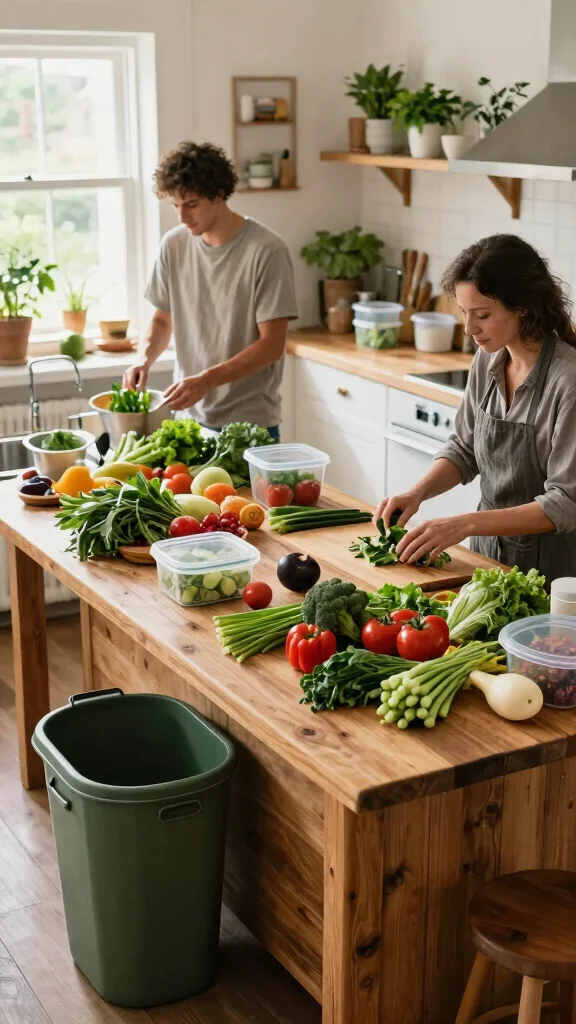
Creating a green kitchen extends beyond design; it involves adopting sustainable practices in everyday cooking. Utilize your wooden island for meal prepping, focusing on seasonal and locally-sourced ingredients. Embrace zero-waste cooking by planning meals, composting organic waste, and using reusable containers. These practices minimize your environmental impact while making your kitchen a hub of sustainability.
Consider these practices:
– Plan meals around what’s in season to reduce the carbon footprint.
– Use reusable bags and containers to cut down on waste.
– Implement a compost bin to recycle organic waste.
By adopting these sustainable practices, you create a kitchen that is not only beautiful and stylish but also responsible and eco-friendly.
Conclusion
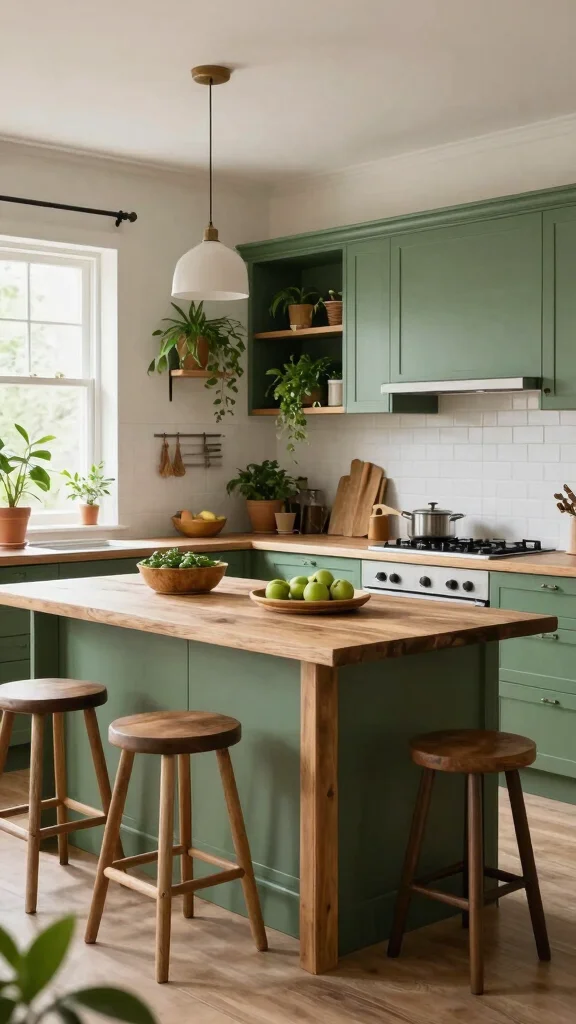
Creating a green kitchen with a wooden island as the focal point is an enriching journey that combines aesthetics with sustainability.
From bold color schemes to eco-friendly materials, each idea reflects a commitment to a healthier home and planet. Embrace these trends to design a kitchen that not only looks good but feels good to use, fostering a warm and inviting atmosphere for all your culinary adventures.
Related Topics
green kitchen
wooden island
sustainable design
rustic decor
eco-friendly decor
kitchen color schemes
reclaimed wood
kitchen inspiration
modern rustic
beginner friendly
DIY kitchen
natural materials