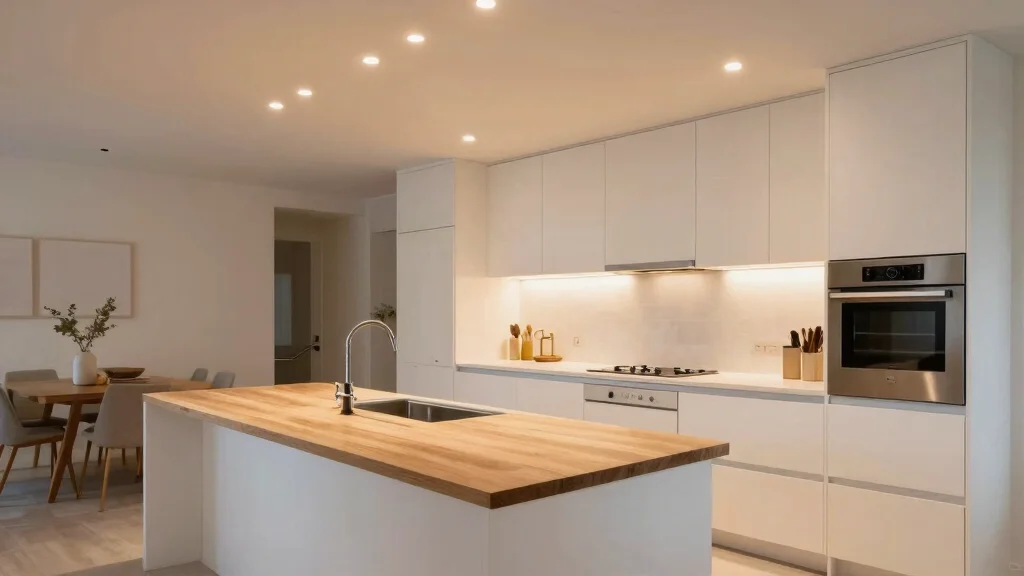
Creating a warm and inviting kitchen is a goal that many homeowners strive for. One key element that can elevate the overall design is kitchen recessed lighting. It not only provides essential illumination but also enhances the aesthetic appeal of modern minimalist kitchens. As someone who has explored countless design options, I felt compelled to share my insights on effective layouts that truly work. Whether you’re renovating your space or simply looking to refresh your kitchen, understanding the best lighting strategies can make all the difference.
If you’re a homeowner, a design enthusiast, or someone who simply wants to make their kitchen cozy and functional, this post is for you. I understand that selecting the right lighting can seem overwhelming. But fear not! I have compiled 17 kitchen recessed lighting layout ideas that cater to various styles and preferences. These ideas are not just visually pleasing; they also focus on functionality and ambiance, ensuring your kitchen is a pleasant place to cook and gather.
By the end of this guide, you’ll be equipped with actionable tips and inspiring ideas to transform your kitchen lighting. From highlighting architectural features to integrating smart solutions, you’ll find everything you need to create a lighting plan that suits your lifestyle and enhances your home’s decor. Let’s dive into these innovative layouts and find the perfect fit for your kitchen!
Key Takeaways
– Diverse Layout Options: Explore 17 distinct recessed lighting layouts that cater to various kitchen styles, enhancing both functionality and aesthetic appeal.
– Focus on Zones: Learn about zone lighting to create different atmospheres in your kitchen, from cooking to entertaining.
– Symmetry is Key: Discover how a symmetrical layout can provide a balanced look, making your kitchen feel more organized and inviting.
– Energy Efficiency Matters: Find energy-efficient lighting solutions like LED options that save on electricity while providing ample illumination.
– Smart Solutions: Delve into modern technology with smart lighting options that allow for easy control and customization of your kitchen’s ambiance.
1. Linear Perfection
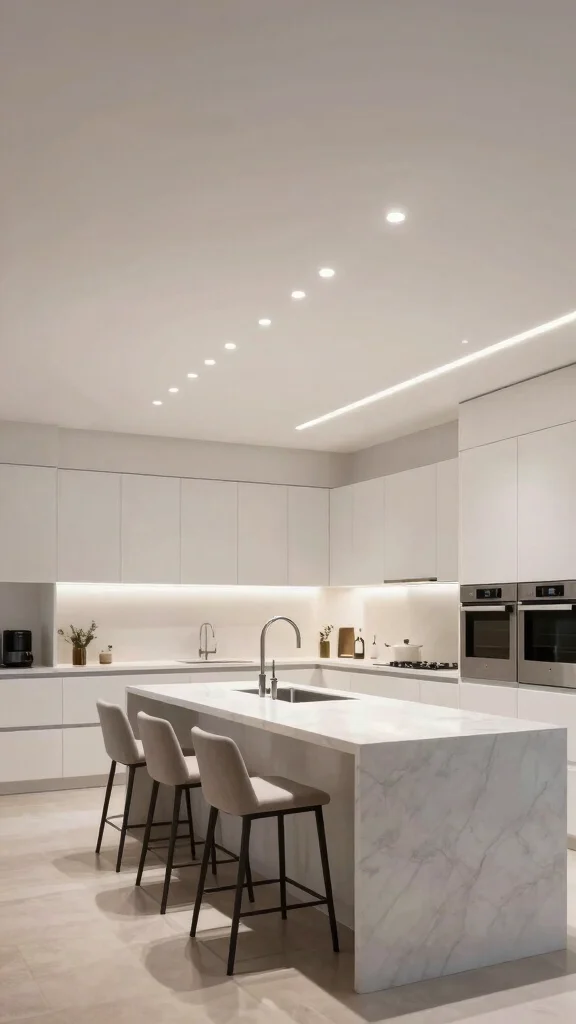
A linear recessed lighting layout offers a sleek and streamlined aesthetic that beautifully highlights your kitchen’s length. This arrangement works well in narrow spaces, such as galley kitchens, creating a sense of expansiveness. For best results, install the lights parallel to your countertops or directly above a kitchen island, ensuring a focused illumination that enhances functionality.
To make the most of this design, consider spacing your lights about 3-4 feet apart for even lighting. Opt for dimmable recessed lights to easily adjust the ambiance, and combine them with under-cabinet options to introduce depth and warmth.
Consider these elements to maximize this layout’s potential:
– Position lights parallel to countertops for optimal effect.
– Install dimmable options for adjustable mood lighting.
– Incorporate under-cabinet lights for added dimension.
This approach delivers a contemporary flair while ensuring ample light for cooking and gatherings, enhancing the overall appeal of your kitchen.
🏡 Transform Your Home Today
Unlock expert secrets to elevate your kitchen design with stunning, budget-friendly makeovers tailored for modern minimalism.
How To Choose The Right Kitchen Recessed Lighting Layout
Choosing the right layout for your kitchen recessed lighting can enhance both the functionality and aesthetic of your space. Here are key factors to consider as you plan your kitchen lighting design.
1. Purpose of Lighting
Begin by defining the primary functions of your kitchen. Do you need bright task lighting for cooking? Or is it more about creating a cozy ambiance during meals? Each purpose requires a different approach. For example, task lighting works best over countertops, while ambient lighting can be placed throughout the ceiling.
2. Size and Dimensions
Measure your kitchen’s dimensions carefully. A general rule is to space recessed lights about 4-6 feet apart. The size of your lights also matters. Smaller lights work well for accenting features, while larger ones can illuminate wider areas. Use these measurements to determine how many fixtures you need for effective coverage.
3. Lighting Layering
Consider layering different types of lighting. You can combine ambient kitchen lighting with task and accent lighting. For instance, use recessed lights for general illumination and add under-cabinet lighting for tasks. This layering creates depth and makes the space feel more inviting.
4. Dimming Options
Integrate dimmer switches into your recessed lighting layout. This feature allows you to adjust the brightness based on the time of day or occasion. A lower light setting can create a relaxing atmosphere during dinner, while bright lighting can be perfect for meal prep.
5. Energy Efficiency
Look for energy-efficient LED recessed lights. They consume less power and have a longer lifespan compared to traditional bulbs. This not only reduces your electricity bill but also minimizes the frequency of bulb replacements. Check the lumens rating to ensure you’re getting enough brightness for your needs.
6. Aesthetic Appeal
Finally, think about the style of your kitchen decor. Choose recessed lights that complement your overall modern kitchen decor. Fixtures with decorative trim can add a stylish touch, while sleek, minimalist designs can keep your space looking contemporary. Match the trim color and finish with your cabinetry and other fixtures for a cohesive look.
Pro Tip: Before finalizing your recessed lighting layout, create a lighting plan. Use graph paper or a design app to map out where each fixture will go. This visual aid can help you spot any potential issues and make adjustments before installation.
By considering these factors, you’ll be well on your way to achieving a beautifully lit kitchen that meets all your functional and aesthetic needs.
2. Zone Lighting
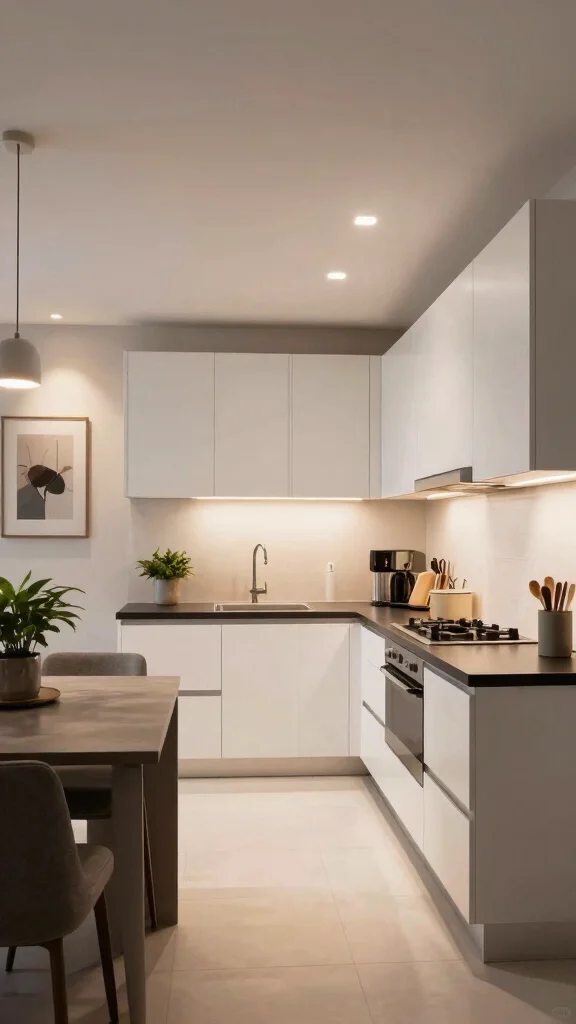
Layered recessed lighting can effectively create distinct zones in your kitchen, enhancing both its functionality and style. By focusing lights over key areas like the cooking space, sink, and dining area, you can craft an engaging and visually interesting layout. This method allows you to illuminate only the areas you need, making it perfect for a busy kitchen environment.
When implementing zone lighting, ensure that task areas have lights placed directly above them. Ambient lighting around the perimeter can provide a cozy atmosphere, while accent lights can highlight artwork or special features, creating an inviting feel.
Here are some tips to optimize zone lighting:
– Place lights directly above workspaces for better visibility.
– Add ambient lights around the kitchen for a warm vibe.
– Use accent lights to showcase artwork or details.
This lighting strategy not only enhances usability but also adds a curated touch, making your kitchen feel intentional and elegant.
3. Symmetrical Layout
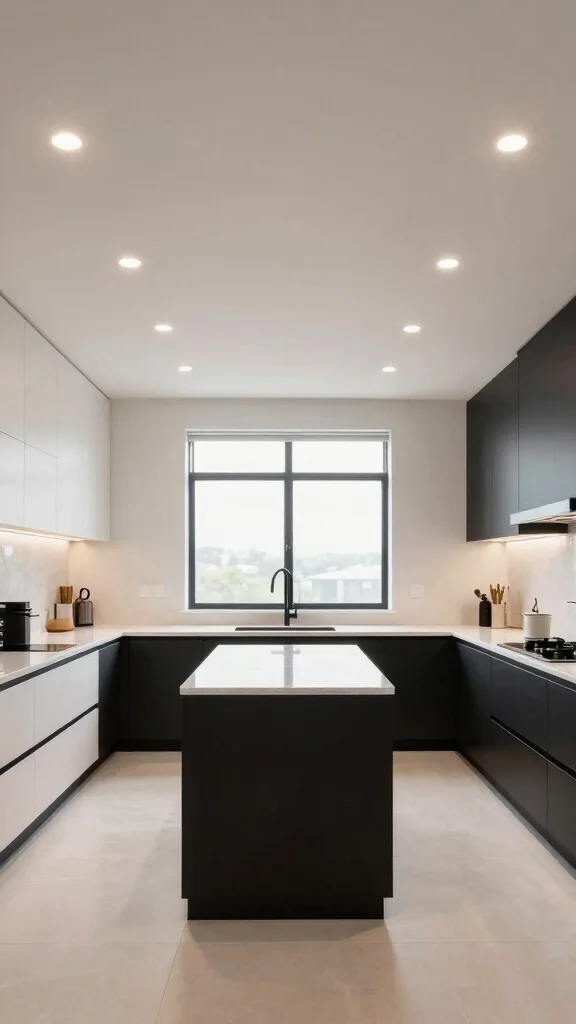
A symmetrical recessed lighting layout brings a sense of balance and order to your kitchen design, perfect for those who appreciate harmony. By evenly spacing lights along the ceiling, you can mirror your kitchen’s design elements and create a consistent lighting effect that guides the eye throughout the space. This layout works particularly well in larger kitchens, ensuring every area is well-lit.
To achieve a visually appealing look, maintain equal spacing between lights. Consider combining this layout with other lighting types, like pendant lights, for extra flair, and adjust placements according to your ceiling height for optimal results.
Here are some key insights to keep in mind:
– Ensure equal spacing for a polished appearance.
– Combine with pendants or other types for added interest.
– Adjust light placement based on ceiling height.
This symmetrical approach not only enhances visual appeal but also guarantees uniform light distribution, making your kitchen feel warm and inviting.
4. Multi-Level Lighting
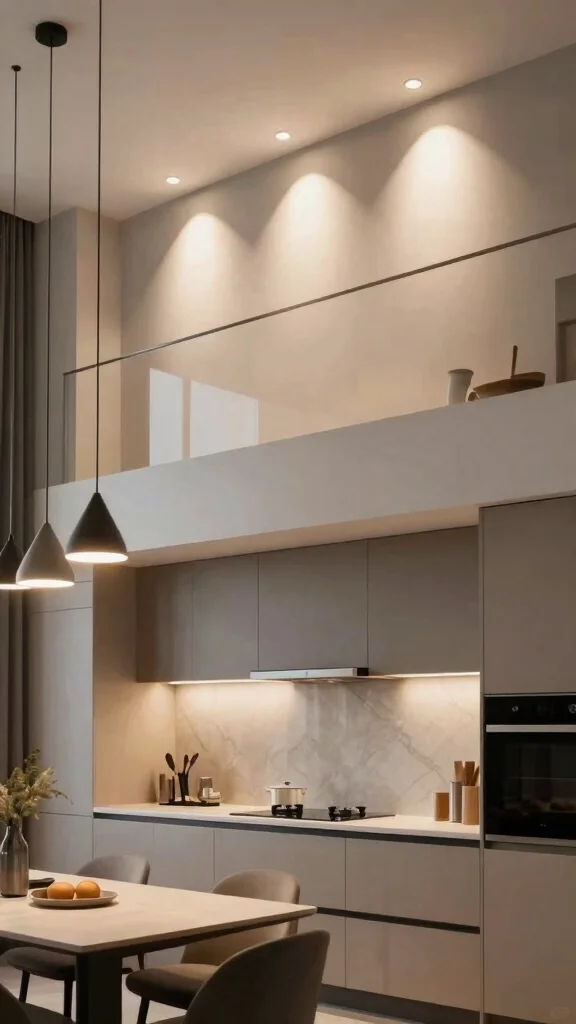
Introduce depth and dimension to your kitchen with a multi-level recessed lighting layout. By varying the height and intensity of recessed lights, you can create a dynamic environment that highlights architectural features and focal points. Adjustable recessed lights can be angled to draw attention to specific areas, making your kitchen feel more engaging.
For practical implementation, use higher wattage bulbs in task areas to maximize brightness. Pair this lighting with secondary sources, like pendant lights, to create visual interest, and don’t forget to install dimmers for controlling light intensity.
Consider these practical tips:
– Use brighter bulbs in work areas for enhanced visibility.
– Combine with pendants for added texture and interest.
– Install dimmers to fine-tune light levels.
This multi-level approach not only elevates your kitchen’s design but also ensures optimal lighting for various tasks, making the space both functional and inviting.
5. Color Temperature Variation
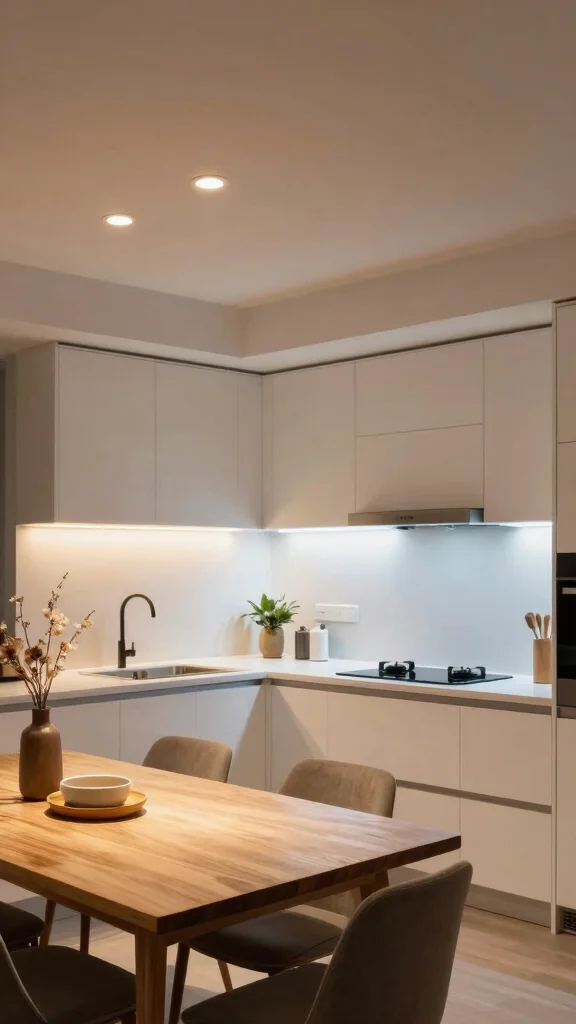
Using varying color temperatures in recessed lighting can dramatically alter the atmosphere of your kitchen. Warm white tones (2700K-3000K) create a cozy, inviting environment, whereas cooler tones (4000K-5000K) are better suited for task-oriented areas like cooking spaces. Mixing these temperatures adds depth and character, enhancing the overall design.
To effectively implement this technique, use warm tones in dining areas for comfort and cooler tones in preparation zones to boost visibility. Consider smart bulbs that allow for easy adjustments of color temperatures to suit your mood and tasks.
Here are some effective lighting layout tips:
– Use warm tones in dining areas for a welcoming vibe.
– Select cooler tones in prep areas for clarity.
– Explore smart bulbs for versatile temperature options.
This method not only boosts functionality but also infuses your kitchen with a personalized touch that reflects your unique style.
6. Recessed Lighting with Decorative Trim
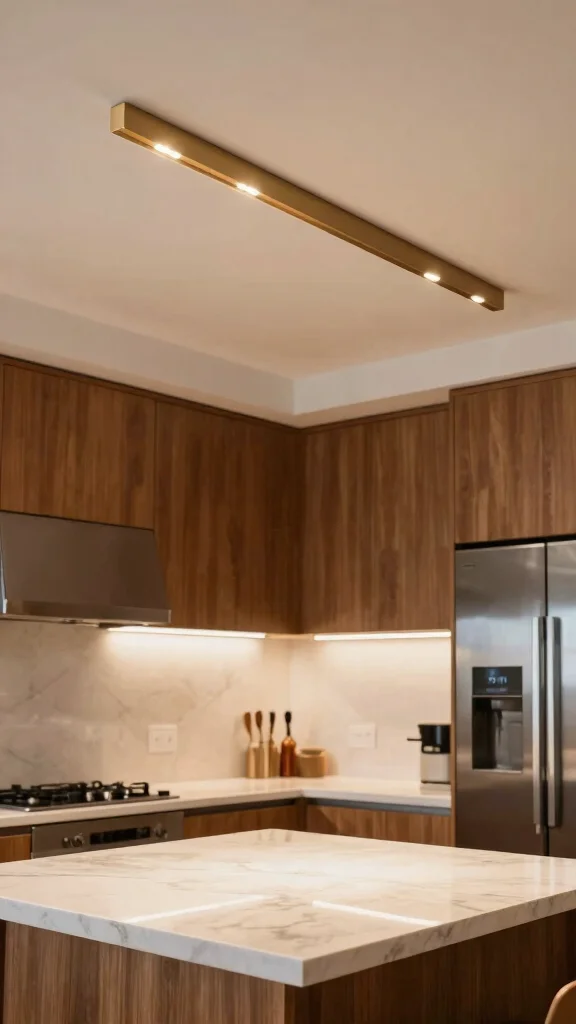
Enhance your recessed lighting with decorative trim that adds a stylish flair to your kitchen. Instead of standard covers, consider trims in finishes like bronze or brushed nickel, or opt for unique geometric designs that complement your overall aesthetic. This small change can make a big impact on your kitchen decor.
By choosing decorative trim, you introduce personality to your lighting fixtures, and you can enhance or soften the light output depending on your selection. With various designs available, you can easily find options that suit your preferred style.
Consider these benefits of decorative trim:
– Add a unique touch to your lighting features.
– Modify light output for a softer effect.
– Choose from various styles to fit any theme.
Decorative trim seamlessly ties your lighting to the overall kitchen theme, ensuring a cohesive and polished look throughout the space.
7. Highlighting Architectural Features
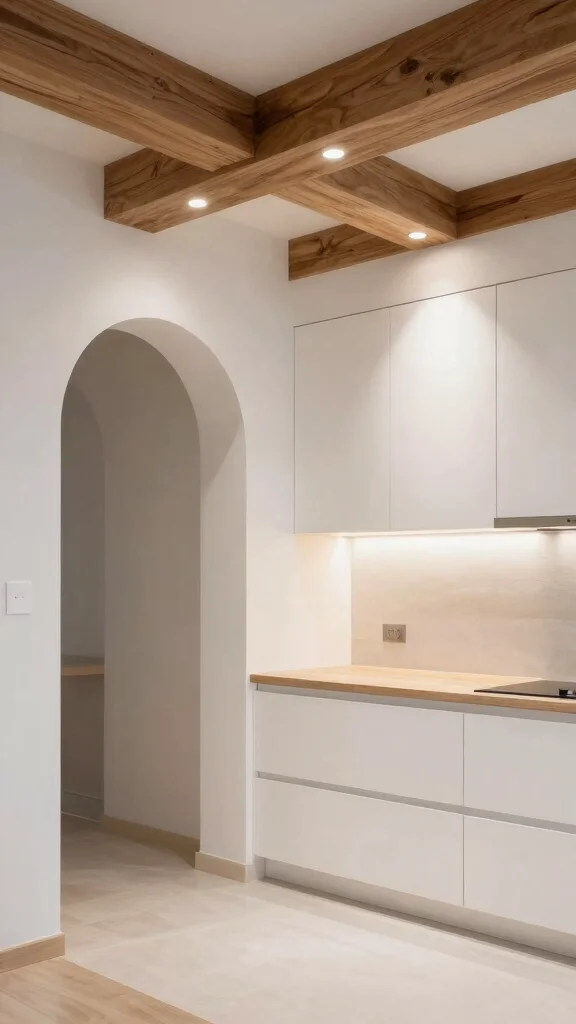
Recessed lighting is a fantastic way to accentuate architectural features in your kitchen, such as beams, arches, or built-in shelving. By strategically placing lights, you can create visual interest that enhances your kitchen’s overall design and makes it feel more personalized.
For maximum effect, position lights to create shadows and highlights that draw the eye to these special elements. Adjustable recessed lights are ideal for focusing on specific features, and integrating them with other lighting types can create a rich, layered look.
Here are some insights to consider:
– Create shadows and highlights for dramatic effects.
– Use adjustable lights to focus on specific features.
– Combine with other light sources for added depth.
Highlighting architectural elements not only adds character but also elevates your kitchen’s elegance, transforming it into a more aesthetically pleasing space.
8. Hidden Recessed Lighting
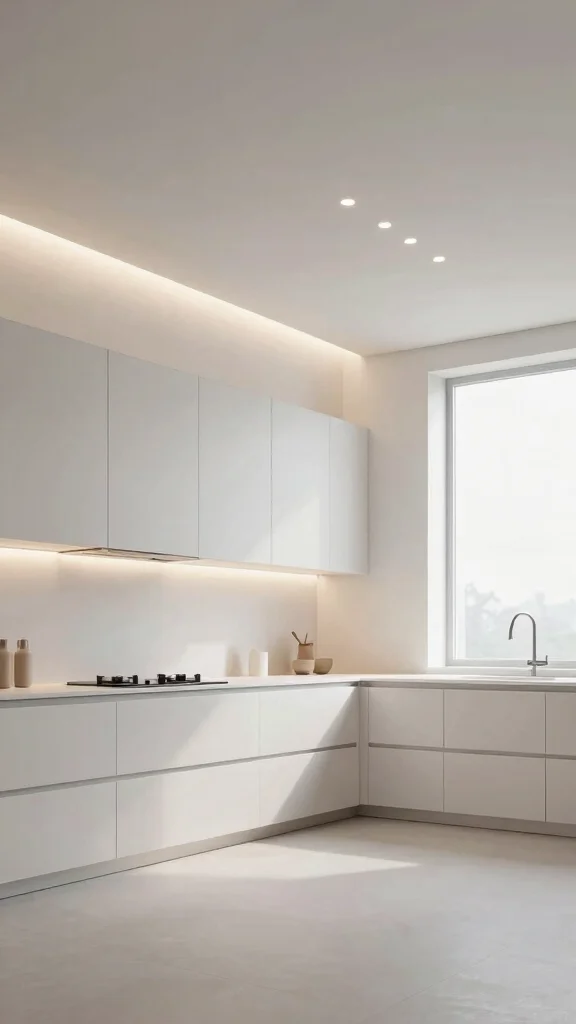
Opt for hidden recessed lighting to achieve a sleek, unobtrusive look that seamlessly integrates with your kitchen design. This layout involves installing lights in coves, along edges, or in ceilings, providing soft illumination without being visible. The hidden effect fosters a sophisticated ambiance, making your kitchen feel more spacious and airy.
Hidden recessed lighting is perfect for a minimalist aesthetic, as it reduces clutter by keeping fixtures out of sight. The soft glow creates a calming atmosphere that enhances the overall experience in your kitchen.
Consider these advantages of hidden lighting:
– Achieve a clean and minimalist design.
– Keep fixtures concealed for a tidy appearance.
– Generate a soft glow that enhances ambiance.
This approach is ideal for modern kitchens that prioritize sleek lines and simplicity, resulting in a luxurious feel that is truly inviting.
❝ Hidden recessed lighting in a kitchen recessed lighting layout delivers a sleek, unobtrusive glow you feel more than you see. It keeps fixtures out of sight, expands space, and suits minimalist aesthetics—soft illumination that elevates the room without clutter. ❞
9. Creative Patterns
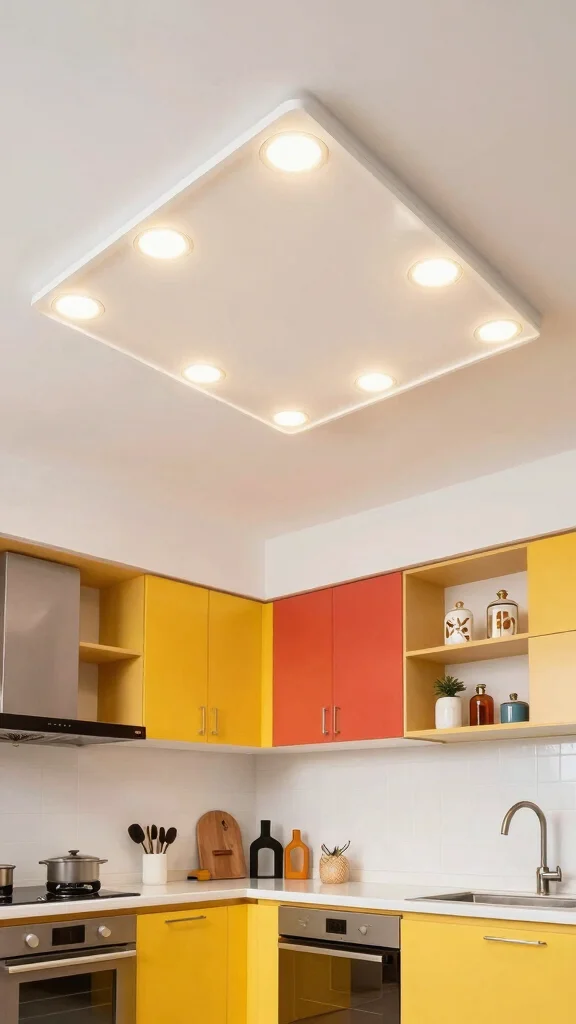
Make a bold statement with your recessed lighting by experimenting with creative patterns and layouts. Rather than the conventional rows, consider arranging lights in unique shapes or configurations that suit your kitchen’s layout. This creative strategy can reflect your personality and add visual interest to the space.
For a successful creative layout, explore geometric patterns that echo your kitchen’s elements. Varying light heights can introduce additional dimension, and pairing with statement chandeliers or pendant lights can create a harmonious balance.
Here are some tips for a creative layout:
– Explore geometric patterns that resonate with your kitchen design.
– Vary light heights to create visual intrigue.
– Pair with standout fixtures for cohesive harmony.
Creative recessed lighting layouts can turn your kitchen from ordinary to extraordinary, making it a true reflection of your personal style.
10. Pendant Light Integration
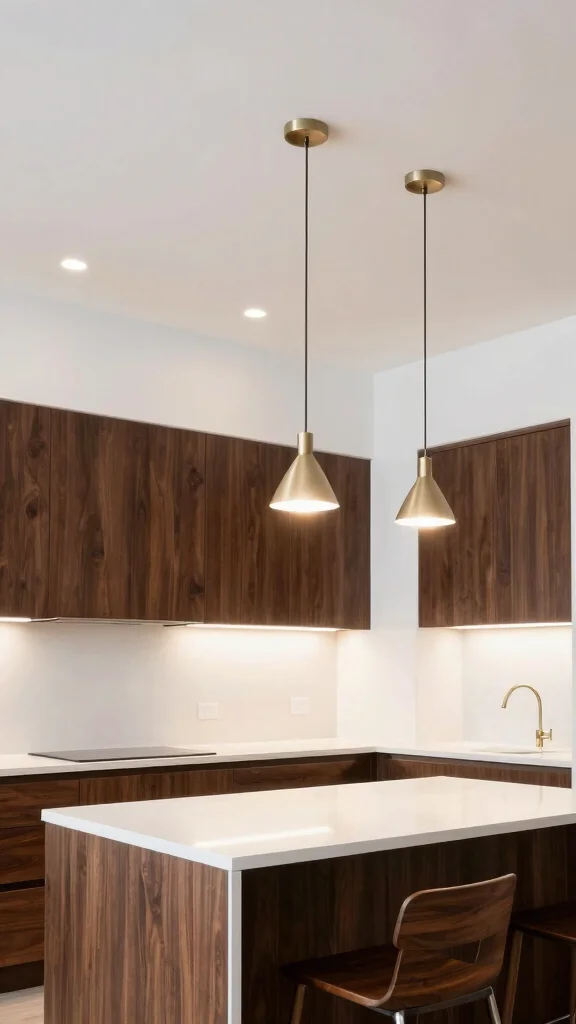
Integrate recessed lighting with pendant lights for a multi-dimensional lighting experience in your kitchen. This combination enhances both functionality and aesthetic appeal, providing focused task lighting while maintaining ambient illumination. Position recessed lights around pendant fixtures to enhance their beauty and ensure that task areas remain well-lit.
When designing this integration, choose pendant lights that complement your recessed fixtures for a cohesive look. Experimenting with different heights can create visual interest, and using dimmers allows you to manage the overall ambiance effectively.
Here are some design tips to consider:
– Select pendants that harmonize with recessed lights.
– Vary heights for added depth and character.
– Use dimmers to fine-tune the kitchen’s atmosphere.
This strategy not only enhances lighting functionality but also enriches your kitchen’s aesthetic, making it a perfect space for gatherings and entertaining.
11. Smart Lighting Solutions
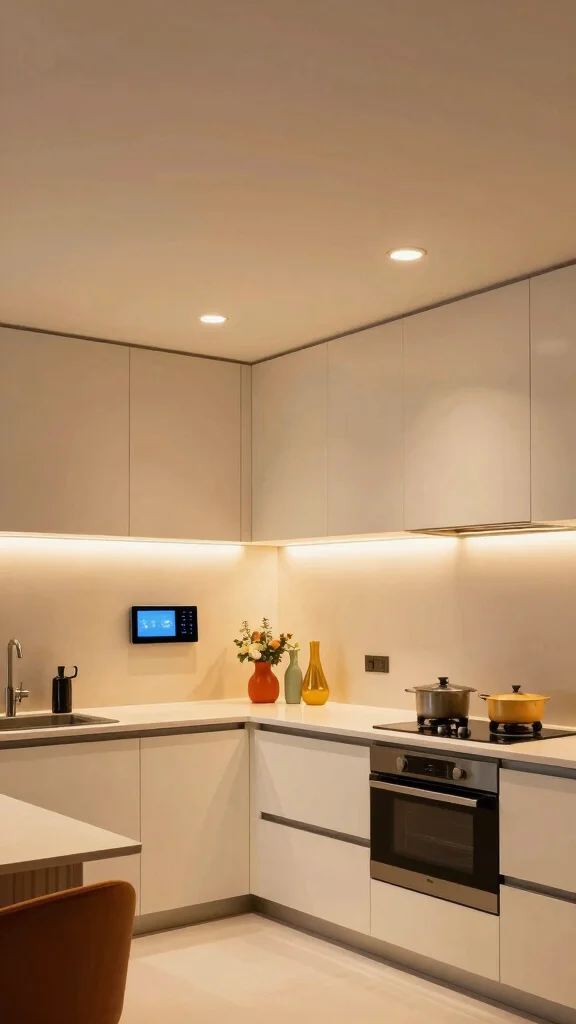
Embrace modernity with smart recessed lighting solutions that offer control over your kitchen’s ambiance. These innovative lights can be programmed to adjust brightness and color temperature throughout the day, enhancing convenience and allowing you to create the ideal atmosphere for cooking, dining, or entertaining.
For optimal results, look for systems compatible with home assistants for easy voice control. Experiment with pre-set scenes tailored to your activities, and schedule your lights to follow your daily routine.
Here are some smart tips to leverage:
– Choose systems that work with home assistants for easy control.
– Create pre-set scenes for various activities.
– Schedule lights to sync with your daily routine.
Smart lighting adds a touch of technological sophistication to your kitchen while granting you flexibility and control over your environment.
12. Energy-Efficient Choices
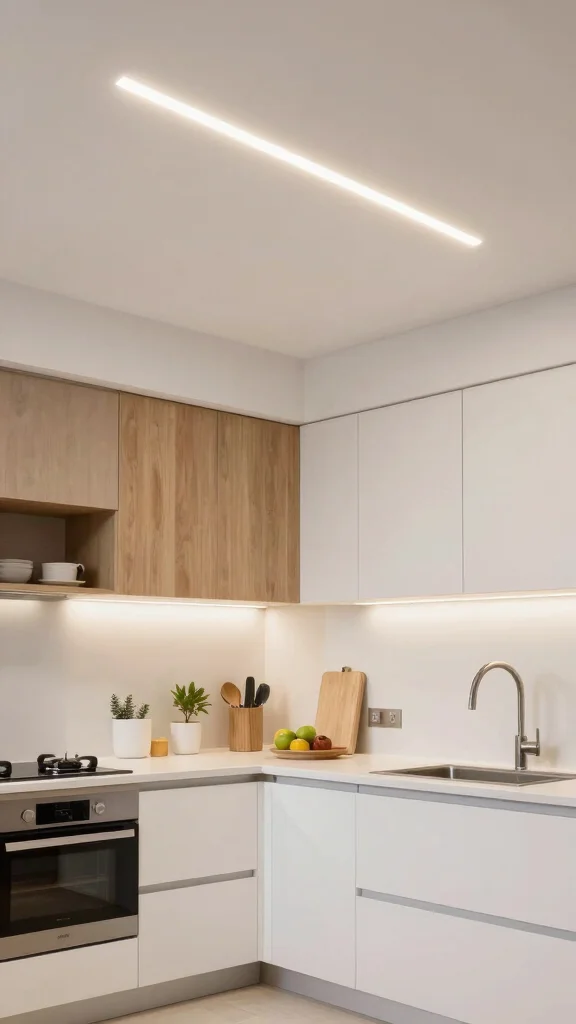
Consider energy-efficient recessed lighting options that deliver stunning illumination without high energy costs. LED recessed lights are an excellent choice, offering durability and longevity while consuming less energy than traditional bulbs. They come in various styles and brightness levels, allowing you to customize your kitchen lighting to fit your needs.
By choosing energy-efficient options, you can significantly lower your energy costs over time and reduce your environmental impact. Plus, their longer lifespan means you’ll spend less time replacing bulbs.
Here are some benefits of energy-efficient lighting:
– Lower energy bills over time for a budget-friendly choice.
– Reduced environmental footprint for sustainability.
– Longer lifespan means fewer replacements needed.
Choosing energy-efficient lighting not only enhances sustainability but also ensures your kitchen remains bright and functional without straining your wallet.
13. Dimmer Switch Installation
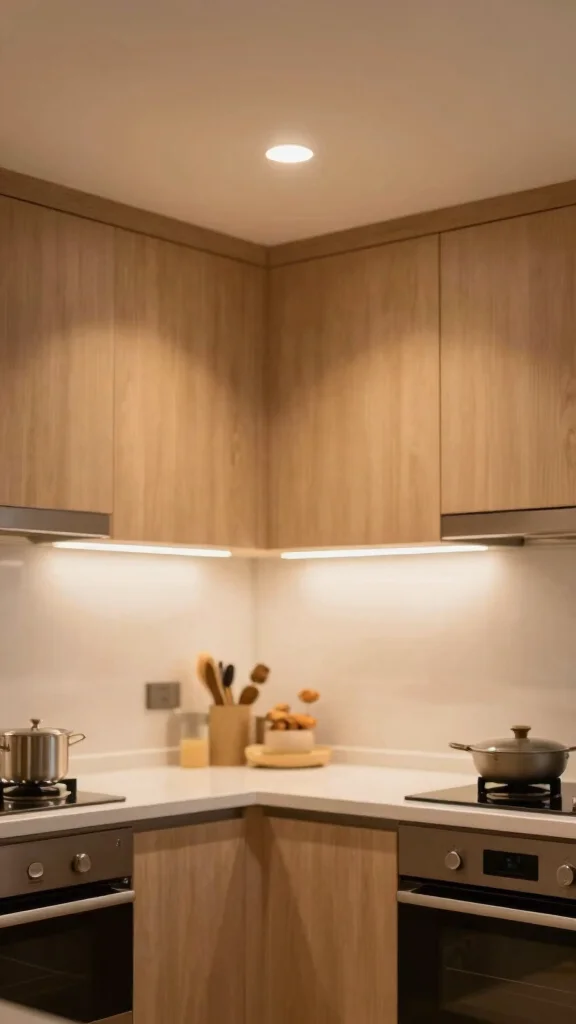
Enhance your kitchen’s versatility by installing dimmer switches for your recessed lighting. Dimmers enable you to adjust brightness based on the time of day or activity, creating an inviting environment for everything from dinner parties to quiet meals. This simple adjustment can significantly transform your kitchen experience.
When installing dimmers, ensure your recessed lights are compatible, and consider multi-zone dimmers for controlling different areas separately. Incorporating smart dimmers can add an extra layer of convenience.
Here are some installation tips to maximize effectiveness:
– Verify compatibility with your recessed lighting.
– Explore multi-zone options for tailored control.
– Consider smart dimmers for modern convenience.
Adding dimmer switches provides flexibility and enhances both functionality and mood, making your kitchen feel dynamic and adaptable.
Fun fact: With dimmer switches, you can switch between 3 brightness levels in seconds—low for cozy dinners, medium for prep, high for cleanup. In a kitchen recessed lighting layout, this tiny tweak unlocks big versatility.
14. Task-Oriented Lighting
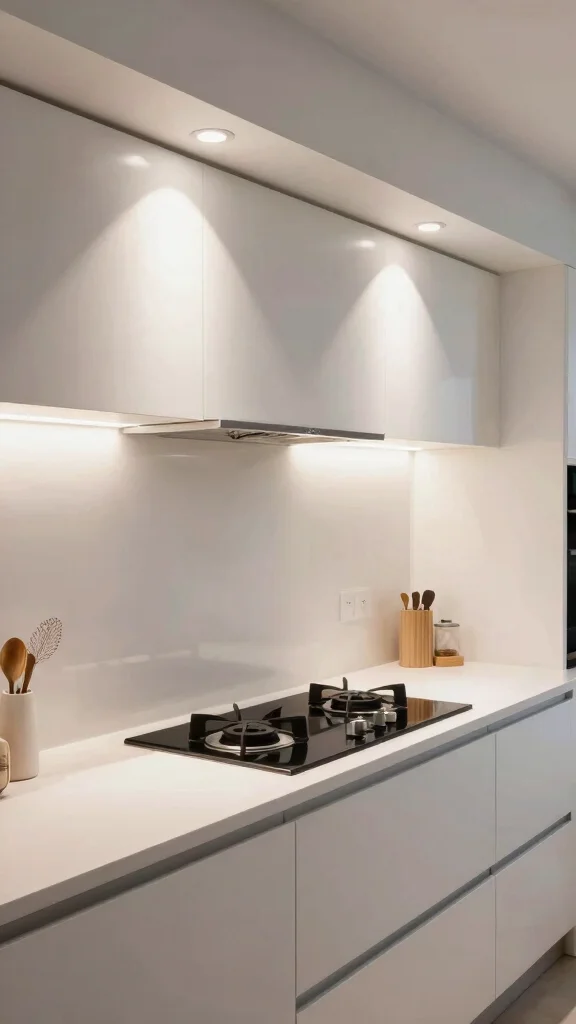
Focus on task-oriented lighting with strategically positioned recessed lights that ensure maximum utility in your kitchen. This arrangement guarantees that essential workspaces like countertops, sinks, and stoves are well-lit, enhancing the cooking and preparation process. Task lighting is crucial for a functional kitchen design, making it easier for you to chop, measure, and cook.
By prioritizing task-oriented lighting, you reduce the risk of accidents and improve visibility for cooking and preparation tasks. This thoughtful approach creates a more functional and enjoyable cooking environment.
Here are some key benefits of task-oriented lighting:
– Minimizes the risk of accidents in the kitchen.
– Boosts visibility for cooking and prep tasks.
– Creates a more enjoyable and efficient cooking experience.
Focusing on task-oriented lighting ensures your kitchen is not only beautiful but also practical, making it a joy to work in.
15. Accent Lighting Features
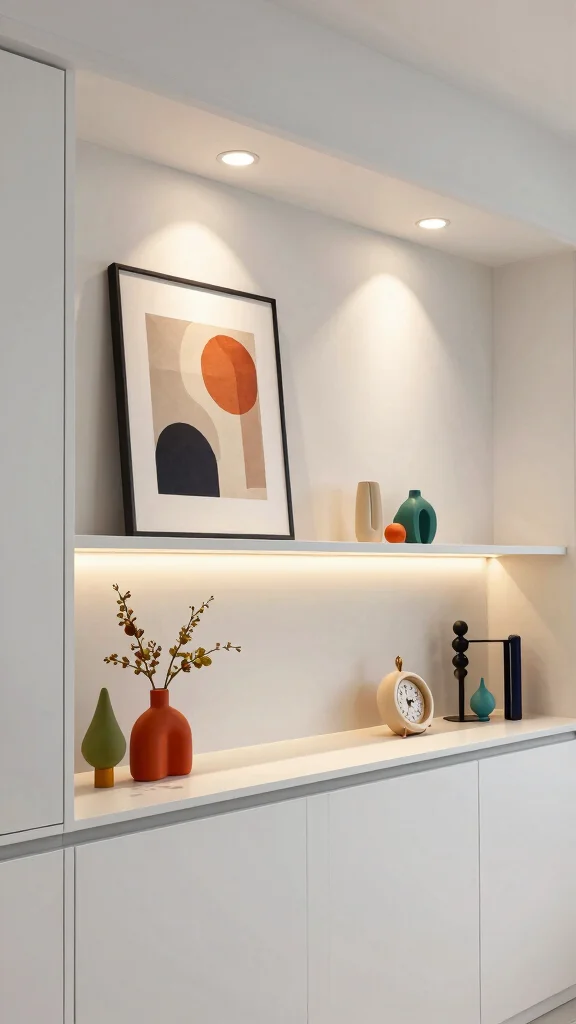
Add depth to your kitchen design with accent lighting features achieved through recessed lights. This technique allows you to highlight specific elements like artwork, shelves, or architectural details, enhancing the visual appeal of your kitchen. Accent lighting creates layers of light that make your space feel more inviting.
To effectively implement accent lighting, use adjustable recessed lights to focus on particular details, and consider pairing with other lighting types for a well-rounded illumination. Colored bulbs can also provide a unique twist for added interest.
Here are some key insights for accent lighting:
– Use adjustable lights to draw attention to key features.
– Combine with other lighting types for a comprehensive look.
– Experiment with colored bulbs for a fresh perspective.
Accent lighting transforms everyday elements into focal points, adding elegance and sophistication to your kitchen design.
16. Flexible Lighting Options
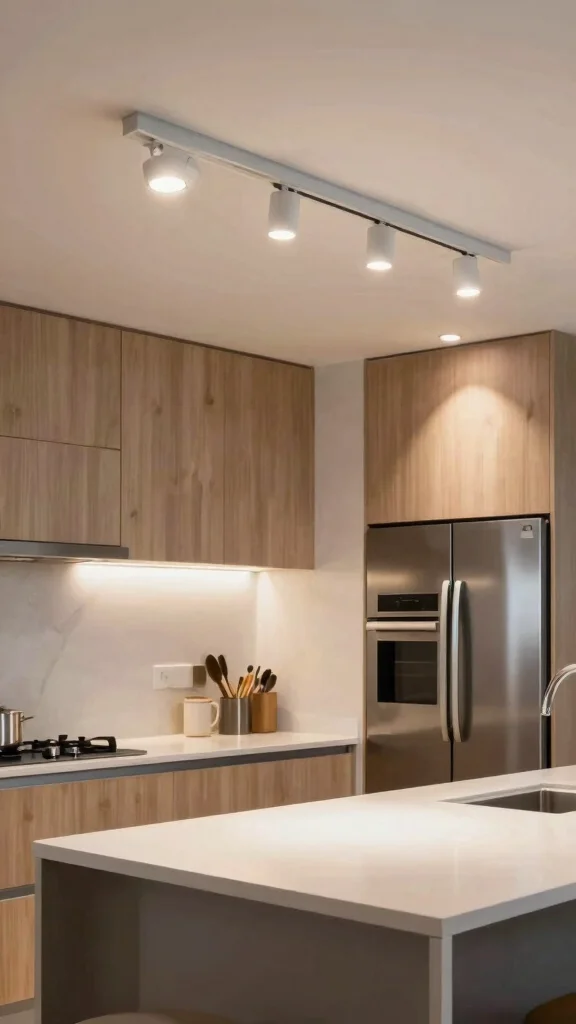
Incorporate flexibility into your kitchen lighting with adjustable recessed fixtures that let you change the direction of the light. This adaptability is ideal for kitchens with diverse layouts, providing focused lighting exactly where you need it most. Adjustable lights can enhance task areas or help create a desired ambiance based on your activities.
With flexible lighting options, you can tailor light direction for specific tasks, making them perfect for multi-functional kitchen spaces. This versatility enhances the overall lighting design of your kitchen, allowing you to create the perfect atmosphere for any occasion.
Consider these benefits of flexible lighting:
– Customize light direction for specific functions.
– Ideal for kitchens with multiple uses.
– Boost the versatility of your lighting setup.
Flexible lighting options empower you to adapt your kitchen lighting to suit any occasion, making your space more functional and enjoyable.
Fun fact: in a kitchen recessed lighting layout, adjustable fixtures let you reframe light in seconds, boosting task visibility by up to 40%. It’s practical: twist the direction for tasks, then soften for ambiance.
17. Combining Styles
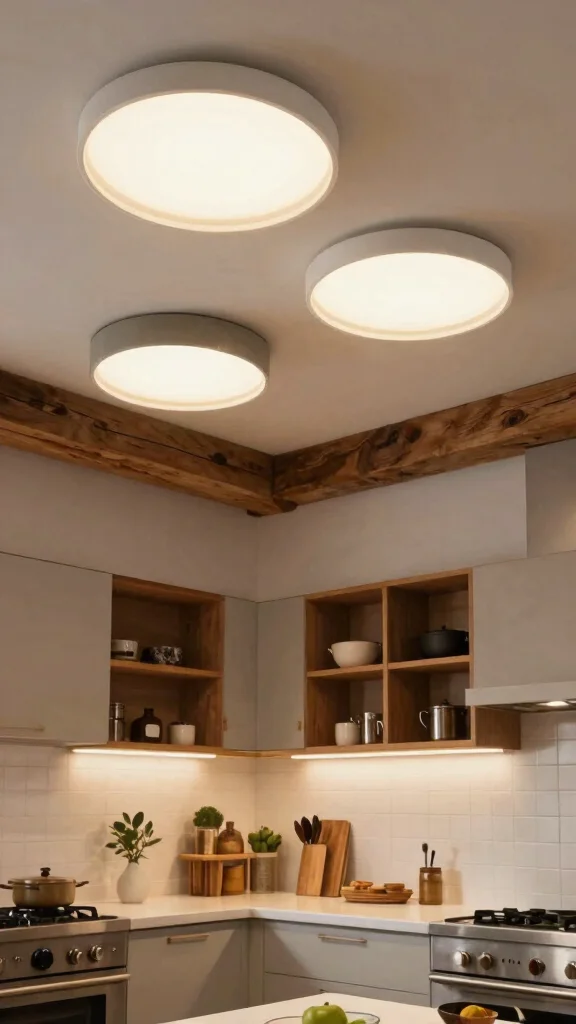
Mix and match different recessed lighting styles to create a unique look that showcases your personality. Whether you lean towards a blend of modern and rustic or prefer a sleek industrial feel, combining styles can result in an eclectic yet harmonious design. Experimenting with various finishes, colors, and shapes can bring unexpected flair to your kitchen.
To effectively combine styles, find common elements to create cohesion, select a dominant style, and let others complement it. Pay attention to height and size differences for added visual interest.
Here are some tips for successfully blending styles:
– Identify common elements for a unified design.
– Choose a dominant style and allow others to enhance it.
– Vary heights and sizes for visual engagement.
This approach not only adds character to your kitchen but also ensures that your lighting enhances the overall design, making it feel more authentic and inviting.
Conclusion
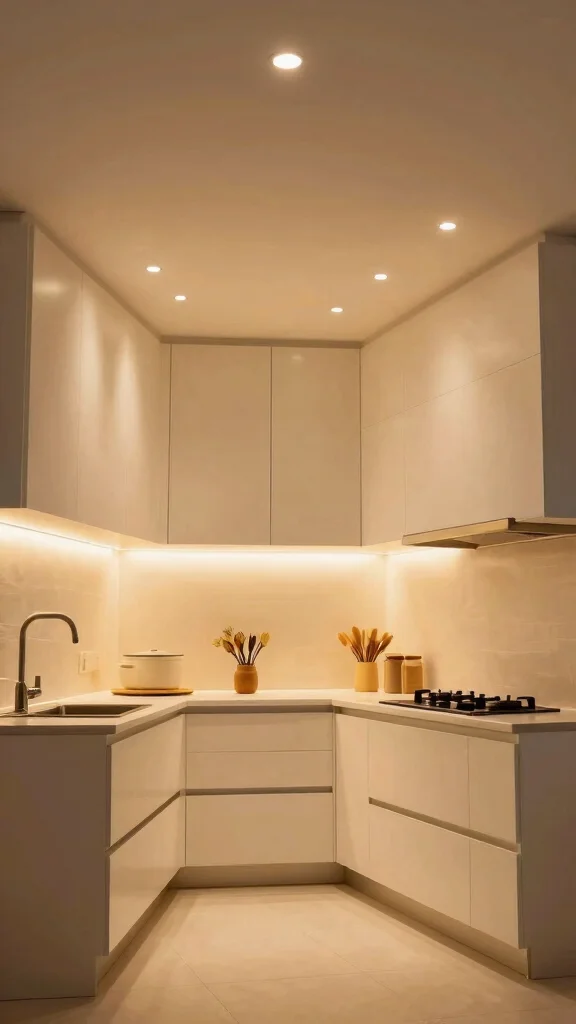
Designing your kitchen lighting layout is key to creating a beautiful and functional space that suits your lifestyle.
From linear patterns to creative combinations, the possibilities are endless. Each idea shared brings its own unique flair, ensuring your kitchen not only looks good but also feels good. Explore these layouts and see how they can transform your modern minimalist kitchen into the heart of your home.
Frequently Asked Questions
What is a great kitchen recessed lighting layout for a modern minimalist kitchen?
For a modern minimalist kitchen, design around three layers: ambient, task, and accent. A practical kitchen recessed lighting layout starts with a clean grid of recessed fixtures that evenly wash the ceiling and walls with light, plus focused task lighting over counters and the island.
Space fixtures about 4–6 feet apart in a grid that follows the room’s footprint, keeping the grid centered over work zones to minimize shadows. Add one or two recessed lights centered over the island if you have an island, and use dimmable LEDs so you can dial in brightness. This aligns with kitchen recessed lighting layout, kitchen lighting design, and ambient kitchen lighting goals in a modern kitchen decor.
How many recessed lights do I need for my kitchen and where should they go?
To estimate how many recessed lights you need, start with a practical zoning plan: divide the room into roughly 4×4 ft zones and place one recessed light in each zone for even ambient coverage.
For islands or long counters, add 1–2 recessed lights over the surface, centered along its length, to keep the work area bright. Place fixtures about 12–18 inches from cabinet fronts to minimize glare and shadows on glossy countertops, and round out the plan with dimmable LEDs so you can adjust brightness as needed.
This approach follows smart lighting layout tips and helps you achieve a cohesive kitchen recessed lighting layout that matches kitchen lighting design and modern kitchen decor.
What color temperature and brightness should I choose for kitchen recessed lighting in a modern kitchen decor?
When choosing color temperature and brightness for a modern kitchen decor, pick a balance between warmth and clarity.
For ambient lighting, 3000K–3500K creates a welcoming feel that still reads colors well, while task areas like the countertops benefit from 4000K or brighter. For brightness, use dimmable LED cans: roughly 600–800 lumens per light for islands or major work zones, and 400–600 lumens for perimeter ambient fixtures.
Keep a consistent color temperature across fixtures to maintain a cohesive modern kitchen decor and use dimmers to fine-tune ambient kitchen lighting and lighting layout tips.
What are common mistakes to avoid in kitchen recessed lighting layout planning?
Common mistakes to avoid include overlighting or underlighting, which create harsh shadows or dim corners.
Another trap is skipping dimmers or mismatching color temperatures across fixtures, which breaks the clean minimalist look. Don’t forget to plan island lighting and under-cabinet lights, or you risk task areas being poorly lit; and always consider ceiling height and potential future changes to your space.
How can I layer recessed lighting with dimmers to create ambient kitchen lighting?
Layering light with recessed fixtures is about three levels: ambient from the ceiling grid, task lighting over counters, and subtle accent lighting.
Use dimmers or smart controls to create scenes (bright for cooking, dim for casual meals). Keep color temperature consistent across layers for a cohesive kitchen recessed lighting layout and ambient kitchen lighting.
Group fixtures into zones (perimeter vs island) and control them separately to fine-tune the mood while preserving a clean, modern kitchen decor.
Related Topics
home decor
modern kitchen
recessed lighting
lighting design
ambient lighting
minimalist style
kitchen layouts
DIY lighting
easy updates
lighting tips
beginner friendly
trending decor