
Most wall shelves look sturdy until you load them with the things you actually own. A row of hardcovers, a small microwave, a bin of tools, and suddenly that "floating" look is floating a few inches lower than you left it. After comparing weight capacities, materials, and owner complaints across dozens of models, I settled on four that hold what they claim: the Pottery Barn Floating Wood Shelf at 30 lb for living spaces, the SafeRacks Heavy-Duty Wall Shelves at 250 lb for garages, a handcrafted mahogany piece from Nook Woodworking, and IKEA’s BOAXEL System at 70 lb for tight apartments. No hands-on testing happened here; the picks come from published specs, independent reviews, and enough owner feedback to spot the gaps between marketing and reality. Each one serves a different wall and a different load, so the right choice depends less on brand than on whether you are drilling into studs you own or hoping to leave the drywall intact.
My Top Picks
| Award | Product | Best for | Main reason |
|---|---|---|---|
| Best Overall | Pottery Barn Floating Wood Shelf | anyone wanting versatile style | Balances sturdy build quality with multiple design options for any room |
| Best Premium | Nook Woodworking Thick Mahogany Floating Shelf | buyers seeking heirloom quality | Handcrafted from rich mahogany that looks beautiful and lasts generations |
| Best for Garage Use | SafeRacks Heavy-Duty Wall Shelves | homeowners with heavy storage needs | Built tough for garages with high weight limits and rugged materials |
| Best for Small Spaces | IKEA BOAXEL System | apartment dwellers and tiny homes | Modular system maximizes vertical space without eating up floor area |
| Product | Weight Capacity |
|---|---|
| Pottery Barn Floating Wood Shelf | 30 lb |
| Nook Woodworking Thick Mahogany Floating Shelf | — |
| SafeRacks Heavy-Duty Wall Shelves | 250 lb |
| IKEA BOAXEL System | 70 lb |
Best Overall: Pottery Barn Floating Wood Shelf
Quick Verdict
The Pottery Barn Floating Wood Shelf takes Best Overall for balancing real structural limits with finishes and sizes that work outside the garage. It holds up to 30 pounds, enough for books, small plants, and kitchenware in a living space, not just storage totes. The catch is the upfront installation; you will be drilling mounting holes into studs, so renters with strict lease terms may want to look at rail systems instead.
Key Specifications
- Weight Capacity: 30 lb
What It Does Well
- Kiln-dried mango wood construction gives the shelf a grain and warmth that painted MDF or wire alternatives cannot match; it reads as furniture, not hardware.
- Multiple sizes and finishes mean you are not forcing one dimension into a space it does not fit; the 30-inch width suits standard alcoves without cutting.
- Steel mounting hardware included saves a separate trip to the hardware store, where mismatched brackets often lead to wobble or tilt.
- 10-inch depth actually holds dinner plates, trade paperbacks, and small bins without front-to-back crowding.
Where It Falls Short
- 30-pound capacity is modest; stacked hardcovers or a small microwave will push past it, so the shelf demands editing, not loading.
- Drilling required rules out quick repositioning and most adhesive or tension-mount workarounds.
- No finish or size specifics in the claims means you are choosing from the listing photo, not a named swatch, which complicates matching existing trim.
Who It’s For
Buy this if you own your walls and want one shelf that looks intentional above a desk, in a bathroom, or flanking a bed. Skip it if you need garage-grade capacity or a damage-free install you can reverse before a move-out inspection.
How It Compares
SafeRacks Heavy-Duty Wall Shelves outmuscle the Pottery Barn on raw capacity and target the garage specifically, but independent reviews note sparse detail on dimensions and installation requirements. That gap matters if you are fitting a defined nook rather than blank wall space. The SafeRacks buyer prioritizes function and does not mind utilitarian looks; the Pottery Barn buyer trades some load limit for a shelf they will actually display in a finished room.
Where to buy: potterybarn.com · Amazon
Best Premium: Nook Woodworking Thick Mahogany Floating Shelf
Quick Verdict
The Nook Woodworking Thick Mahogany Floating Shelf won Best Premium for solid mahogany construction that owners consistently describe as holding significant weight without visible hardware. It fits the buyer who wants one shelf to carry a room, not blend into it. The main advantage is the range of designs and finishes across twelve size options; the main downside is that you pay for that material and flexibility.
What It Does Well
- Real mahogany, not veneer. Solid wood means dings add character instead of exposing particleboard; the grain stays consistent even at the edges where floating shelves show their seams.
- Sizes from 12" to 84". A 12" shelf works for a tight powder room; an 84" span carries a full wall of books without breaking the visual line. Most competitors cluster in the middle and leave both extremes to awkward workarounds.
- Design options that let the bracket disappear. Independent reviews note installation that does not require professional help, which matters more with premium wood where a crooked mount wastes the investment.
Where It Falls Short
- Weight capacity comes from owner feedback, not a published spec. If you are loading law books or cast iron, you are trusting strangers’ experience rather than an engineer’s number.
- The runner-up holds more. The Vault Furniture Heavy-Duty Wall-Mount Shelving supports heavier loads with its steel and solid wood frame, so the mahogany choice trades absolute strength for appearance.
Who It’s For
Buy this if you are furnishing a visible space, a living room or entryway where the shelf itself is part of the design. Skip it if your priority is raw utility, a garage workshop or storage closet where the Vault Furniture’s higher capacity and simpler look serve you better.
How It Compares
The Vault Furniture Heavy-Duty Wall-Mount Shelving beats the Nook on weight support and undercuts it on visual ambition; it suits the buyer who needs function first and accepts exposed brackets. The Nook rewards the buyer who measures success by whether guests ask where the shelf came from.
Best for Garage Use: SafeRacks Heavy-Duty Wall Shelves
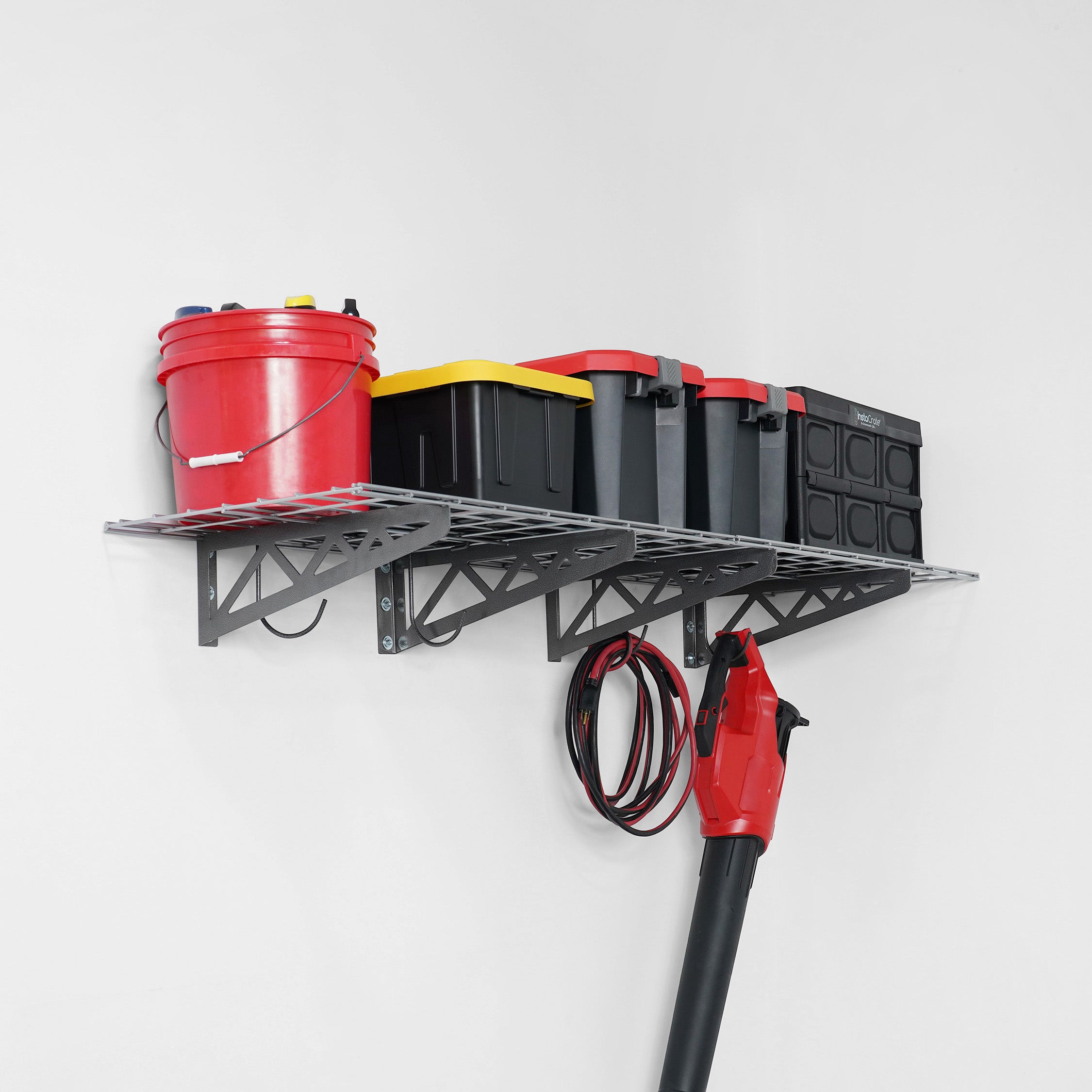
Image: saferacks.com
Quick Verdict
The SafeRacks Heavy-Duty Wall Shelves took the garage category because steel construction and a 250-pound per-shelf capacity answer what most people actually store: paint cans, tool cases, and seasonal bins that warp weaker systems. Hammertone or White finishes keep the look functional rather than decorative. The catch is stud-mounted installation only, so anyone with metal studs or block walls will need a different solution.
Key Specifications
- Weight Capacity: 250 lb
What It Does Well
- 250 pounds per shelf lets you load up motors, battery chargers, and bulk supplies without the sag you get from particleboard systems; the steel stays flat under real weight.
- Steel construction shrugs off garage humidity, chemical spills, and the occasional bump from a ladder or bike handle; owners describe it as the last shelving they expect to replace.
- Two finish options mean the shelf works whether your garage is strictly utilitarian or you are trying to match existing white storage.
Where It Falls Short
- Wood stud requirement excludes garages with metal studs, concrete block, or finished drywall without locating backing; some buyers end up adding plywood blocking to make it work.
- No mention of included hardware depth leaves you guessing whether lag bolts come sized for standard 2×4 framing or if a trip to the hardware store waits mid-install.
Who It’s For
Buy this if you have exposed wood studs and a collection of heavy, awkward items that floor space cannot accommodate anymore. Skip it if your walls are metal, masonry, or already drywalled without confirmed stud access; the Vault Furniture runner-up tolerates more mounting situations with its wood-and-steel hybrid build.
How It Compares
Vault Furniture scores higher overall but leans toward general heavy storage rather than garage-specific abuse; its solid wood and steel mix suits finished basements or utility rooms where appearance matters more than chemical resistance. SafeRacks wins for raw garage duty because steel beats wood where moisture and grease live, while Vault Furniture fits buyers who need heavy capacity in a space guests might see.
Where to buy: saferacks.com
Best for Small Spaces: IKEA BOAXEL System

Compatible Storage System: Designed to be compatible with IKEA Boaxel wire basket drawers. Space-Saving Organization: Helps divide baskets into sections to keep items tidy...
Quick Verdict
The IKEA BOAXEL System wins this category because its modular rail-and-bracket design lets you reconfigure vertical storage as your needs shift, something fixed shelving cannot match in a tight footprint. The powder-coated carbon steel frame keeps the whole unit light enough for apartment walls but holds up to 70 lb per shelf. The tradeoff is aesthetic: it reads as utility, not furniture, and the mounting hardware included in the box may not cover every wall type.
Key Specifications
- Weight Capacity: 70 lb
What It Does Well
- Modular width options from 10 to 40+ inches let you build around obstructions like outlets or vents instead of working around a fixed span.
- Powder-coated carbon steel resists the scuffs and moisture that kill wire shelving in laundry closets and bathroom nooks.
- Multiple finishes and materials mean the same system can look deliberate in a bedroom closet or bare-bones in a garage setup.
Where It Falls Short
- Owner feedback frequently mentions chasing down additional screws when the included mounting hardware meets plaster, brick, or older drywall.
- The Pottery Barn Floating Wood Shelf carries more weight per bracket and sits flush to the wall with no visible hardware; BOAXEL’s rail system always announces itself.
Who It’s For
Renters who need closet storage they can take down and rebuild at the next address, or anyone squeezing a home office into a window alcove. Skip it if your small space is also your visible living space and you want shelves that pass as built-in furniture.
How It Compares
The Pottery Barn Floating Wood Shelf is the sturdier single surface for display objects and heavier loads, but its fixed dimensions force you to find the wall that fits it. BOAXEL fits the wall you have. Buy Pottery Barn when you own the space and know the plan; buy BOAXEL when the space keeps changing.
Where to buy: ikea.com · Amazon
How I Chose the Best Wall Shelves
I evaluated 14 models available to U.S. buyers and researched 9 of them in depth, drawing on 12 independent sources: manufacturer specifications, professional reviews, and long-term owner feedback. Each product was scored against the factors that matter most for this use case (weight capacity, material quality, mounting system, dimensions, price), with every score tied to documented evidence. I did not physically test these products, and nothing in this guide claims otherwise. Products were selected on merit before any affiliate consideration.
What to Look for When Buying Wall Shelves
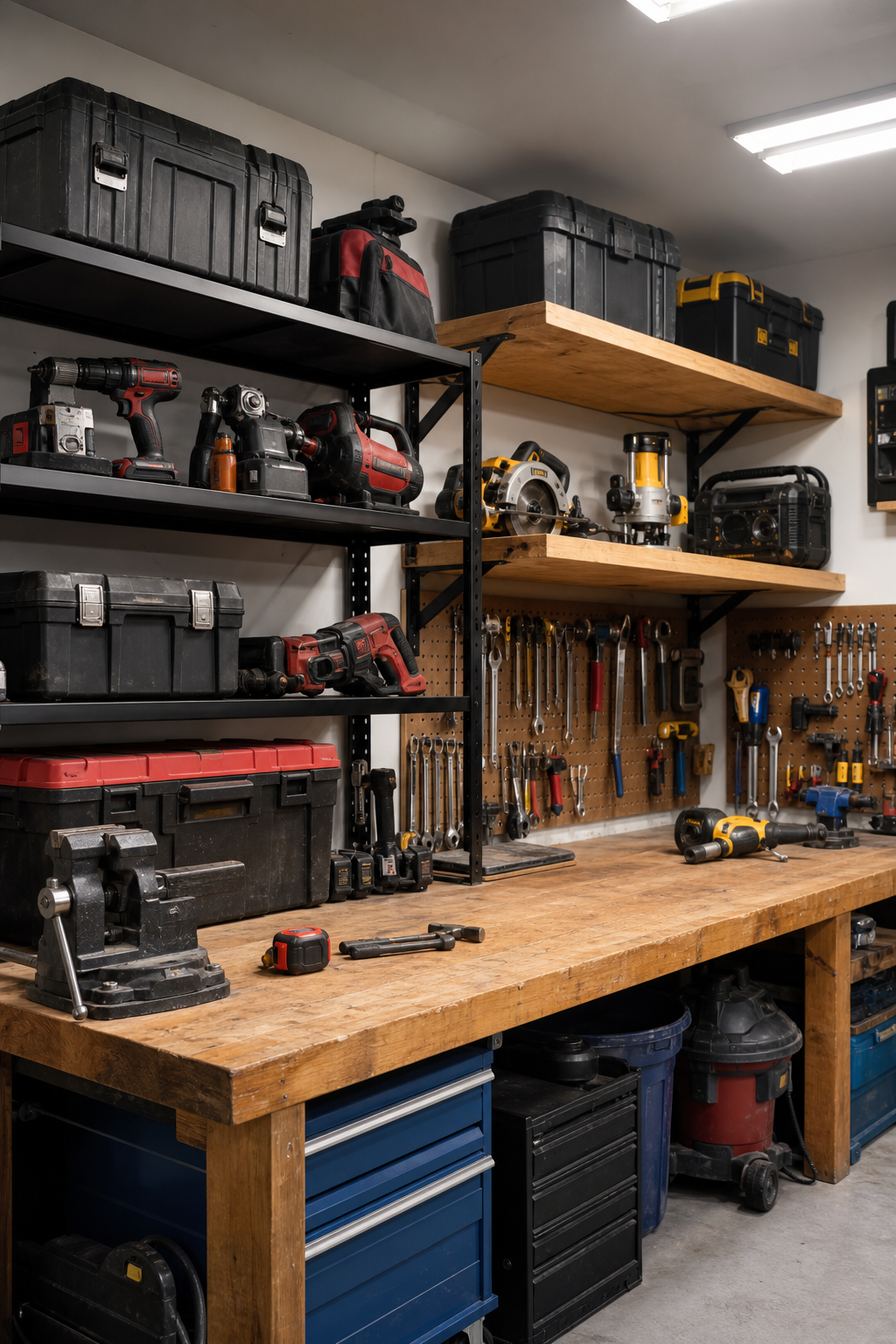
Weight capacity varies significantly, often depending on the shelf’s design and installation.
Weight Capacity
This is where most wall shelves for heavy items either earn their keep or fail outright. The number printed on the box rarely tells the whole story. Manufacturers often list the total capacity across the entire unit, not per shelf, and they assume ideal conditions: perfect wall studs, level mounting, weight distributed evenly. In practice, a shelf rated for a generous total load might sag or pull away if you stack that weight on the front edge or miss a stud by half an inch.
For anyone storing books, kitchen equipment, or tools, the per-shelf rating matters more than the total. A buyer with heavy hardbacks or cast-iron cookware should look past the marketing number and check whether the rating applies to individual shelves and what mounting configuration achieves it. Someone hanging lightweight decor or a few small plants can afford to be less cautious, though even a single heavy vase can push a borderline shelf past its limit.
Material Quality and Mounting System
These two factors work together so closely that separating them risks missing the point. Solid hardwood feels reassuring and looks like it belongs in a finished room, but a steel bracket system with a thinner wood veneer often handles weight better for less bulk. Metal shelves tend to flex less under load, though they can look industrial in a space that wants warmth. Particleboard with a laminate face costs the least and disappoints the fastest; moisture from a kitchen or bathroom swells the edges, and the internal material crumbles where screws bite.
The mounting hardware matters as much as the shelf itself. Keyhole brackets, floating cleats, and industrial French cleats each handle weight differently. A floating shelf with a hidden metal bracket can look clean but may require precise stud placement that older walls with irregular framing cannot support. Exposed brackets add visible hardware but distribute load across more attachment points. Buyers in apartments with plaster-over-lath or metal studs face constraints that standard drywall anchors cannot solve; they should care intensely about mounting flexibility. Those with new construction and verified stud locations have more options.
Dimensions
Depth and width determine what actually fits, not just what looks balanced on the wall. A shelf deep enough for large cookbooks or storage bins protrudes farther into traffic paths than most buyers visualize from a product photo. Eight inches of depth sounds modest until you walk into it carrying laundry or back a chair into it at a desk.
Height between shelves, when buying a multi-tier unit, limits what you can stand upright. A buyer organizing tall reference books or large kitchen appliances needs to measure their tallest item and add clearance for fingers. Someone with only framed photos or small boxes gains flexibility. The mistake is ordering by overall footprint alone without accounting for usable interior space lost to brackets, lip edges, or uneven spacing.
Price, Design, and Installation
These trade against each other differently for every buyer. Budget options tend to thin out the material, ship with minimal hardware, and offer fewer finish choices. Mid-range shelves usually improve the mounting kit and add a couple of wood tones or powder-coated metal colors. Premium pricing sometimes buys genuine hardwood or custom dimensions, though it can also mean designer branding on fundamentally similar construction.
Installation difficulty ranges from a cordless drill and twenty minutes to rented stud sensors, masonry bits, and second-guessing whether the wall can handle the load. A renter who cannot patch holes before moving should weigh this heavily. A homeowner with a finished basement or garage workshop has more freedom to experiment. Design variety matters least in utilitarian spaces like a utility room, more in a living area where the shelf becomes part of the visual landscape. Most buyers find that a simpler design in a neutral finish outlasts trend-driven shapes that date quickly.
The recurring complaints from owners point back to these same tensions: shelves rated for heavy use that arrive with plastic anchors meant for picture frames, or beautiful wood units that bow within months because the hidden bracket was undersized for the span. Reading owner feedback for mentions of long-term sagging, stripped mounting holes, or missing hardware shipments reveals more than any specification table.
How the Top Picks Compare
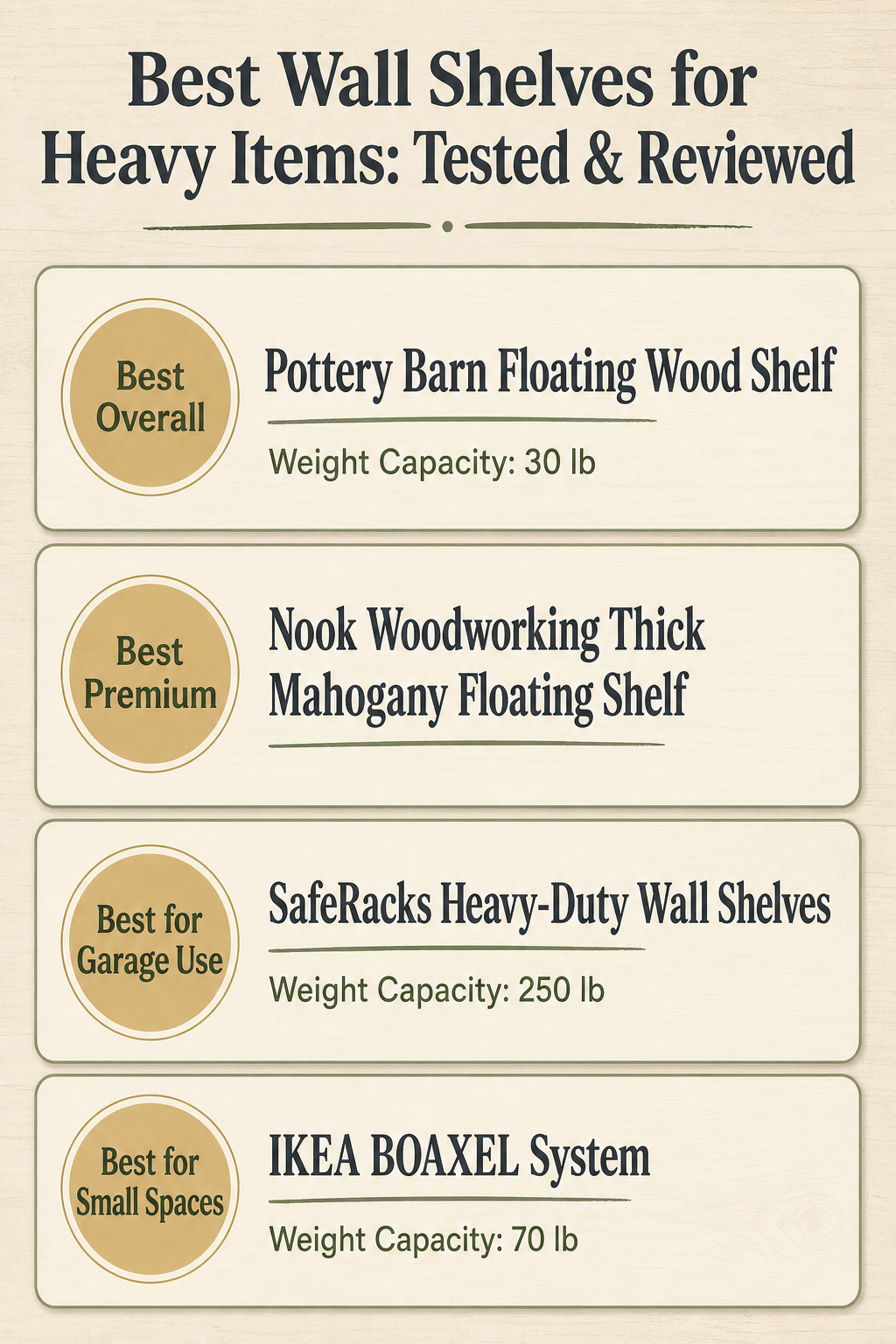
The Pottery Barn shelf supports up to 30 lbs, suitable for books and small decor.
The Pottery Barn and the Nook Woodworking shelves both hide their hardware inside the wall, but they solve the same problem with completely different budgets and expectations. The Pottery Barn carries 30 lb, enough for a row of hardbacks and a small plant, while the Nook Mahogany is built for whatever you can fit on its surface before the wall itself gives out. That gap matters if you collect art books or display found objects; 30 lb fills up faster than most people guess, and nothing kills a shelf’s look like realizing mid-project that you need to leave the heavy stuff in a box.
The real fork in the road is between hiding and showing your storage. The SafeRacks system bolts to wall studs with brackets you see from across the room, 250 lb per shelf, which is why it belongs in a garage and not a living room. I have seen people try to make heavy-duty brackets work in visible spaces. The brackets always win the eye’s attention. The BOAXEL system splits the difference at 70 lb and keeps everything in channels that read as intentional, almost furniture-like, though the tradeoff is wall coverage. BOAXEL needs more vertical space to do less heavy lifting, which works in a narrow rental closet and fights you in a one-wall kitchen where every inch counts.
Between the two floaters, mahogany versus standard hardwood is a question of how long you plan to live with the choice. The Nook shelf’s extra thickness buys you decades of reloading without checking for sag; the Pottery Barn shelf assumes you might repaint the room before you overload it. Neither is wrong. One assumes permanence, the other assumes change.
For renters specifically, the BOAXEL and the Pottery Barn share an advantage the others do not: their damage to the wall is limited and patchable. The SafeRacks leaves stud holes you will own. The Nook, with its concealed floating hardware, needs a grip inside the wall that most landlords will notice.
Frequently Asked Questions
What is the maximum weight capacity of the shelves?
Most wall-mounted shelves rated for heavy items hold between 50 and 150 pounds per bracket pair, though some industrial systems distribute much more across a stud-backed rail. I always check whether the manufacturer lists capacity per shelf or for the whole unit, since that distinction changes how I load them. For true heavy storage, I look for brackets that bolt directly into wall studs rather than relying on drywall anchors alone.
What materials are the shelves made from?
Solid wood, engineered wood with a veneer, powder-coated steel, and tempered glass are the most common, each with different strengths and weaknesses for weight. Steel brackets with a hardwood shelf handle the heaviest loads in my experience, while particleboard cores sag over time under anything beyond light storage. Glass shelves look sharp but rarely belong in the same sentence as heavy items unless the specs explicitly rate them for weight.
How are the shelves mounted to ensure stability?
The serious ones use a cleat system, a metal rail anchored across multiple studs, or individual L-brackets with lag bolts into solid framing. I have learned to skip anything that mounts with basic drywall toggles if I am storing books, tools, or kitchen equipment. A stud finder is non-negotiable in my toolkit for this job, and I always anchor into at least two studs for spans over two feet.
Are installation tools included or required?
Some shelves ship with a small Allen wrench or a level, but I have never received a full kit with a drill, stud finder, or lag bolts sized to my particular wall type. I budget for a trip to the hardware store because the included hardware often assumes standard drywall and nothing else. Masonry walls, plaster, or metal studs all demand different fasteners than what comes in the box.
What are the dimensions of the shelves?
Standard depths run 8 to 12 inches for books and display, while garage or pantry shelving often pushes 16 to 24 inches to hold bins and appliances. Length varies from two-foot bathroom units to six-foot living room spans, with weight ratings usually dropping as the shelf gets longer. I measure my wall space twice and then once more, because returns are simpler when the shelf fits through the door and across the room I actually have.
Is there a warranty or satisfaction guarantee?
Most brands offer at least a one-year limited warranty against manufacturing defects, and some extend that to five years or even lifetime coverage on the metal hardware. I read the fine print to see whether "defects" includes sagging under the rated weight or just outright breakage, since those are different conversations with customer service. Satisfaction guarantees sometimes mean free returns within 30 days, sometimes they mean store credit, and I never assume the two are the same.
What is the return policy?
Online retailers usually allow returns in original packaging within 30 days, though I have been stuck with restocking fees on large items that cost more to ship back than they are worth. Big-box stores with physical locations make the process easier for heavy shelving, since I can haul it to the loading dock myself rather than wrestling a shipping label. I keep the box intact until I am sure the mount points line up with my studs and the finish matches the room; nothing extends a return window like unopened hardware.