
NewAge’s 18-gauge steel system wins for anyone building out a full garage wall, with modular expansion, bamboo worktops, and LED lighting that actually matters on winter evenings. Skip it if you are renting or working with a single bay; the four-hour assembly and permanent footprint assume you own the space and the time.
The 800-pound lockers and QR-linked videos are real, but so is the price premium that only makes sense when you are adding pieces two years from now rather than starting over.
Husky Freestanding Garage Cabinet
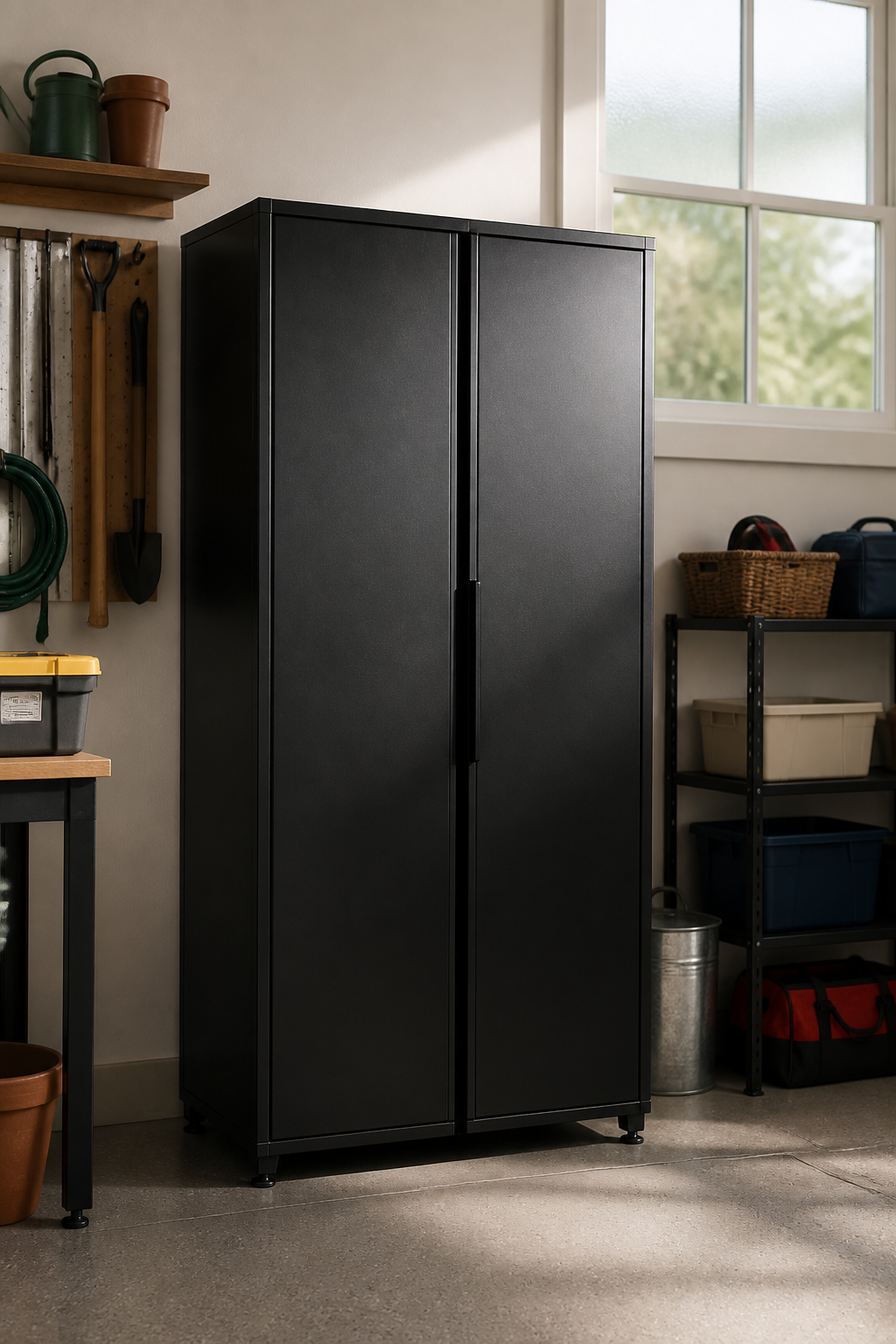
Steel cabinets at 36.6 x 18.3 x 72 inches with a 150-pound-per-shelf limit and magnetic doors sit right where budget meets usable. The Husky Freestanding Garage Cabinet locks, levels from inside with a screwdriver slot, and seals against dust and pests. Assembly came straightforward with stickered pieces, though the finish scratches if you are not careful during build.
Three shelves adjust on metal supports, which helps if you are storing taller garden tools or keeping chargers threaded through the removable cutouts. The leveling feet are plastic, so loading every shelf to its max is asking for trouble.
The shelves on this budget cabinet hold an impressive 150 pounds… The doors stay open when needed and have a magnetic close… Another convenient feature is the ability to level the cabinet from the inside.
That 150 pounds is real but not generous. A homeowner with a full compressor or engine parts should look at welded units instead. For renters and weekend DIYers with hand tools, cleaning supplies, and the occasional power tool, this cabinet keeps the floor clear without anchoring into landlord concrete.
Gladiator GearBox
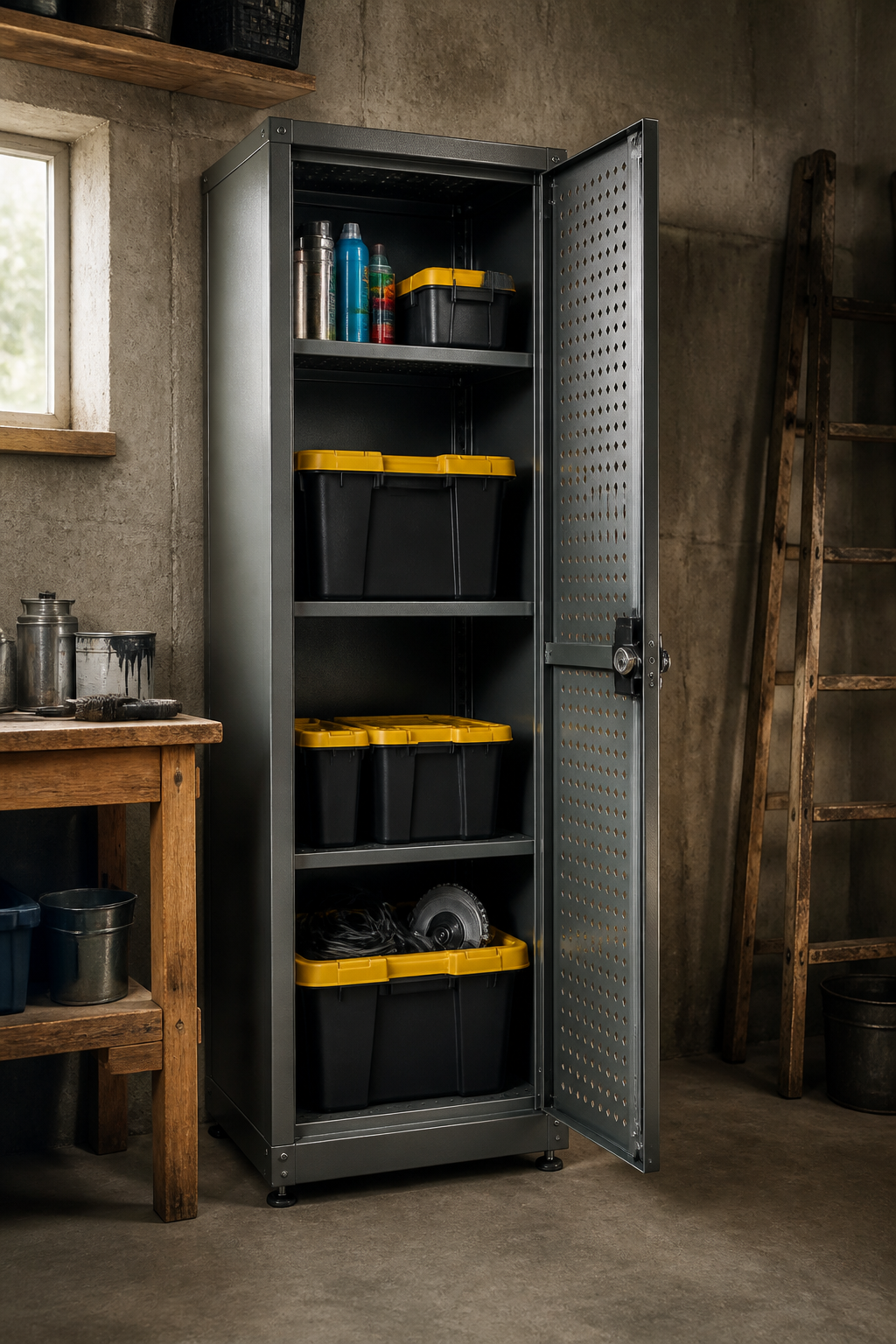
The 36 x 18 x 72 inch Gladiator GearBox arrives fully welded and ready to roll off the truck, which is where its real value lands. Three shelves inside carry 45 pounds each, enough for bins of fasteners, paint cans, or a small compressor, and the doors lock with a three-point system that keeps chemicals or sharp tools away from curious kids.
That 18-inch depth is the tradeoff to clock before buying. Christmas wreaths, bulky camping gear, or anything deeper than a standard tote will fight the doors. For yard tools, automotive supplies, or anything stackable, the cabinet earns its footprint, but anyone storing full-size plastic bins or oversized seasonal decor should look at deeper units in this guide instead.
The steel body and textured finish read garage-native rather than kitchen-cabinet misplaced, and the pre-assembly saves a Saturday that other cabinets would consume with screws and ambiguous diagrams. At roughly $400–$430 depending on retailer, the price runs higher than flat-pack alternatives, but the time returned is hard to fake.
Rubbermaid FastTrack Rail System
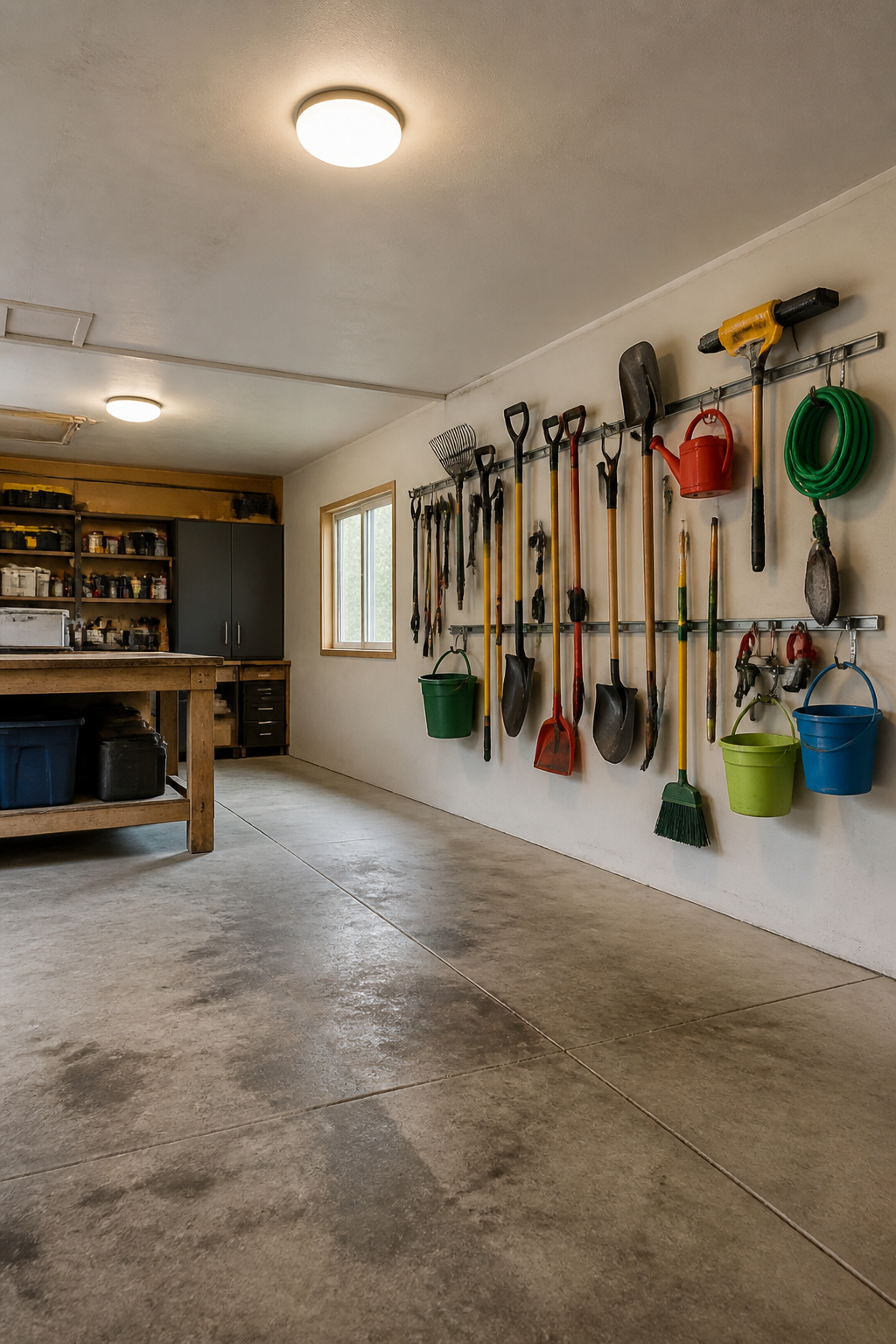
A 48-inch steel rail rated for 1,750 pounds total changes what you can do with a garage wall. The Rubbermaid FastTrack Rail System hangs yard tools, coolers, even bulky cleaning supplies without eating a square foot of floor space, which matters when your garage still has to fit a car.
Installation took about an hour with a drill, marker, and level. The level was not included, so add that to your list or borrow one before you start. Five hook styles come in the box, and the modular design lets you space three rails however your wall allows. I would not call the rails decorative before you load them, they are plain steel, but that stops mattering once the clutter is up and the floor is clear.
The tradeoff is visibility. Everything stays on display, so this system works best for people who want grab-and-go access, not hidden storage. In smaller garages where cabinets or shelves would block walkways, the wall-mounted approach makes more sense than it first appears.
Yukon 9-Drawer Rolling Workbench
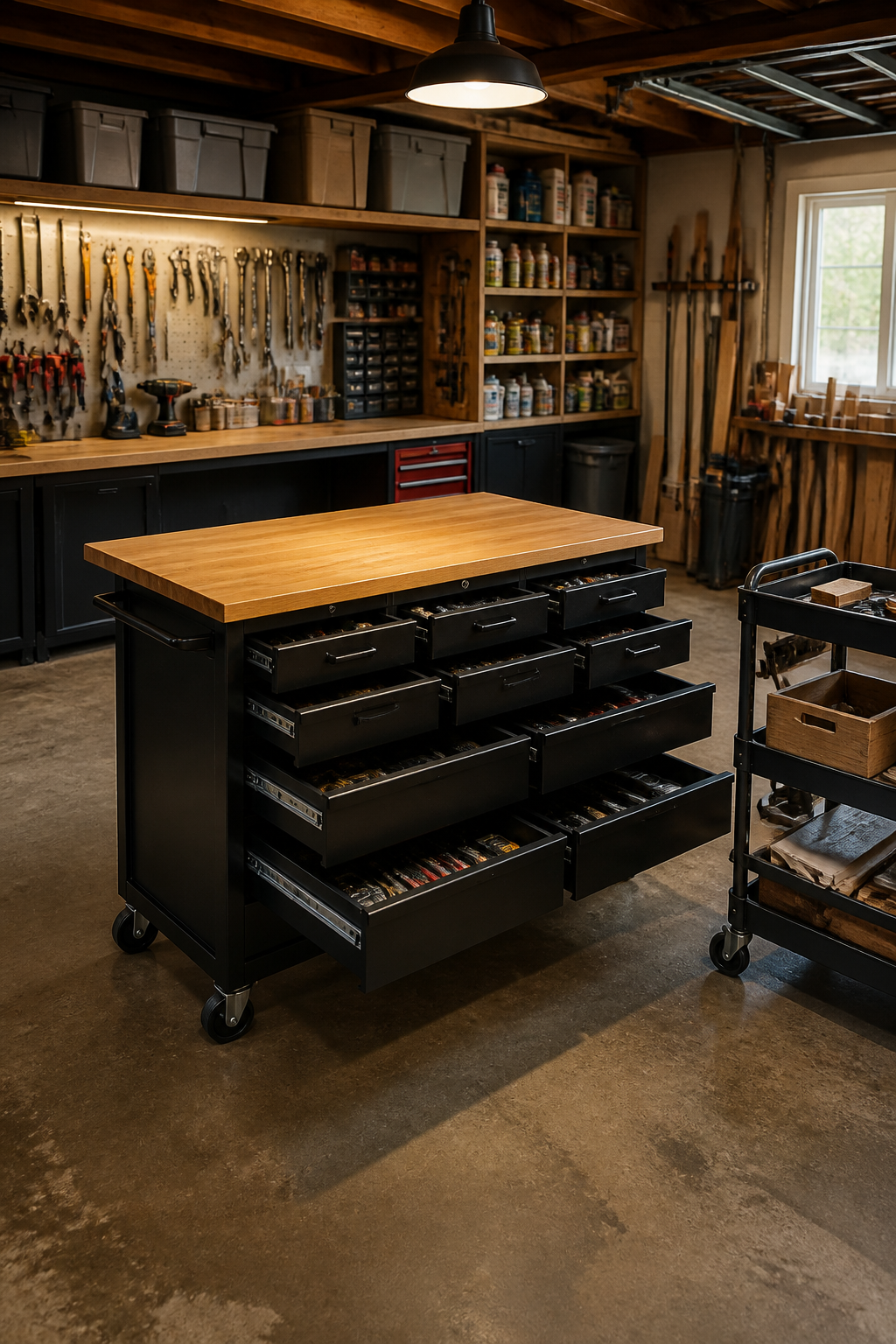
The Yukon 9-Drawer Rolling Workbench measures 46.25 x 16.25 x 37.13 inches and carries 1,200 pounds across its steel frame and wood butcher block-style surface. That wood top against the black metal is what makes this piece work visually; Harbor Freight also runs it in blue, red, and white, but the contrast on the darker finish reads more finished than utility-grade.
Nine drawers run underneath, with the bottom row deepest for extension cords and shop lights. One key locks every drawer at once, so losing it means losing access to the whole cabinet, not just one compartment.
Assembly stops at attaching the wheels and a handle. The handle juts out enough that I would skip it in a narrow garage where you walk past the side; the bench rolls fine without it. The included wrench is worth replacing with your own.
At 16.25 inches deep, the footprint is narrower than full-depth cabinets. That is the tradeoff: the sleek profile fits tighter spots, but the surface area for spreading out parts shrinks with it. For a weekend project bench where tools live inside and projects happen on top, the dimensions work. For assembling furniture or cutting full sheets, you will want more depth or a separate table.
Husky 5-Shelf Steel Shelving Unit
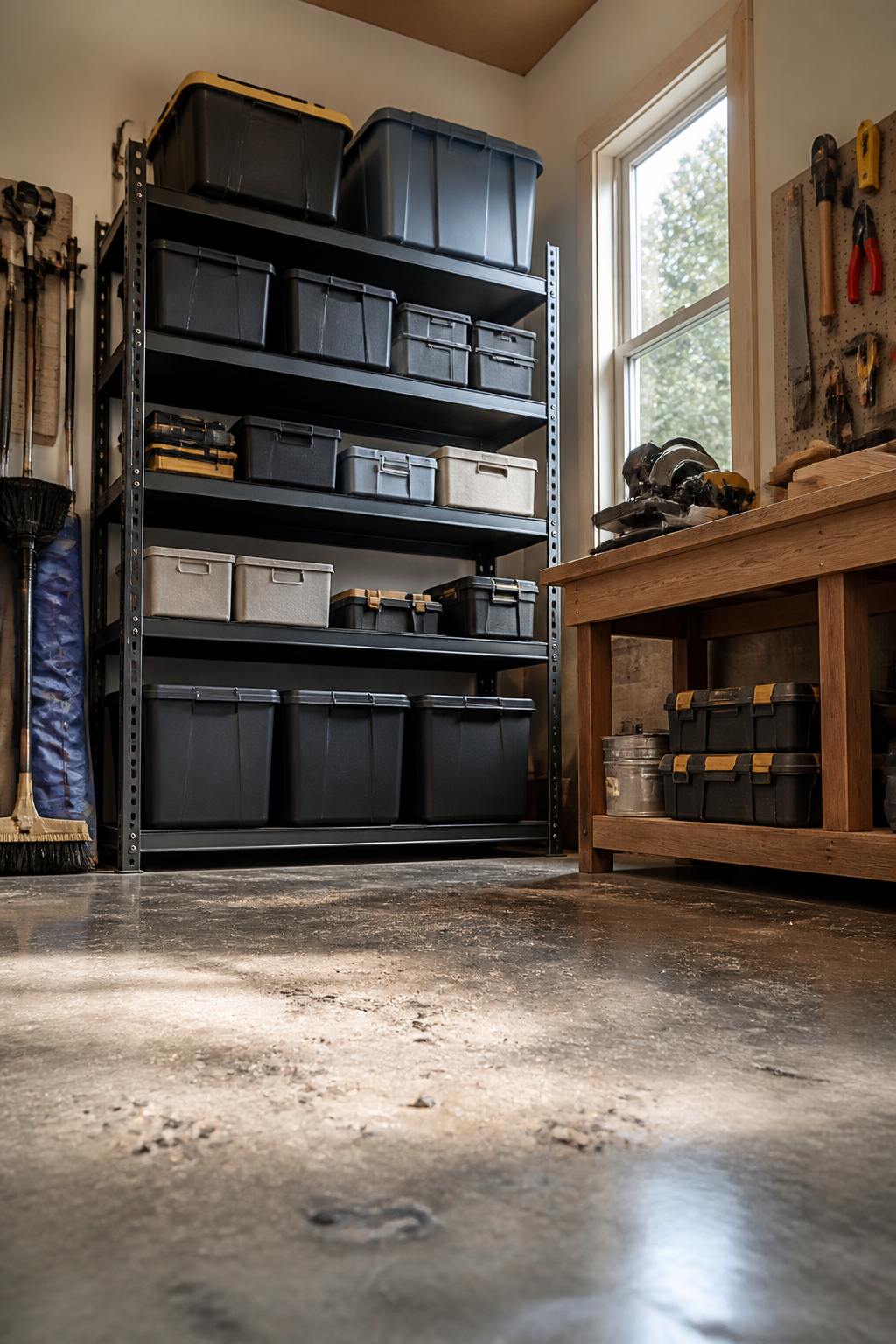
Steel shelving lives or dies by capacity, and 5,000 pounds total, 1,000 per shelf puts this Husky unit in a different category from the particleboard racks most of us start with. The frame measures 48 by 72 by 24 inches in its full configuration, though the 78-inch height can split into two 39-inch sections if your space works better low and wide.
Shelf height adjusts in whatever increments the pin holes allow, so a cooler, five-gallon buckets, or folded camp chairs fit without wasted vertical inches. Two people and a rubber mallet get it together in about the time you’d expect; the stabilizer bars took some fiddling to seat properly, and that was the only real friction in the build.
The modular part matters if you outgrow one. Husky designs these to line up and expand, so a second unit bolts alongside the first and reads as continuous storage. Someone with a full complement of yard equipment, a couple totes of holiday decorations, and the inevitable box of things they will sort someday actually needs this much open capacity. A renter with a single car bay and a bike probably does not.
Fleximounts Overhead Storage
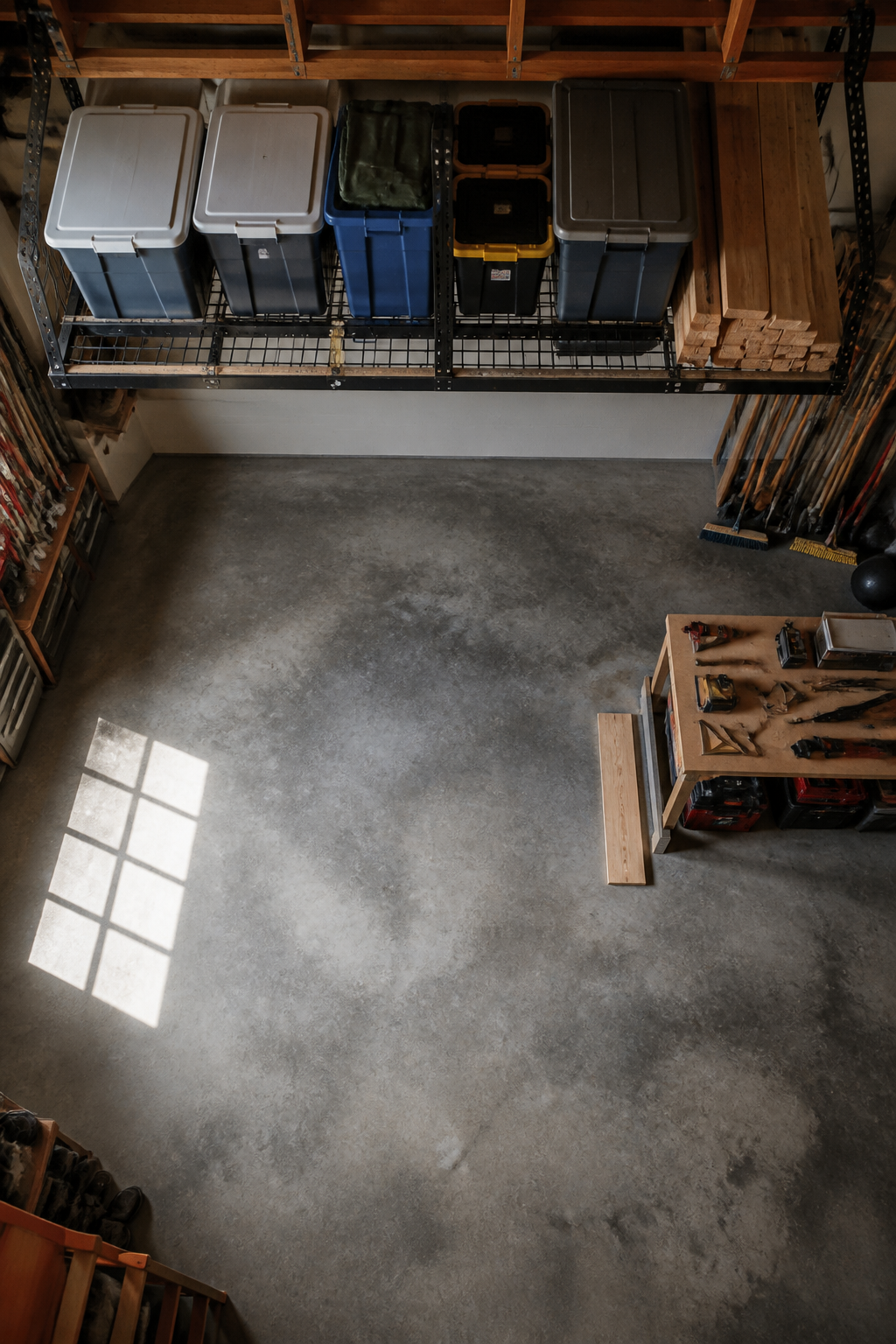
A 4×8 foot sheet of steel mounted overhead can swallow an entire season’s worth of totes and still have room for lumber. The Fleximounts 4×8 overhead rack carries 600 pounds across a 48-by-96-inch grid, which is enough for most families to get holiday decorations, camping gear, and out-of-season sports equipment off the floor in one go. The integrated steel grid, built into the frame rather than bolted on, keeps the surface from flexing once loaded.
Ceiling height is the real filter here. You need enough clearance below the rack to walk underneath and enough above to fit the unit itself, which means this works best in garages with nine-foot ceilings or higher. Anything lower and you are ducking under your own storage every time you cross the bay. Access requires a ladder, so the 600-pound capacity is best treated as seasonal storage, not everyday tools. Installation is a two-person job; working overhead exhausts your arms fast, and aligning the brackets with joists while holding the rack steady is not solo work. The package includes all fasteners, and the upper bracket holes line up directly with standard joist spacing, so you are not drilling fresh patterns into finished ceiling.
NewAge Garage Storage System
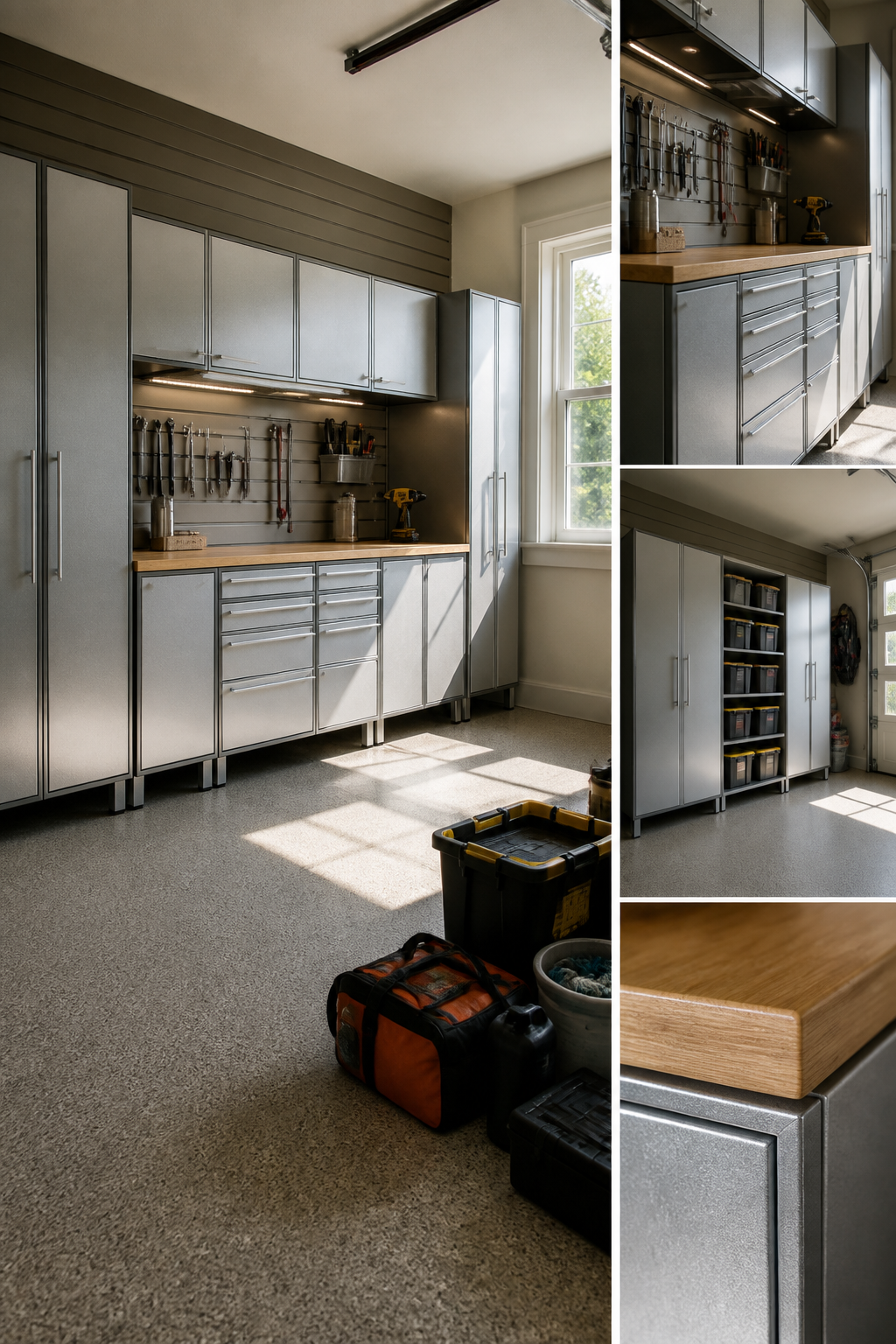
NewAge builds its cabinets from 18- or 24-gauge steel, which is where the premium price starts to make sense. The 18-gauge units feel closer to what you’d find in a pro shop, while the 24-gauge still outclasses most big-box shelving. Some configurations include built-in LED lighting, a small detail that matters more than I expected on winter evenings.
Caroline Lubinsky at Family Handyman went with a six-piece set measuring 108 inches by 77-1/4 inches, and the modularity is the real draw. Add bamboo worktops, stainless-steel surfaces, slatwall, rolling tool drawers, or pull-out cabinets. The lockers hold up to 800 pounds.
Assembly took her about four hours with help, and the QR-linked videos help. This is not a one-person job. The cabinets lock, the tool cabinet has wheels, and the packaging actually protects the finish in shipping.
Rhino Shelf
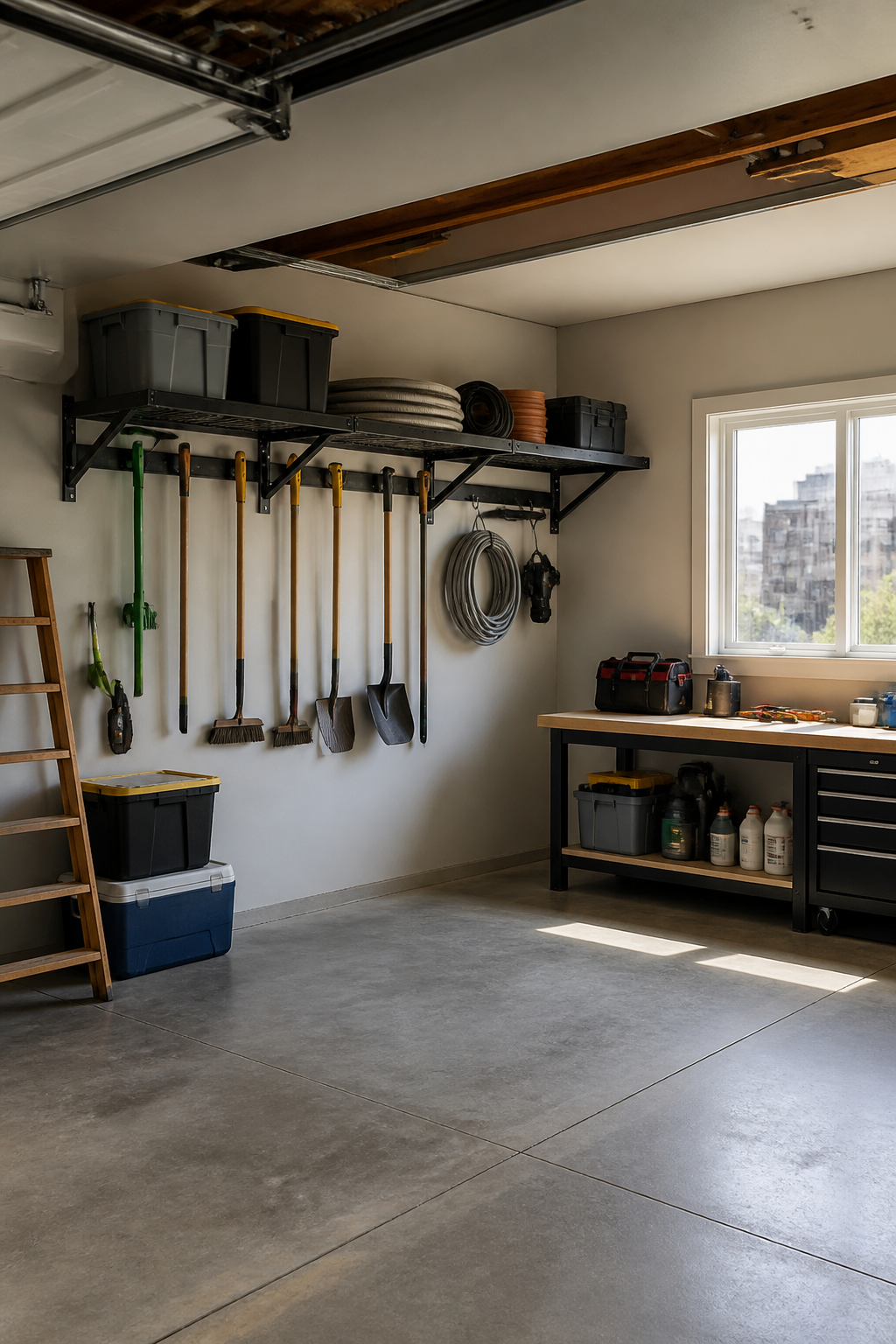
Wall-mounted shelving lives or dies by how evenly the load spreads, and Rhino Shelf builds that question right into its geometry. Each 4-foot section carries 650 pounds, but the real engineering shows up when you lean a ladder or a bundle of conduit against it. The brackets mount into studs at intervals that keep long items from cantilevering past the frame, so the weight stays distributed across the whole bay instead of pooling at the ends. That matters more than the raw number, because a 650-pound rating on paper turns into a sagging shelf in practice if the hardware lets the load drift.
Installation is straightforward enough that most owners handle it in an afternoon. The system ships as a kit with brackets already matched to the span, so there is no guesswork about which gauge goes where. Unlike ceiling-hung alternatives, it stays clear of overhead mechanicals and does not interfere with garage door warranties or local code requirements for clearance above vehicles. For renters, the wall-mounted approach means patchable holes rather than ceiling anchors, though you will still want landlord buy-in before you start drilling studs.
Durability and Materials
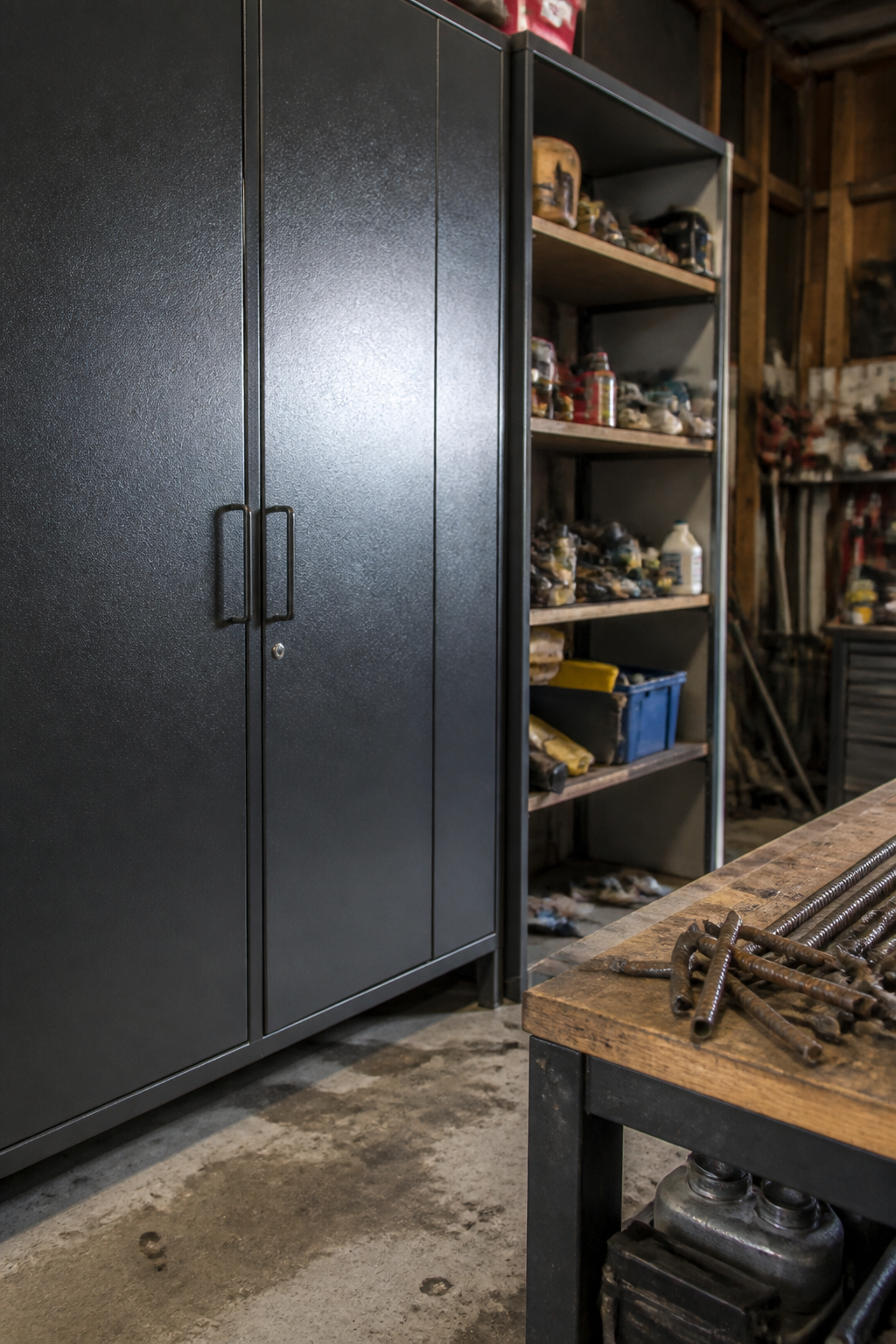
Welded steel construction is what separates garage storage that lasts from the stuff that sags in year three. Powder-coated steel resists rust well enough in dry climates, but I have watched humidity win against cheaper finishes in real garages where the door stays open half the summer. The systems that held up were the ones with galvanization underneath the paint, not just a sprayed-on layer.
Temperature swings are the hidden test. A cabinet rated for indoor use will warp, stick, or pop its welds through a Midwest winter if the garage is unheated. The 2,350-pound total capacity on a welded-steel system only matters if the frame itself does not flex; once the joints go, the load rating becomes fiction. Resin and aluminum handle moisture better than bare steel, though they give up some weight capacity for it. Wood composite looks warmer but swells at the seams unless every edge is sealed, and most are not.
Adjustable shelves help after the fact, but the material choice is permanent. I would rather buy once for galvanization I cannot see than replace a unit because the finish looked good in the store.
Modularity and Expansion
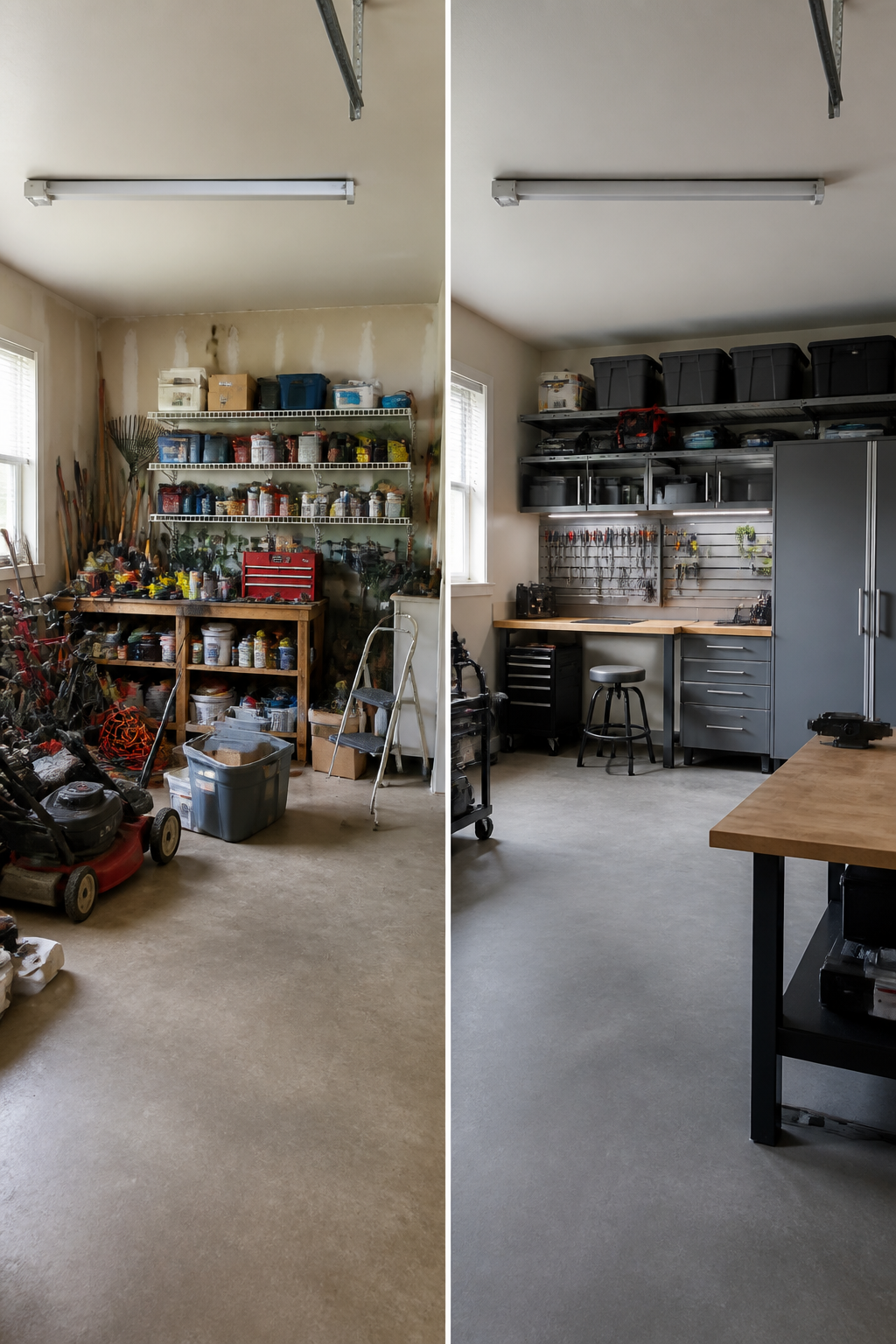
The thing about garages is they never stay the same. Kids grow out of bikes into kayaks, that sedan becomes an SUV, and suddenly the storage system that looked perfect in March is fighting you by October. Modularity matters because the best garage storage systems adjust without requiring a full replacement.
NewAge builds this in from the start. Their cabinets arrive with adjustable shelves, and you can add hangers or cabinet pulls later without drilling new holes. The 18- or 24-gauge steel construction stays consistent across pieces, so an expansion two years from now matches what you already own. Lockers handle up to 800 pounds, and the tool cabinet rolls where you need it. Some units even include built-in LED lighting, which becomes useful when you realize your original layout cast a shadow over the workbench.
I like that the packaging actually protects the contents. Dents and scratches out of the box are what turn a weekend project into a three-weekend headache, and arriving clean matters more than arriving fast. The real value, though, is reconfiguring as needs change rather than guessing right the first time.
Weight Capacity Reality
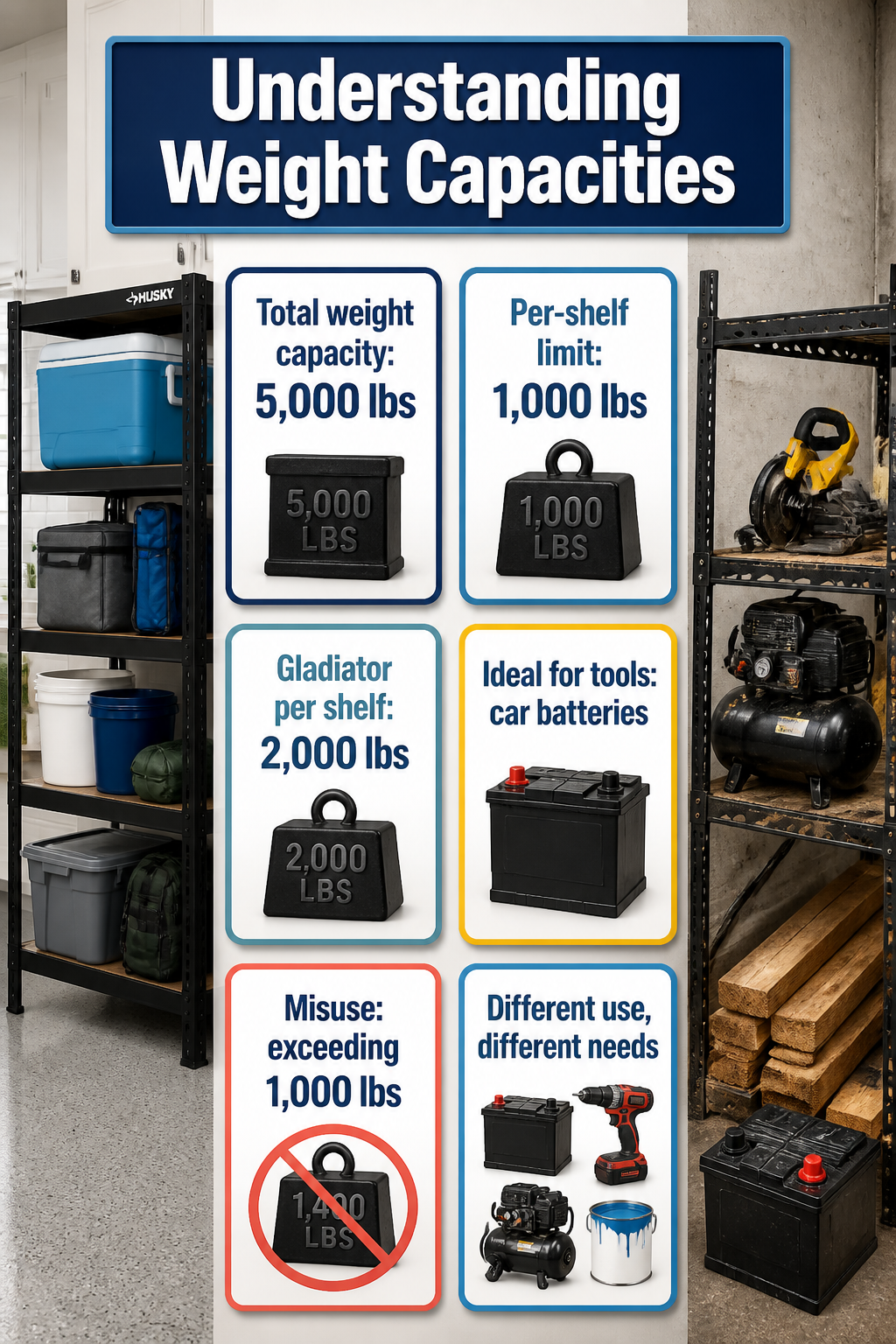
Per-shelf ratings and total system loads tell two different stories, and the gap between them matters more than most product pages admit. A unit might advertise 5,000 pounds total while capping each individual shelf at 1,000 pounds. That distinction decides whether your cooler and camping chairs can share space or need separate real estate.
The Gladiator four-tier rack flips that logic entirely: 2,000 pounds per shelf, not total. Four shelves of welded steel rated independently means a benchtop planer or stack of full paint cans sits anywhere you want it, not just on the bottom tier where total-load thinking usually pushes the heavy stuff. I spent too long assuming "heavy duty" meant the same thing across every box until I started comparing the actual numbers.
What actually gets stored makes the rating matter. Sources describe Husky units holding coolers, buckets, camping chairs, seasonal gear, and normal garage overflow without threatening the 1,000-pound individual shelf limit. The Gladiator’s 2,000-pound tier rating targets a different user: car batteries, air compressors, bulk hardware, power tools, lumber stacked for off-ground storage. Two valid systems, two real use cases. The mistake is buying the heavier rating for light storage and paying for steel you do not need, or worse, loading up a 1,000-pound shelf with 1,400 pounds of tools because the total capacity looked generous enough.
Installation Experience
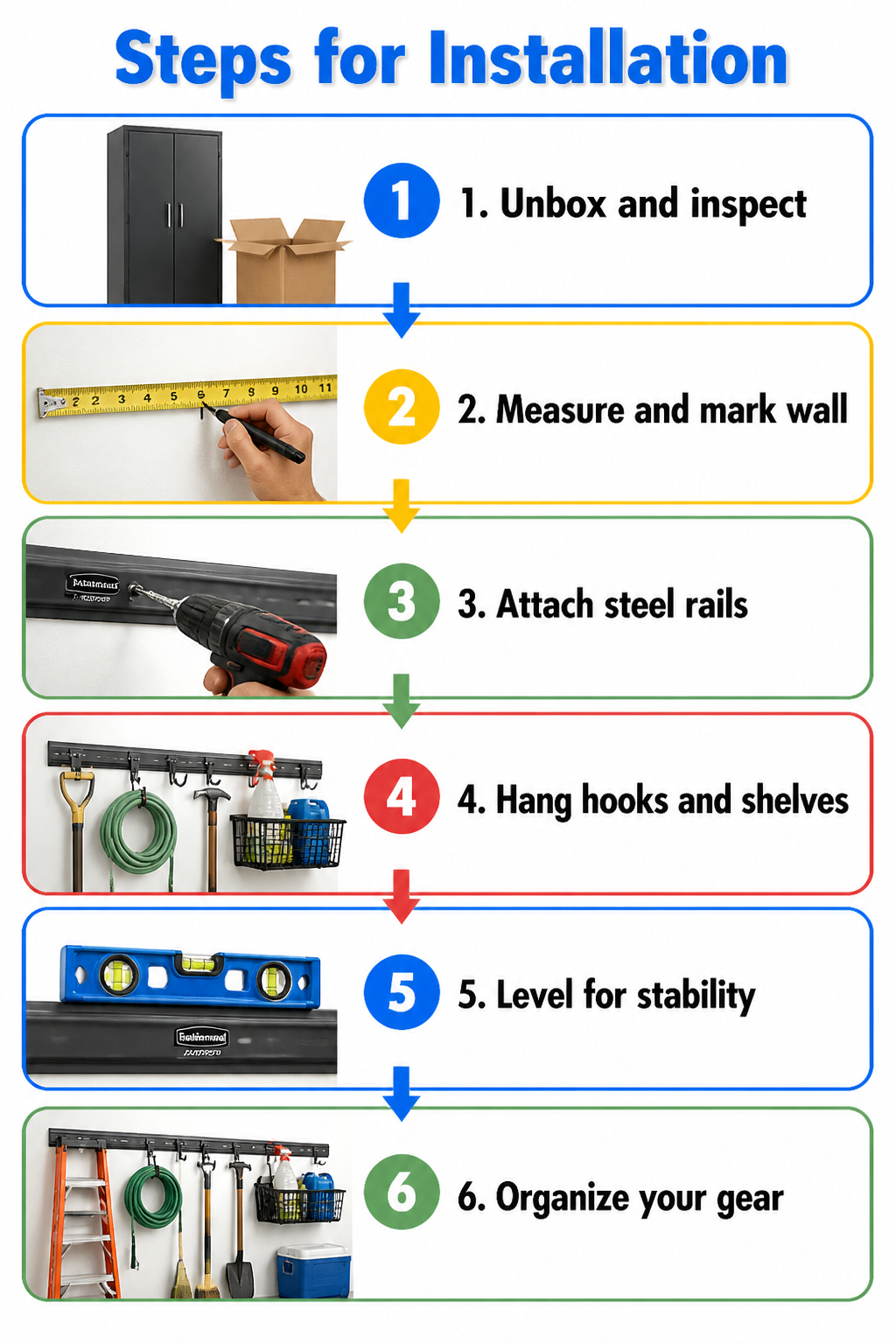
Pre-assembled cabinets and rail systems split the installation experience into two different weekends. A steel cabinet that arrives ready to stand saves the hours flat-pack shelving demands, though that convenience shows up in the price. Rail systems like the Rubbermaid FastTrack go the other direction: three 48-inch steel rails, five hook styles, and a 1,750-pound total capacity all need mounting by hand.
The FastTrack took me about an hour with a drill, a marker, and a level the kit oddly skipped. Ten feet of wall swallowed the setup, and the rails stayed put once they were up, no rattling from the garage door or the car pulling in. A level is not optional here; the shelves hang from those rails, and uneven mounting wastes the modularity that makes the system worth buying. Everything stays visible, which is either the point or the problem depending on how tidy your gear looks on hooks.
Space Efficiency
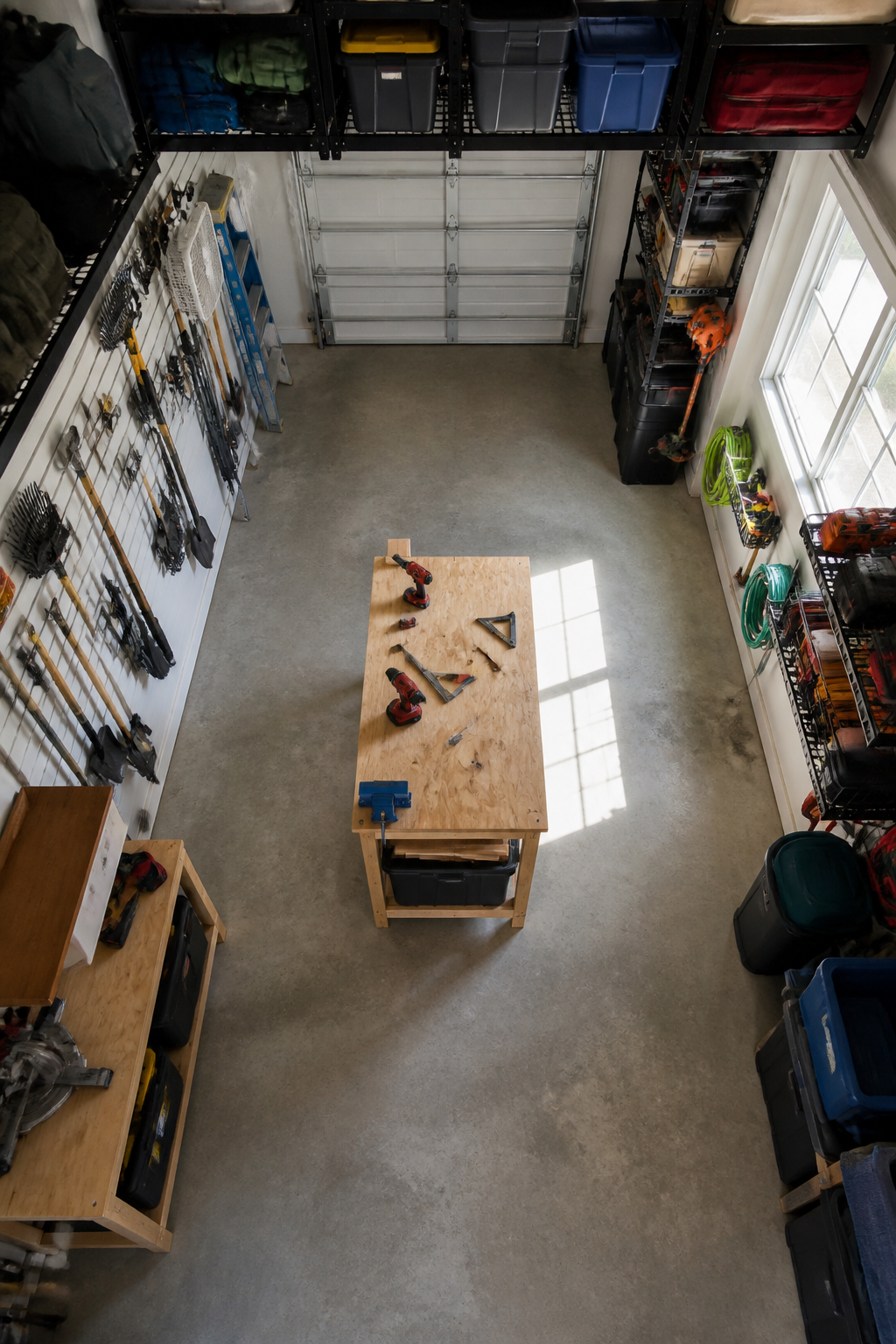
Floor space is the first thing to disappear in a garage, so wall-mounted systems win on clearance by definition. Slatwall, pegboard, and basic hook rails all keep the footprint open for parking, workbenches, or seasonal piles that have nowhere else to go. The fixings matter more than the board itself; drywall anchors, concrete screws, and cinder block fasteners are three different shopping lists, and using the wrong one is how a loaded shelf ends up on the fender.
Overhead storage claims the air above the garage door or between vehicle roofs and the ceiling joists. Platform systems like the Fleximounts unit run 96 by 48 inches, adjust from 18 to 24 inches down, and carry up to 1,000 pounds of steel rack and load. That is serious capacity, but the trade is access. Seasonal bins and sentimental boxes you touch twice a year belong up there. Anything you need monthly means a ladder, a helper, and twenty minutes you will eventually skip.
Ceiling-mounted lifts with pulleys split the difference for bicycles or lighter bulky items you use more often. Load at waist height, hoist above the car, drop when needed. Either overhead option needs secure mounting; several hundred pounds of anything falling is not a repair, it is an insurance claim.
The small-garage play is both: walls for tools you grab daily, overhead for the rest.
Frequently Asked Questions
What is the best garage storage system?
The best garage storage system depends on what you store and how much space you have. For heavy tools and automotive gear, welded steel cabinets like the Husky 3-Piece or Gladiator GearBox handle serious weight. Wall-mounted rail systems such as the Rubbermaid FastTrack work better for grab-and-go yard tools in tighter garages. Overhead racks like Fleximounts free up floor space entirely if your ceiling height allows.
How much weight can garage shelves hold?
Per-shelf ratings range from 150 pounds on budget cabinets like the Husky Freestanding up to 2,000 pounds per shelf on the Gladiator 4-Tier welded unit. Total system capacity matters too: the Husky 5-Shelf unit carries 5,000 pounds across all five tiers, while the Fleximounts overhead rack holds 600 pounds. Always check whether the rating is per shelf or total, since loading one shelf beyond its individual limit risks failure even if the overall total looks safe.
Are wall-mounted garage storage systems effective?
Yes, they keep the floor clear for parking and walkways, which matters most in single-car or narrow garages. The Rubbermaid FastTrack rail system rated for 1,750 pounds total hangs tools, coolers, and cleaning supplies without using a square foot of floor space. The tradeoff is visibility: everything stays on display, so this approach works best for people who want quick access and do not mind their gear showing.
What materials are best for garage storage?
Welded steel with galvanization underneath the powder coat lasts longest against humidity and temperature swings. Resin and aluminum handle moisture better than bare steel but sacrifice some weight capacity. Wood composite looks warmer but swells at unsealed edges. The article notes that galvanization you cannot see matters more than surface finish that looks good in the store.
How do I organize my garage effectively?
Use vertical space first: walls for daily tools, overhead racks for seasonal items you access twice a year, and cabinets or shelving for everything in between. Categorize by how often you touch something, not by type. Modular systems like NewAge adjust as your storage needs change without requiring full replacement. In smaller garages, combining wall-mounted rails with overhead storage beats floor-based cabinets that block walkways.