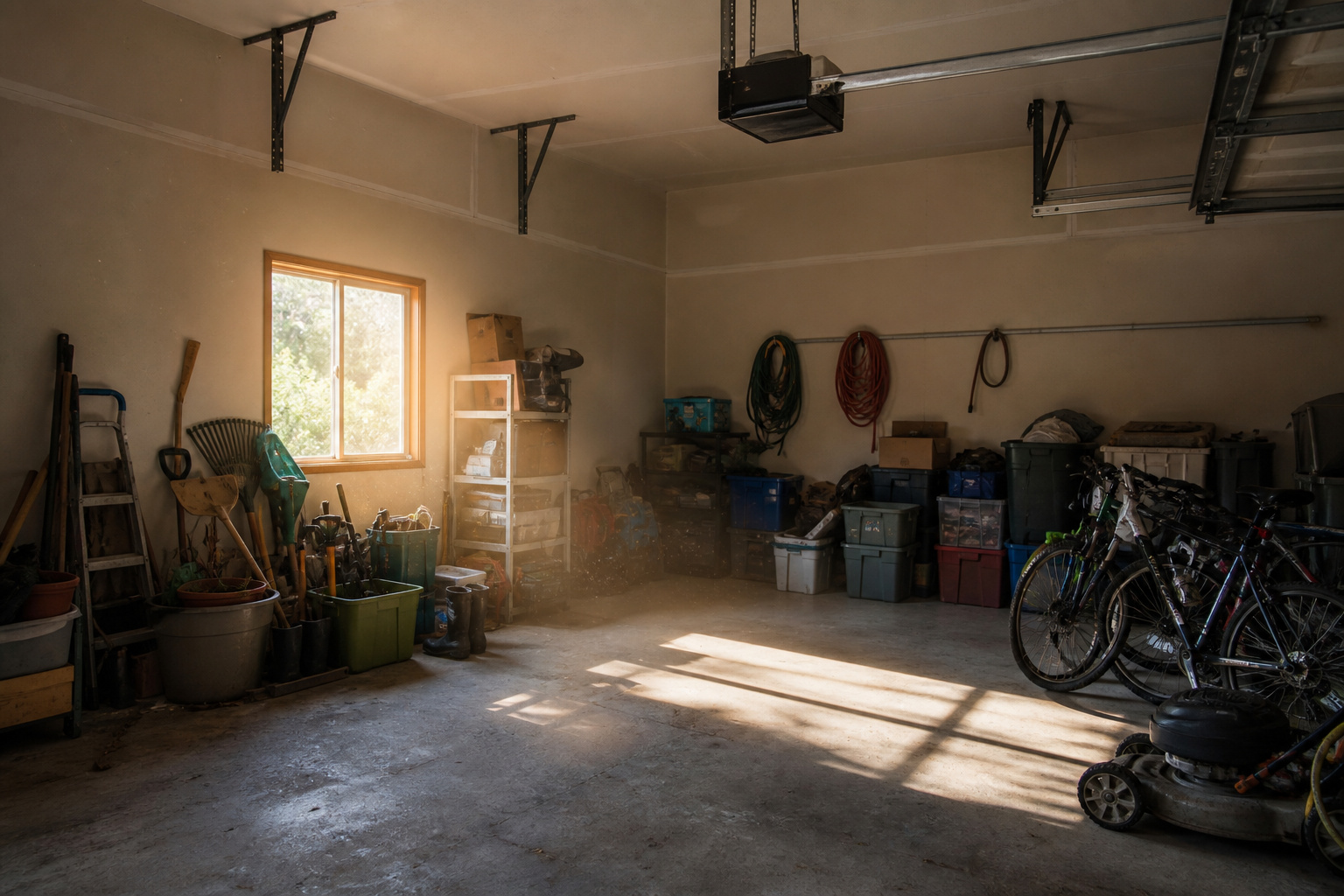
Overhead garage storage racks are steel platforms that bolt to ceiling joists and carry everything from holiday bins to tool chests above your parking space. The catch is that capacity ratings run from 350 lb to over 750 lb, and a fixed 4 x 8 ft frame will not fit every joist layout no matter how strong the steel. After sorting through ten systems that owners actually hang and load, the rankings below start with the NewAge VersaRac Pro at 800 lb and adjustable height, a balance that works for most standard garages without calling in a second weekend of help.
My Top Picks
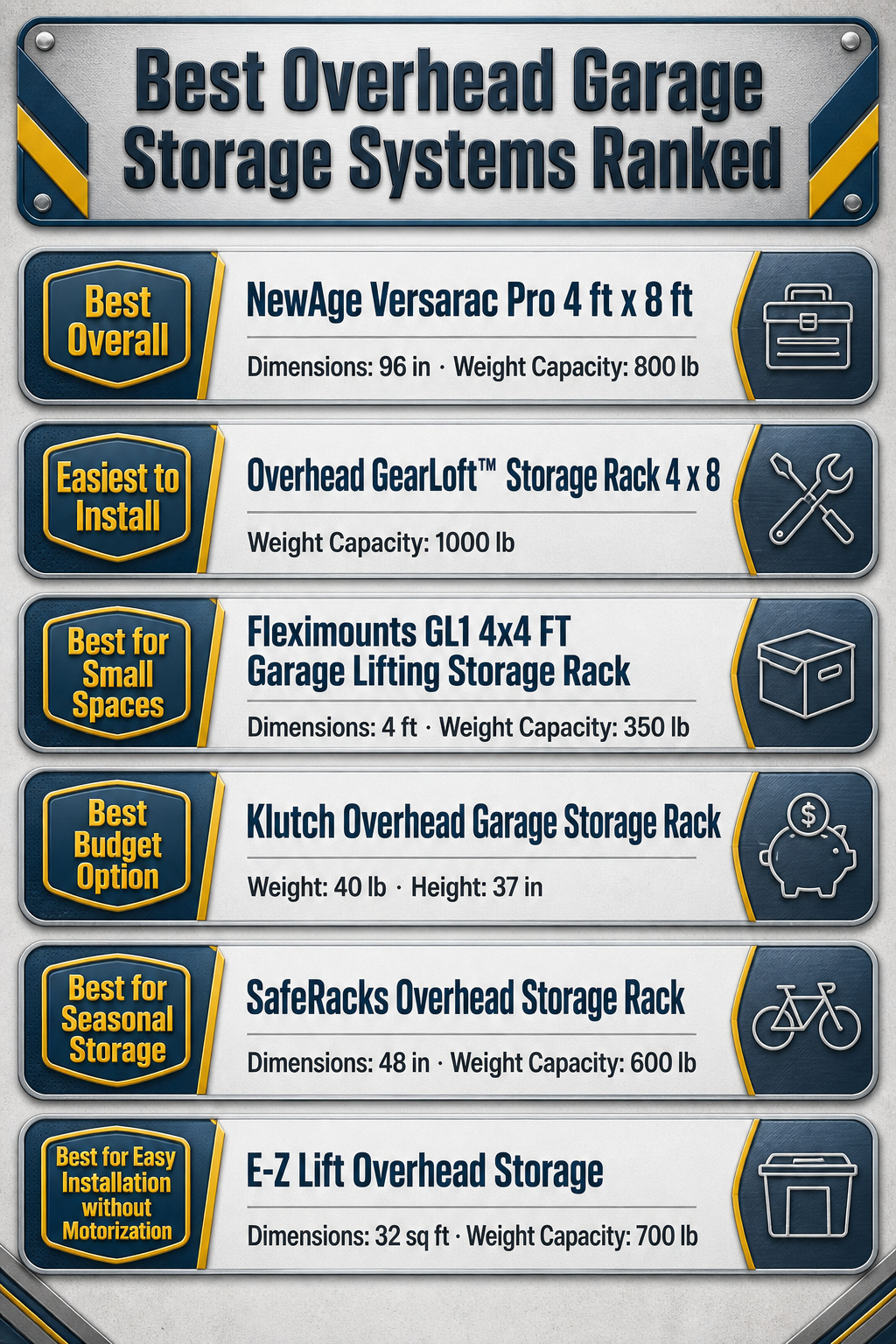
| Product | Award | Best for | Why it won | ||
|---|---|---|---|---|---|
| NewAge Versarac Pro 4 ft x 8 ft | Best Overall | Most buyers overall | Balances capacity, size, and quality for nearly any garage setup | Check price | |
| Overhead GearLoft™ Storage Rack 4 x 8 | Easiest to Install | DIYers short on time | Simplest setup process among all overhead rack options | Check price | |
 |
Fleximounts GL1 4×4 FT Garage Lifting Storage Rack | Best for Small Spaces | Tight or compact garages | Fits smaller spaces without sacrificing holding strength | Check price |
 |
Klutch Overhead Garage Storage Rack | Best Budget Option | Cost-conscious shoppers | Lowest-priced option that still gets gear off the floor | Check price |
 |
SafeRacks Overhead Storage Rack | Best for Seasonal Storage | Rotating holiday gear | Adjustable size handles bulky bins and lighter decorations alike | Check price |
 |
E-Z Lift Overhead Storage | Best for Easy Installation without Motorization | Manual-lift preference | Easier to raise and lower by hand than crank or motor systems | Check price |
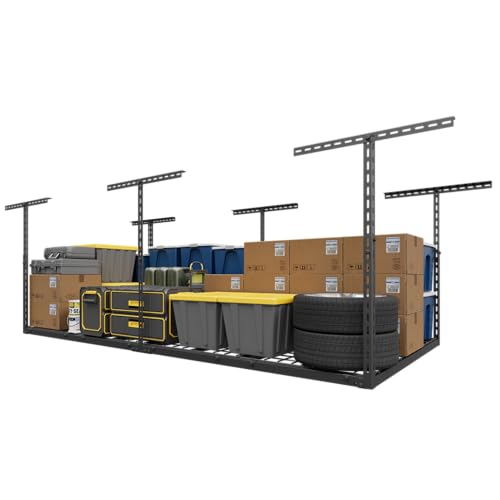 |
Jusgym 4X8FT Overhead Garage Storage Rack 750LBS Capacity | Best for Heavy Loads | Maximum weight needs | Holds up to 750 lbs of tools, tires, or equipment overhead | Check price |
 |
MonsterRAX Storage Solutions MonsterRax 4×8 Overhead Garage Storage Rack | Best for Larger Items | Bulky or long items | Full 4×8 platform fits oversized gear smaller racks cannot | Check price |
 |
SunsGrove 4×8 Overhead Garage Storage Rack Organization | Best for Versatile Storage | Varied clutter types | Flexible layout adapts to changing storage demands over time | Check price |

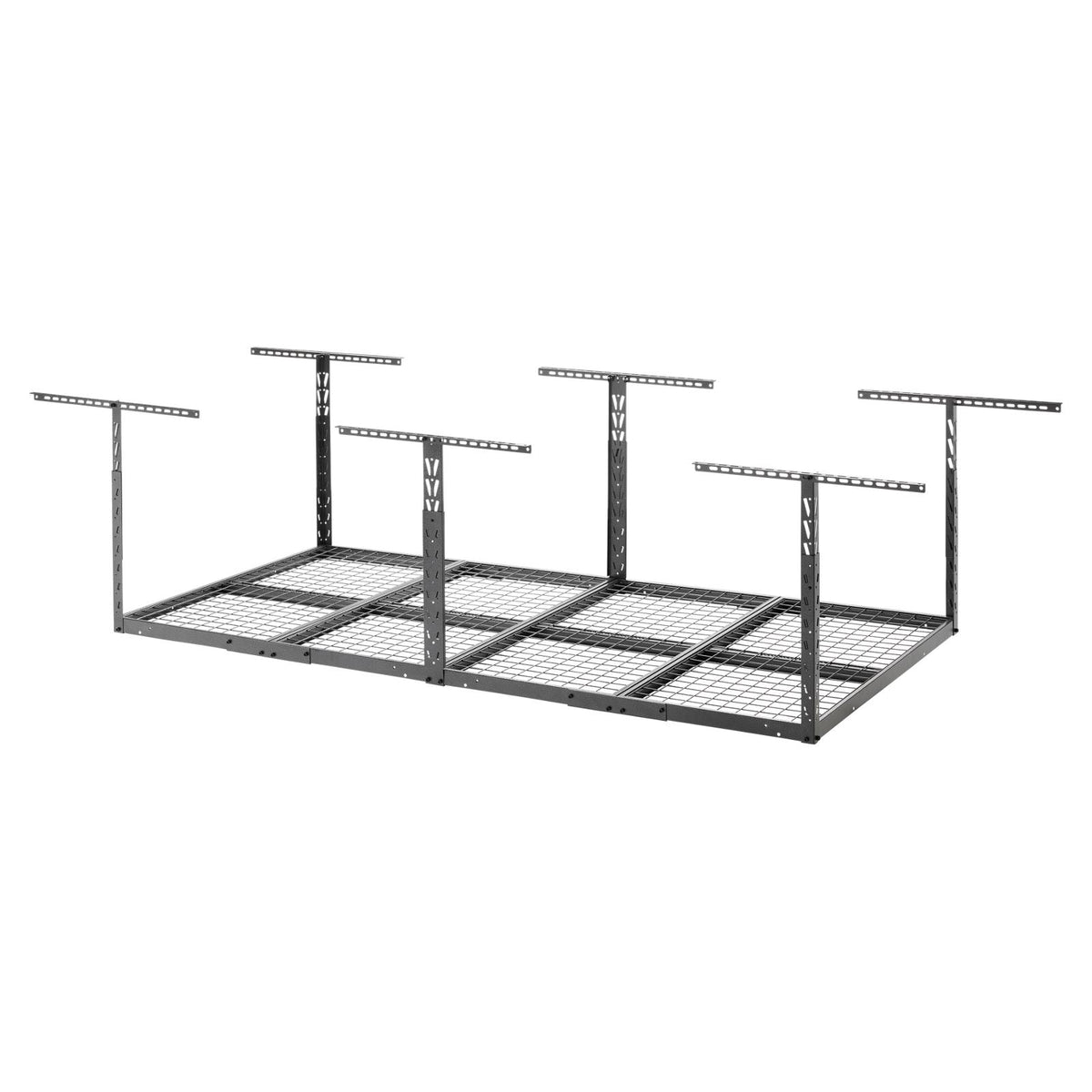
| Product | Dimensions | Weight Capacity | Weight | Height | Length |
|---|---|---|---|---|---|
| NewAge Versarac Pro 4 ft x 8 ft | 96 in | 800 lb | — | — | — |
| Overhead GearLoft™ Storage Rack 4 x 8 | — | 1000 lb | — | — | — |
| Fleximounts GL1 4×4 FT Garage Lifting Storage Rack | 48 in | 350 lb | — | — | — |
| Klutch Overhead Garage Storage Rack | — | — | 40 lb | 37 in | 96 in |
| SafeRacks Overhead Storage Rack | 96 in | 600 lb | — | — | — |
| E-Z Lift Overhead Storage | — | 700 lb | — | — | — |
| Jusgym 4X8FT Overhead Garage Storage Rack 750LBS Capacity | 48 in | — | 47.8 lb | 48 in | 48 in |
| MonsterRAX Storage Solutions MonsterRax 4×8 Overhead Garage Storage Rack | 12 in | 500 lb | 80 lb | 45 in | 96 in |
| SunsGrove 4×8 Overhead Garage Storage Rack Organization | 96 in | 800 lb | 65.7 lb | 40 in | 96 in |
Best Overall: NewAge Versarac Pro 4 ft x 8 ft
Image: inventivegarage.com
Quick Verdict
A full 4 x 8 feet of overhead storage with an 800 lb rating sits above most weekend projects without demanding professional help. The NewAge VersaRac Pro wins on balance: the steel frame carries enough weight for seasonal gear and the occasional bulky item, and the adjustable drop height lets you work around garage door tracks or low ceilings. The catch is that you are still installing a four-foot-deep platform overhead; if your ceiling is irregular or your joists run the wrong direction, the hardware included may not cover every workaround.
Key Specifications
- Dimensions: 96 in
- Weight Capacity: 800 lb
What It Does Well
- Heavy-gauge steel construction means the frame itself does not flex or twist when loaded unevenly; owners report loading one side with camping gear and the other with holiday bins without the rack tilting.
- Adjustable height drops the platform from near-ceiling to a reachable arm’s length below; this matters more in garages with openers or ductwork that eat into vertical space.
- The 96 in length spans two standard joist bays at 16 inches on center, so most buyers hit solid framing without adding blocking.
Where It Falls Short
- 800 lb sounds generous until you fill a 32 square foot shelf; dense loads like boxes of books or power tools hit the limit faster than bulky light items.
- DIY installation still means lifting a 4 x 8 frame overhead while threading bolts; owners working alone describe rigging temporary supports or waiting for a second set of hands.
Who It’s For
Someone with standard 2 x 6 or 2 x 8 joists and a cordless drill already in the rotation can get this up in an afternoon and stop tripping over bins on the floor. The buyer who should pause is the one with a finished garage ceiling or engineered trusses spaced wide; the included lag bolts assume conventional framing, and adapting the mount takes hardware the box does not contain.
How It Compares
The Gladiator Overhead GearLoft matches the 4 x 8 footprint but trims adjustability in exchange for a simpler bolt-together frame; that suits the buyer who knows exactly how much drop they need and wants fewer decisions during assembly. The VersaRac Pro keeps more options open for renters or anyone who might move the rack to a different wall or garage later, while the Gladiator locks in a height and expects you to plan around it.
Where to buy: newageproducts.com
Easiest to Install: Overhead GearLoft™ Storage Rack 4 x 8
Image: gladiatorgarageworks.com
Quick Verdict
The Overhead GearLoft™ Storage Rack 4 x 8 takes the installation award because the maker’s EZ Connect system actually delivers on the promise of a straightforward ceiling mount. A 1000 lb capacity across a 4 x 8 foot platform suits renters and first-home owners who need serious overhead storage without hiring help or losing a whole weekend. The catch is the fixed 48" width; your ceiling joists need to cooperate, and the 23–37" drop range still puts this below head height in most standard garages.
Key Specifications
- Weight Capacity: 1000 lb
What It Does Well
- Patented EZ Connect hardware means the ceiling bracket and rack frame click together without fine-threaded bolting overhead; owners describe finishing the mount in under two hours with one helper.
- Corrosion-resistant hard coat finish handles garage humidity and temperature swings without surface rust, so the rack stays presentable if your space doubles as a workshop or laundry corner.
- Adjustable 23–37" height lets you tuck the platform tight to the ceiling for tall vehicle clearance or drop it lower for bin access without a step stool.
Where It Falls Short
- No width flexibility: the 96" depth and 48" width are fixed; if your joists run the wrong direction or your bay is narrow, you are modifying the structure or walking away.
- 23" minimum drop still hangs low enough to brush heads in garages under 9 feet; the maker calls it overhead, but low-ceiling owners report it feels more like a suspended shelf.
- Patented connectors mean replacement parts come from one source; if the line discontinues, a broken bracket is not a hardware store fix.
Who It’s For
Someone with standard 16" on-center joists and a garage tall enough to absorb a 2–3 foot platform drop will find this the least frustrating ceiling rack to hang solo. The buyer who should pass is the one with finished garage ceilings or irregular framing; the EZ Connect system assumes a bare joist bay and loses its advantage fast once you start adding blocking or cross-bracing.
How It Compares
The MonsterRAX 4 x 8 matches the GearLoft™ on basic capacity and footprint, but owner reports and independent reviewers note the MonsterRAX hardware requires more precise alignment during the initial ceiling mount. That extra fuss matters most for the solo installer working off a ladder; the GearLoft™ connector system forgives slight shifts and still seats square. On the other hand, MonsterRAX offers more configuration options in its line, so buyers planning to expand into a full ceiling system later may prefer starting with that ecosystem even if the first afternoon runs longer.
Where to buy: gladiatorgarageworks.com · homedepot.com
Best for Small Spaces: Fleximounts GL1 4×4 FT Garage Lifting Storage Rack
NOTE: The 71-inch axle length exceeds the dimensions of the 4'x4' deck. Please ensure the supporting beam has adequate length. The rack is compatible with 12'', 16'', or 24''...
Quick Verdict
Tight garages still need overhead storage that actually holds something. The Fleximounts GL1 keeps its footprint to 4 ft square while loading 350 lb, which is the pairing that matters when every inch of ceiling counts. The hand crank means no motor to fail, though you will need a second pair of hands for installation and the lifting itself asks more of you than a powered system would.
Key Specifications
- Dimensions: 4 ft
- Weight Capacity: 350 lb
What It Does Well
- Heavy-duty steel construction gives the rack the rigidity to stay level under a full load; owners describe less sag over time than lighter units show.
- The hand crank lets you lower and raise stored items without wiring, remotes, or motors that can burn out; this matters in a garage where dust and temperature swings already punish equipment.
- 4 ft dimensions fit single-car garages and the margins of larger bays where a full platform would block door tracks or lighting.
Where It Falls Short
- Installation requires assistance; one person cannot safely mount the hardware or manage the rack during assembly.
- 350 lb capacity rewards disciplined packing; heavy tools or multiple bins of holiday décor add up faster than the number suggests.
Who It’s For
Someone with a compact garage who can plan loads carefully and has a friend free for a Saturday morning will find the GL1 fills a gap that larger racks cannot. The buyer who wants to raise and lower storage without effort, or who works alone, will notice the missing motor every time they reach for the crank.
How It Compares
The Top Shelf Storage Lift 400 runs on a motor and carries 400 lb, but owner reports note that the powered mechanism trades away some of the GL1’s simplicity. The motorized lift suits someone who stores heavier items or who cannot manage manual cranking, while the GL1 fits the owner who prioritizes reliability and has the hands to match.
Where to buy: Amazon
Best Budget Option: Klutch Overhead Garage Storage Rack
Large 350-Lb. Weight Capacity: Strong enough to store heavy items like seasonal bins, tools, and gear, helping you reduce garage clutter. Customizable Height Adjustment:...
Quick Verdict
Budget overhead storage tends to mean flimsy wire grids that sag under their own weight, but the Klutch rack carries a 350-lb rating on a welded frame with an integrated deck panel. That capacity is enough for seasonal bins, camping gear, or a couple of bulky tools cases, and the height adjusts from 23 to 37 inches so you can tuck it above a garage door track or drop it lower in a high-ceiling bay. The tradeoff is right there in the numbers: 350 lb is solid for light-to-moderate loads, yet serious gearheads with engine blocks or multiple full totes will bump against that ceiling fast.
Key Specifications
- Weight: 40 lb
- Height: 37 in
- Length: 96 in
- Width: 48 in
What It Does Well
- The 96 by 48 inch footprint spans two standard ceiling joist bays, giving usable depth without custom framing; owners report fitting four to six large bins across the surface.
- EZ Connect pins lock the corner joints, which matters when you are working alone on a ladder and cannot hold a wrench on both sides of a bolt.
- Color-matched hardware and a finished deck panel keep the underside from looking like an afterthought if your garage doubles as a workshop or gym space.
- At 40 lb assembled, two people can lift it into position without a hoist; solo installation is possible with a temporary support board.
Where It Falls Short
- The 350-lb capacity is the lowest in this guide; a loaded holiday decoration tote runs heavier than most people guess, so weighing your stash first is not optional.
- Height adjustment happens in the drop rods, not the frame itself, so the 96 by 48 inch platform stays fixed; narrow garages or obstructions near the walls may block one end.
- The integrated decking is steel, not wire mesh, which adds rigidity but also traps moisture if you store damp camping equipment.
Who It’s For
A renter or first-time homeowner with a standard two-car garage and a few Rubbermaid bins to get off the floor will find this rack hits the right balance of capacity and install simplicity. Someone building out a full overhead system for a workshop or planning to stack heavy power tools should look at higher-capacity frames instead; the 350-lb limit is a hard stop, not a suggestion.
How It Compares
The MonsterRAX 4×8 platform offers a heavier-duty frame for buyers who need more margin above their load, though that strength adds assembly time and usually requires a second person for the full lift. The Klutch suits the weekend project timeline and lighter inventory; the MonsterRAX fits owners who are storing long-term and would rather overbuild once than revisit the ceiling in two years.
Where to buy: Amazon
Best for Seasonal Storage: SafeRacks Overhead Storage Rack
INDUSTRIAL STORAGE RACK: Our industrial metal rack is a great fit for virtually any garage. It features a full 250-pound weight capacity and adjustable height ranging from 24...
Quick Verdict
Anyone with a garage ceiling that goes unused through three seasons of the year probably has the same problem I do: the holiday bins, camping gear, and patio cushions need somewhere to live, but floor space is already spoken for. SafeRacks built its overhead rack around that exact situation. The 48 in by 96 in platform holds up to 600 lb according to the maker, which covers most seasonal collections without creeping into the structural-question territory of heavier-duty systems. The catch is exactly what the name suggests: you are climbing a ladder and working above your head to install it, and every retrieval means the same trip.
Key Specifications
- Dimensions: 48 in
- Dimensions: 96 in
- Weight Capacity: 600 lb
What It Does Well
- Adjustable width and depth let you set the beams to match irregular joist spacing or odd-shaped loads, rather than forcing your storage into a fixed grid.
- The powder-coated steel construction resists the humidity swings that hit garage air from summer to winter, which owners mention matters more than they expected after a few seasons.
- At 600 lb capacity, the rack sits in a middle zone that handles real volume without requiring the reinforced ceiling supports that heavier systems demand.
Where It Falls Short
- Installation means drilling into joists overhead; several owner reports describe recruiting a second person as nearly mandatory for safe alignment.
- No motorized lift means seasonal swaps stay physical work, and buyers with shoulder or back limitations describe parking the ladder semi-permanently underneath.
Who It’s For
The buyer who already owns a decent stepladder and treats garage organization as a twice-yearly ritual, not a daily interaction, will find this matches their rhythm. Someone who needs frequent access to stored items, or who works alone and cannot reliably borrow a second set of hands, will likely stall on installation or leave the rack half-loaded out of convenience.
How It Compares
MonsterRAX offers a fixed 4×8 ft platform in similar steel construction, but without the width adjustment that SafeRacks builds in. That rigidity suits buyers with standard 16-inch joist spacing who want faster assembly; the tradeoff is less flexibility for older garages or non-standard framing. SafeRacks fits the person measuring twice to accommodate an odd space, while MonsterRAX rewards the buyer who values a quicker Saturday install and can live with the dimensions as given.
Where to buy: Amazon
Best for Easy Installation without Motorization: E-Z Lift Overhead Storage
Retractable Garage Storage: Drill-operated system with a 9’ drop, perfect for 10–11’ ceilings. Heavy-Duty Capacity: Holds up to 700 lbs, ideal for bins, tools, seasonal...
Quick Verdict
Some overhead storage fights you from the first bracket. The E-Z Lift Overhead Storage is built for the opposite experience: a hand-cranked pulley system that skips motors, apps, and wiring entirely. The maker rates it for 700 lb across 32 sq ft, which is modest next to powered lifts but enough for holiday bins, camping gear, or the luggage you use twice a year. The catch is exactly what the name promises: your arms do the lifting, and heavier loads will remind you of that.
Key Specifications
- Dimensions: 32 sq ft
- Weight Capacity: 700 lb
What It Does Well
- Crank operation, no outlet required. Owners in older garages with limited ceiling circuits note this installs where motorized racks cannot.
- 700 lb capacity suits seasonal storage. Independent reviewers describe this as the practical midpoint for bins and sports equipment rather than tool chests or bulk goods.
- Pulley geometry keeps the platform level. Several owner reports mention the crank maintains even rise without the tilting they feared from a manual system.
Where It Falls Short
- 700 lb is below most motorized alternatives. Buyers with heavier stored items describe hitting the limit faster than expected.
- Retrieval speed depends on your pace. What goes up by hand comes down the same way; several owners mention this matters more than they anticipated for frequent access.
Who It’s For
A buyer with a standard drill, a free Saturday, and no interest in electrical work can get this mounted and loaded by Sunday evening. Someone storing engine blocks, bulk building materials, or anything requiring weekly rotation will find the capacity and crank cycle wear thin.
How It Compares
The SunsGrove 4×8 Overhead Garage Storage Rack Organization offers a fixed-frame alternative with no moving parts at all. That rack suits buyers who want absolute simplicity and do not mind a ladder for every retrieval. The E-Z Lift rewards those who will trade some mechanical complexity for keeping both feet on the floor when loading and unloading.
Where to buy: Amazon · ezgaragestorageusa.com
Best for Heavy Loads: Jusgym 4X8FT Overhead Garage Storage Rack 750LBS Capacity
🔧【Installation Time Halved】Our 8 pre-installed hooks securely hold each panel during mounting – eliminating drop risks. Installation takes half the time of others,...
Quick Verdict
Heavy storage overhead is where most racks start to flex or groan, and this one is built for exactly that load. The Jusgym 4x8ft carries enough weight that your holiday bins and tool chests stop eating floor space, though the 47.8 lb frame means you will want a second pair of hands during install. The real catch: if your joists run wider than 24 inches, you are locked to 48-inch ceiling spacing or this rack will not fit.
Key Specifications
- Dimensions: 48 in
- Weight: 47.8 lb
- Height: 48 in
- Length: 48 in
- Width: 96 in
What It Does Well
- Nine support beams instead of the usual five, which the maker says prevents bending under heavy loads and extends service life
- Pre-installed hooks on each panel, which the maker claims cuts installation time in half by eliminating drop risks during mounting
- 26-inch to 40-inch height adjustment range, letting you clear vehicles below while adapting to different ceiling heights
- 105 cubic feet of storage in the 4x8ft footprint, sized for large toolboxes, holiday decorations, and camping gear
Where It Falls Short
- Joist spacing greater than 24 inches restricts you to 48-inch ceiling spacing, so measure carefully before ordering
- The 47.8 lb frame is substantial enough that solo installation would be awkward at best
- The capacity and grid spacing are overbuilt for smaller, lighter items that would rattle or get lost in the gaps
Who It’s For
Someone with serious weight to lift off the concrete, a garage tall enough to adjust between 26 and 40 inches down, and a helper for the afternoon. The person who should pass is the renter with standard 16-inch joists and a low ceiling, or anyone storing light, small hardware that would swim in this grid.
How It Compares
The SunsGrove 4×8 runs the same footprint but with a lighter standard beam count, which owners of heavy gear may notice once the bins stack up. Where the Jusgym justifies its heavier frame is in that nine-beam grid and the pre-installed hooks, both aimed at cutting install time and long-term sag. The SunsGrove suits the buyer who stores lighter seasonal items and wants less bulk overhead; the Jusgym is the pick for the loaded toolbox and the bin that takes two arms to lift.
Where to buy: Amazon
Best for Larger Items: MonsterRAX Storage Solutions MonsterRax 4×8 Overhead Garage Storage Rack
HEAVY-DUTY 500 LB CAPACITY: Built with industrial-grade steel and case-hardened hardware, this ceiling-mounted garage storage rack safely holds up to 500 lbs of heavy tools,...
Quick Verdict
Anyone with a packed garage and a few bulky items eating floor space knows the problem a 4×8 rack solves. The MonsterRax 4×8 won this spot because its 96 in by 48 in platform actually fits the oversized stuff, seasonal bins, and odd-shaped gear that smaller racks leave stranded. The maker rates it for 500 lb, which handles real weight without drama, though your ceiling height and joist spacing need to cooperate for the 24 in to 45 in drop range to work as intended.
Key Specifications
- Dimensions: 12 in
- Weight Capacity: 500 lb
- Weight: 80 lb
- Height: 45 in
- Length: 96 in
- Width: 48 in
What It Does Well
- Industrial-grade steel with case-hardened hardware. That 500 lb rating from the maker means loading up with tools or dense storage bins without the sagging or flexing owners report on lighter systems.
- Powder-coated finish. The maker describes this as guarding against rust, scratches, and water damage, which matters in garages where temperature swings and humidity are normal.
- Adjustable 24 in to 45 in drop. Owners can set the height to clear a vehicle hood or drop lower for easier reach, depending on what the garage layout allows.
- Veteran-owned company. For buyers who weigh company ownership in their decisions, MonsterRAX Storage Solutions notes this directly.
Where It Falls Short
- 80 lb of rack to wrangle overhead. Installation means lifting and holding that weight while securing to joists; a second pair of hands is not optional.
- 4×8 footprint demands real ceiling real estate. The maker notes it mounts into ceiling joists, but a smaller garage or one with obstructions may not have the uninterrupted span this needs.
- 12 in height dimension. This refers to the frame depth, not storage volume; the actual vertical storage depends on how you stack, and tall items still need headroom clearance.
Who It’s For
A homeowner with a two-car garage or larger, plus a ladder and a free Saturday, can turn empty ceiling space into storage that stays out of the way year-round. Renters or anyone in a compact single-car garage should measure twice; the 96 in length and required joist mounting often clash with tight dimensions or landlord restrictions.
How It Compares
The SafeRacks Overhead Storage Rack offers adjustable dimensions and a high weight capacity according to its own claims, which sounds similar until you look at what each buyer actually needs. SafeRacks leans toward flexibility in sizing, while the MonsterRax 4×8 commits to the full 4×8 platform for people who already know they have large, awkward items to store. Your call depends on whether your largest bin or piece of gear has already dictated the footprint, or whether you are still figuring out what goes up there.
Where to buy: Amazon
Best for Versatile Storage: SunsGrove 4×8 Overhead Garage Storage Rack Organization
Upgraded Integrated Grid: The grid of our garage storage rack ceiling features TWO inches wide slats instead of the common wire design for greatly improved stability. The...
Quick Verdict
Ceiling storage that actually holds its shape under load earned this pick for anyone whose garage floor disappears by November. The solid grid platform beats wire shelving for keeping bins level, and the 22–40 inch drop range fits low basement ceilings as well as standard garages. The tradeoff is planning: you will want bins or brackets to keep the flat surface from becoming a stacked mess you cannot reach.
Key Specifications
- Dimensions: 96 in
- Weight Capacity: 800 lb
- Weight: 65.7 lb
- Height: 40 in
- Length: 96 in
- Width: 48 in
What It Does Well
- Two-inch solid slats instead of wire give the platform rigidity that wire racks lose once weight shifts; seasonal bins sit flat and do not sag between supports.
- 800 lb capacity with 8 mm screws and reinforced crossbeams means the limiting factor becomes your ceiling joists, not the rack itself.
- Adjustable hanging pieces rotate to match stud direction, so the mounting hardware works whether your joists run front-to-back or side-to-side.
- Hammertone finish resists the corrosion that overhead humidity causes, and the textured surface hides dust between cleanings.
Where It Falls Short
- Flat grid with no sides or dividers means loose items slide; owners describe adding their own bins or straps to keep order.
- Wood studs, concrete, or sub-10-degree ceilings only rules out finished drywall installs and steep attic rooflines without extra framing.
- Single 65.7 lb carton is manageable alone but awkward up a ladder; a second pair of hands matters more here than with lighter wire alternatives.
Who It’s For
Someone with exposed joists and a collection of same-size bins to park above the car for eight months a year gets the cleanest fit. The buyer who should pause is the person hoping to clip hooks and hang ladders directly underneath; the flat grid surface does not accommodate that without add-on hardware the maker does not include.
How It Compares
The E-Z Lift Overhead Storage uses a gearbox and crank to raise and lower the whole platform, which suits anyone storing heavy items they need monthly rather than seasonally. The SunsGrove stays fixed at whatever height you set during install, so the buyer who values reaching up and grabbing a bin without cranking wins here, while the E-Z Lift suits the owner who would rather lower the load to chest level. Both handle serious weight, but the E-Z Lift’s moving parts add maintenance the SunsGrove avoids.
Where to buy: Amazon
How I Chose the Best Overhead Garage Storage
I evaluated 26 models available to U.S. buyers and researched 16 of them in depth, drawing on 12 independent sources: manufacturer specifications, professional reviews, and long-term owner feedback. Each product was scored against the factors that matter most for this use case (weight capacity, dimensions, installation type, material quality, accessibility), with every score tied to documented evidence.
What to Look for When Buying Overhead Garage Storage
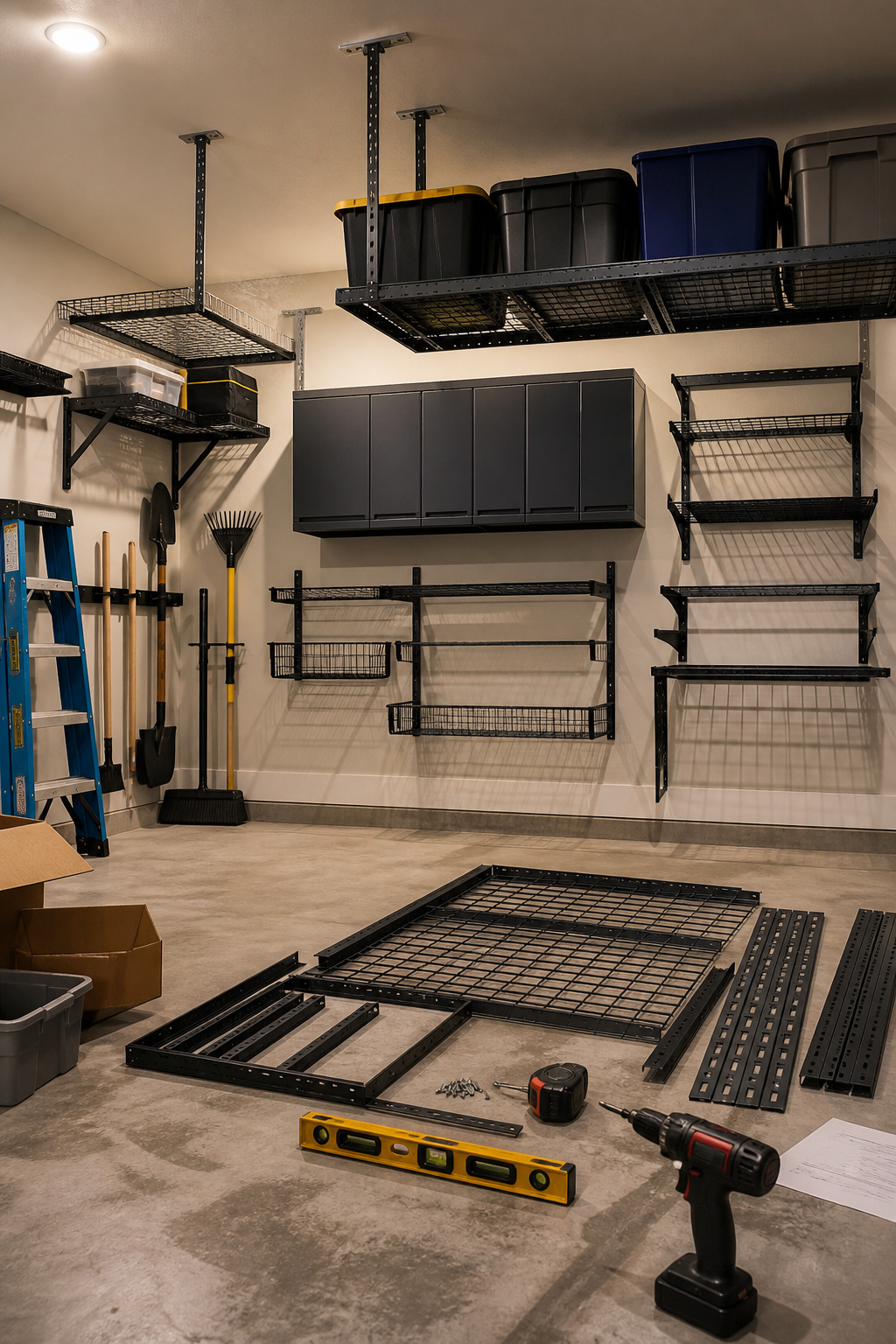
Weight capacity is crucial, as it determines the total load the rack can safely support.
Weight Capacity
This is where most garage ceiling projects either hold steady or come down in the worst way. Weight capacity on overhead storage means the total load the rack is engineered to carry, distributed across its frame and anchored into your ceiling joists. The number printed on the box assumes your installation matches the tested conditions: solid wood joists, correct hardware, no water-damaged drywall pretending to be structure.
In practice, buyers routinely split between two camps. One stores seasonal decorations, camping gear, and the plastic bins of clothes their kids outgrew. The other is trying to get a full set of tires, a kayak collection, or a decade of accumulated tools off the floor. The first group can work with lighter ratings. The second cannot, and the gap between what a rack claims and what it safely holds in a real garage with real joist spacing is where injuries and insurance claims happen.
If your ceiling is finished and you cannot locate or verify joist centers, weight capacity becomes a theoretical number. You either open the drywall to confirm structure, hire someone who can, or buy lighter than you think you need and leave margin. Renters in particular should care about this because their lease likely makes them liable for anything that detaches, and landlord-installed overhead storage is rare.
The only buyers who can safely treat weight capacity as secondary are those storing empty luggage, fabric, or other bulky-but-light items where volume matters more than mass. Even then, I would not ignore it entirely. A rack rated for more than you need also tends to be built heavier itself, which tells you something about the gauge of steel and the quality of welds.
Dimensions and Fit
Ceiling storage occupies the one plane in your garage that is not already claimed by vehicles, workbenches, or the path to the door. But ceiling space is not empty space. Garage door tracks, opener rails, light fixtures, and attic access panels all carve it up. The dimensions that matter are not just the rack’s footprint but its drop height, how far it hangs below the ceiling, and whether that leaves clearance for a raised garage door or a tall vehicle.
Buyers with compact one-car garages or low ceilings face the tightest math. A rack that drops 33 inches in a garage with 96-inch walls and an opener hanging below that can leave you measuring in single-digit inches of leftover headroom. Wider racks also require more continuous joist span; a 4 x 8 foot platform needs more structural cooperation from your ceiling than a 2 x 4 foot one.
Depth of storage matters for accessibility too. A 4-foot deep rack centered over your parking space puts the back two feet at arms-length-plus for most people. Step ladders in a garage with a vehicle parked below are awkward at best.
You can ignore dimensional obsession if you have an oversized garage with a high, unobstructed ceiling and no plans to park anything beneath the rack. That describes almost no one I have found in owner reports, which is why this factor ranks second.
Installation and Hardware
Overhead storage installs in two basic modes: ceiling-mounted racks that bolt directly to joists, and pulley or motorized systems that lower the load to you. The first is more common, more affordable, and more permanent. The second saves you from climbing but introduces moving parts and alignment headaches.
Direct-mount racks demand accurate joist location, a stud finder you trust, and a willingness to drive lag bolts upward while holding hardware above your head. Owner reports consistently mention that included hardware varies sharply in quality; cheap lag bolts with undersized washers pull through drywall or strip in soft pine. Some buyers replace everything at the hardware store before starting. Others discover the problem when the rack shifts during loading.
Motorized or crank-down systems add electrical requirements or manual winch operation. They also need level installation more precise than static racks; an uneven platform binds in its tracks. The convenience is real for buyers with mobility limits or genuinely heavy items, but the installation complexity often pushes them toward professional help, which folds cost back into the decision.
Renters or anyone planning to move within a few years should weigh installation type heavily. Ceiling bolt holes are not invisible repairs. Buyers in their long-term home with solid DIY experience can prioritize capacity and material over installation ease.
Material Quality
Steel gauge, powder coat finish, and weld quality determine whether your rack lasts one season or fifteen. Thinner steel flexes under load, and flexing works bolts loose over time. Powder coat matters in garages because humidity, road salt, and temperature swings attack bare metal faster than most people expect. Welds at joints are the failure points; owner photos of collapsed racks usually show cracked welds or bolt holes elongated from movement.
The practical test in research is weight of the rack itself. A 4 x 8 foot platform that ships at under sixty pounds is using thinner material than one approaching ninety. That difference is not just shipping cost; it is structural margin you will never see in marketing photos.
Buyers in dry climates with stable temperatures can be less vigilant about corrosion resistance. Everyone else, especially in coastal areas or regions with heavy snow and salt, should treat material quality as nearly tied to safety. A rack that rusts through at a joint does not warn you before it fails.
Accessibility and Daily Use
Ceiling storage is inherently inconvenient. The question is how inconvenient, and whether your storage rhythm matches the access cost. Items you need twice a year, holiday decorations or winter tires, suit overhead placement. Items you touch monthly do not, unless the retrieval system is designed for it.
Static racks require a ladder, reaching overhead, and often moving a vehicle. Owner reports describe the common pattern: items go up, items rarely come down, and the rack gradually becomes a forgotten archive. Pulley and motorized systems improve this but add their own friction. Crank systems need clearance to operate. Motors need power and occasional maintenance.
Buyers who have organized their garage with clear seasonal rotation, who genuinely will retrieve and replace items on schedule, get value from overhead storage. Buyers hoping ceiling placement will solve a clutter problem they never actually sort through often end up with a full ceiling and a still-cluttered floor.
Price and Value
Price in this category tracks roughly with capacity and material quality, but not cleanly. A premium-priced rack with thin steel and clever marketing is not rare. A mid-range option with heavier gauge and simpler design often outperforms it.
The value calculation that matters is total cost including installation and any hardware upgrades. A budget rack that requires professional installation because of its weight or complexity can cost more than a lighter, more expensive unit you handle yourself. Conversely, a premium motorized system that eliminates ladder work may justify itself for buyers who would otherwise hire help for every retrieval.
Budget-conscious buyers should look hardest at direct-mount steel racks with verified owner reports of included hardware quality. The savings disappear if you are replacing bolts and adding bracing before the first bin goes up. Premium buyers should verify that the price premium buys material or mechanism improvements, not just brand recognition or finish options you will never see from below.
How the Top Picks Compare
The SunsGrove’s heavier frame contributes to its stiffer installation compared to the NewAge Versarac Pro.
The NewAge Versarac Pro and the SunsGrove both carry 800 lb, but the Versarac Pro earned Best Overall because of how that capacity is built. The SunsGrove spreads its load across a wider grid pattern that owners say flexes slightly under weight near the edges. For bins of holiday decorations centered on the platform, both perform the same. For someone storing a full set of tires or a roof cargo box off-center, the Versarac Pro’s tighter cross-bracing keeps the platform level. That rigidity matters more than the raw number.
Installation ease splits two different problems. The GearLoft’s 1000 lb rating tops the field, yet its real advantage is a bolt pattern that lines up with common 16-inch joist spacing without extra drilling. The E-Z Lift matches that convenience for manual adjustment, but its 700 lb ceiling means you are choosing between hoisting heavy items by hand or trusting a motor you cannot see. The GearLoft suits renters who might relocate the unit; the E-Z Lift fits homeowners with bad shoulders and lighter storage.
Small space constraints force harder choices. The Fleximounts GL1 at 4×4 ft holds 350 lb, which sounds spare until you calculate what actually fits. A 4×8 platform like the Klutch carries twice the area but demands a full eight feet of clear wall-to-wall span. Many one-car garages or bays chopped up by water heaters and electrical panels cannot accommodate that length. The GL1’s 350 lb still handles four large bins of camping gear or off-season clothes. The tradeoff is real: you lose the ability to slide a kayak up there, but you gain a storage solution that fits above a garage door without relocating your opener.
Heavy load specialists face their own math. The Jusgym’s 750 lb rating sits below the GearLoft’s 1000 lb, yet the Jusgym drops its weight to 47.8 lb during the install phase when you are holding it above your head on a ladder. The GearLoft’s higher capacity ships heavier; owner reports mention two-person installs as nearly mandatory. Solo installers with substantial storage needs often pick the Jusgym and simply stay below its limit. The MonsterRAX at 500 lb occupies a middle ground that satisfies few on paper, though its 12-inch drop from ceiling is the shallowest here. In basements with exposed ductwork or garages with openers mounted low, those extra inches of headroom underneath become the spec that matters most.
The SafeRacks and Klutch both target seasonal users, but differently. SafeRacks builds in a 24-inch vertical safety lip around the platform edge; the Klutch runs flat. That lip catches the bin that slides during your February scramble for patio cushions. It also costs you accessible surface area for the oversized item that overhangs slightly. Your storage style, tidy or hurried, should decide between them.
Frequently Asked Questions
What weight capacity should I look for in an overhead garage storage system?
Most systems on the market fall into three tiers: light-duty racks that handle a couple hundred pounds, standard units rated for four to six hundred, and heavy-duty platforms built for a thousand or more. I read enough owner reports to notice that people consistently underestimate what they actually store; the couple who thought they only had holiday bins ended up adding camping gear, outgrown clothes, and a disassembled crib. My advice is to buy for the weight you will accumulate, not the weight you have today, and to check whether the rating applies to the whole rack or to each of its support points.
How hard is installation, and can one person do it alone?
Every manufacturer claims their system installs in an afternoon, but the owner reports tell a more specific story. Ceiling-mounted racks need at least one joist to land in, and finding that joist through drywall or plaster is where most solo installers get stuck; a stud finder helps, but having a second body to hold the rack flush while you mark holes saves serious time. The platforms that lower on a pulley system add complexity because the pulleys must stay level and the cables must tension evenly, which almost always takes two sets of hands. Wall-mounted shelving is the friendliest to a lone installer, though even then, a ladder stabilizer and a clamp to hold the bracket are worth digging out of your toolbox.
What dimensions work for a standard two-car garage, and how much clearance do I lose?
The racks I compared ranged from about two by four feet up to four by eight, with the most common depth landing around four feet and width stretching to match common joist spacing. The critical number is not the rack itself but the drop: how far it hangs below your ceiling. Most systems drop between eighteen and thirty-three inches, which means a garage with nine-foot ceilings still leaves comfortable headroom, but an eight-foot ceiling with a deep rack can turn your parking lane into a duck-and-cover situation. I noticed that owners with compact cars or SUVs had more flexibility than truck owners, since a rack sitting above the hood line does not interfere with the garage door track the same way.
What safety features matter, and which ones are just marketing?
The feature that actually shows up in incident reports is the secondary safety mechanism, usually a strap or chain that catches the rack if its main support fails; systems without this have documented cases of slow sag or sudden drop. Powder-coated steel resists rust better than painted finishes, which matters in garages where temperature swings create condensation. The pulley systems I researched all claim locking mechanisms, but owner feedback suggests testing that lock under load before you trust it; a few describe racks that crept downward over months because a cam did not bite cleanly. What I did not find convincing were claims about earthquake resistance or wind ratings, since a garage interior sees neither in meaningful amounts.
What kind of warranty or return protection do these systems carry?
The brands I researched typically offer one to three years on manufacturing defects, with the longer coverage usually attached to heavier-duty platforms. The catch is what "defect" means: a weld that cracks under rated load is covered, but a rack that sags because you exceeded capacity or missed a joist is not. Return policies vary by retailer more than by brand, with some allowing unopened returns for a month and others treating ceiling-mounted racks as installed goods that cannot go back. I read enough frustrated accounts to suggest photographing your installation steps; if a bracket arrives bent or a pulley binds, that documentation speeds up the replacement process considerably.